In a tense contest of military power and technological advancement, Iran devoted more than twenty years and billions of dollars to protecting its nuclear program inside a mountain.
This installation, the Fordow Fuel Enrichment Plant, was shielded by Russian-made air defense systems and advanced radar networks.
Iranian military leaders confidently declared on state television that the facility could not be destroyed.
They were nearly correct.
In a bold mission that would redefine modern military operations, the United States carried out Operation Midnight Hammer.
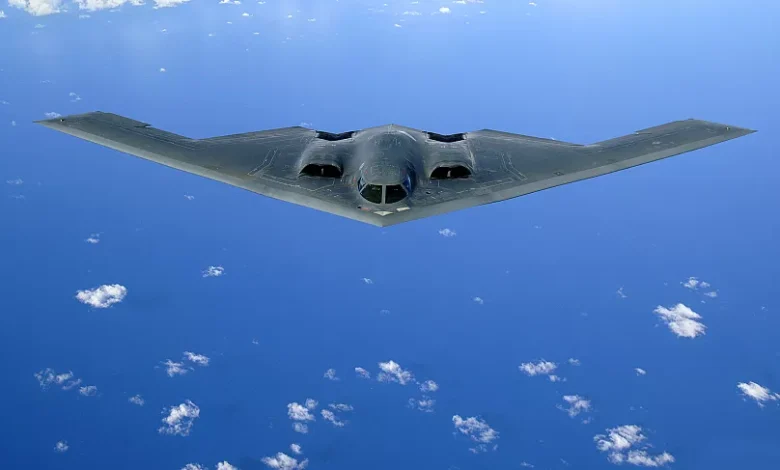
During that operation, seven B-2 Spirit stealth bombers departed from Whiteman Air Force Base in Missouri and flew for eighteen hours. They entered Iranian airspace without being detected.
Their objective was to release fourteen GBU-57 Massive Ordnance Penetrators, targeting the heavily fortified Fordow complex.
But what circumstances led to such a dramatic strike?
And what does this operation reveal about how warfare is evolving—and how far nations will go to defend their strategic interests?
The Origins of Fordow
The development of Fordow was shaped by lessons from earlier setbacks.
After the Stuxnet cyberattack exposed weaknesses in Iran’s nuclear infrastructure, the country began constructing a facility that could survive future attacks.
Built almost 300 feet inside a mountain, Fordow was engineered to function as a nearly impenetrable stronghold protecting Iran’s nuclear program.
The project was more than a defensive measure—it symbolized Iran’s determination to resist outside pressure and safeguard its nuclear ambitions.
The GBU-57: Engineering a Bunker Buster
Central to Operation Midnight Hammer was the GBU-57 Massive Ordnance Penetrator, the most powerful non-nuclear bomb in the U.S. arsenal.
Its development represented over fifteen years of research and engineering within the Pentagon.
The weapon was specifically designed to destroy deeply buried or reinforced structures such as Fordow.
One of its most advanced components is the Large Penetrator Smart Fuze, which enables the bomb to determine when to detonate after penetrating underground.
This system allows it to explode at the precise moment that will cause maximum destruction to hardened targets.
The Role of the B-2 Spirit
The B-2 Spirit stealth bomber stands among the most sophisticated aircraft ever built.
It is currently the only platform capable of carrying and deploying the GBU-57.
Thanks to its stealth design, the B-2 can evade radar detection and enter defended airspace with minimal risk of being tracked.
Its ability to combine long range, stealth, and heavy payload capacity made it the perfect aircraft for such a sensitive mission.
The Deception Strategy
To increase the chances of success, U.S. planners implemented a complex deception plan.
While the real strike group of B-2 bombers moved east toward Fordow, other aircraft were sent west to create a false trail.
This diversion confused Iranian surveillance and air defense systems, drawing attention away from the true flight path.
As a result, the strike aircraft were able to approach their objective without being detected.
The Strike on Fordow
As the bombers arrived above Fordow, the mission reached its most critical phase.
For approximately twenty-five minutes, the aircraft operated over the target—one Iran had repeatedly described as untouchable.
Remarkably, no Iranian defensive systems fired during the operation.
The event demonstrated the power of stealth technology and precision strike capabilities in modern warfare.
The Aftermath and Debate
Following the mission, intense debate emerged over the extent of the damage.
A leaked Defense Intelligence Agency (DIA) assessment appeared to contradict official Pentagon statements.
Some analysts argued that the attack severely damaged Iran’s nuclear infrastructure.
Others suggested that it only forced the program to relocate or become even more concealed.
This disagreement illustrates the challenges of accurately measuring the outcomes of complex military operations and intelligence assessments in modern conflict.
Wider Implications
Operation Midnight Hammer represents more than a display of military capability; it highlights the persistent struggle for influence in the Middle East.
As tensions between the United States and Iran continue to simmer, the mission underscores how far countries are willing to go to safeguard their strategic priorities.
Yet an important question remains: Did breaching the mountain strengthen global security, or did it simply push Iran to build an even deeper and more protected facility?
Conclusion
In the wake of Operation Midnight Hammer, analysts and governments around the world began debating the consequences of such a decisive military action.
Events like this demonstrate how modern warfare—driven by advanced technology, intelligence, and precision weapons—continues to evolve.
While the operation may have altered the balance of power in the region, the broader contest for geopolitical influence is far from resolved.
Looking back on this moment, one thing becomes evident: the global strategic landscape is still shifting, and the struggle for dominance remains ongoing.
In an era where technological innovation and military strategy are closely intertwined, the stakes for nations have never been higher.
What do you think about the impact of Operation Midnight Hammer?
Did it genuinely contribute to global stability, or did it intensify the competition for military and technological superiority in the region?
Share your perspective in the comments.
The discussion around defense technology, military strategy, and the engineering behind the weapons that shape global politics is only beginning.
Stay tuned for more insights as we continue exploring the complex world of modern warfare and international security.