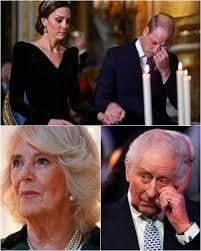
If such an apology ever truly took place, it would represent a profound emotional turning point within a family that has often appeared defined by formality and restraint. For Prince William—who, as a young boy, walked behind his mother’s coffin in front of the entire world—hearing his father acknowledge that moment could signal a deeply personal reckoning rarely visible to the public.
Yet the royal family has always operated within a culture where much remains unspoken. Silence, discretion, and carefully controlled narratives are part of how the monarchy maintains its image. Without clear confirmation, stories like this exist in a space between fact and speculation—a place where royal history and public imagination often overlap.
Perhaps that explains why the story has spread so widely. It touches on emotions people have carried since Princess Diana’s death in 1997: grief, unresolved questions, and the hope that behind the palace walls there may have been moments of honesty and reflection. In the absence of certainty, the story allows people to imagine their own version of accountability, forgiveness, and healing within a family that has long lived under the weight of both tradition and tragedy.