Discovering a sudden dark, swollen bubble on a child’s skin can be frightening for any parent. The skin may appear normal one moment, and the next a deep red or purple bump has formed, often causing immediate concern. It’s natural for the mind to jump to worst-case scenarios—serious infections or even more alarming conditions. In reality, most of these startling marks turn out to be blood blisters, a common response the body has to minor injuries or pressure on the skin. Understanding how blood blisters form and how the body heals them can help replace anxiety with calm, informed care.
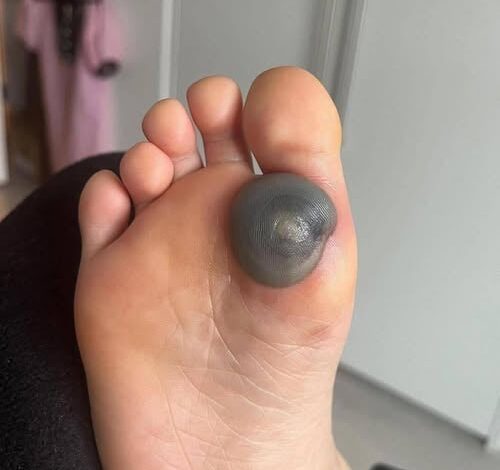
A blood blister is a type of blister that forms when small blood vessels beneath the skin break due to pressure or trauma. Unlike a regular blister—which is usually filled with clear fluid—a blood blister contains blood because capillaries have been damaged while the top layer of skin remains intact. This creates a small pocket where blood becomes trapped under the surface, giving the blister its dark red or purplish color.
These blisters often appear after an accident or strong pressure on the skin. A finger caught in a door, a heavy object landing on a toe, tight shoes rubbing against the heel, or repeated friction during sports can all lead to blood blister formation. They are most common on the fingers, palms, toes, and heels—areas of the body that frequently experience impact or rubbing. Occasionally, similar blisters can even develop inside the mouth after accidentally biting the cheek or tongue.
Although blood blisters may look dramatic, they are usually harmless and heal on their own. In fact, the best approach in most cases is simply to leave the blister alone. The layer of skin covering the blister acts like a natural bandage, protecting the injured tissue from bacteria and outside irritation. Popping or draining the blister can increase the risk of infection and slow down the healing process.
When left untouched, the body begins to repair the area naturally. Over the course of about one to two weeks, the trapped blood is gradually absorbed back into the body. Meanwhile, new skin forms beneath the blister. Eventually, the outer layer dries up and peels away, revealing healed skin underneath.
If the blister causes discomfort, a few simple steps can help ease symptoms. Applying a cold compress for several minutes may reduce swelling and soreness. If the blister is located in an area that experiences frequent friction—such as the foot—it can be covered with a bandage or padded dressing to prevent further irritation while it heals.
Children are naturally active, however, and sometimes a blister may burst on its own. If that happens, the focus should shift to keeping the area clean. The skin should be gently washed with mild soap and water, followed by a thin layer of antibiotic ointment if recommended by a healthcare professional. Covering the area with a clean bandage helps protect it while the new skin strengthens. It’s important not to remove any loose skin covering the blister, as it still provides protection during the healing process.
Most blood blisters resolve without complications, but certain warning signs should not be ignored. If the area becomes increasingly painful, swollen, or warm to the touch, or if yellow or green fluid appears, these may indicate an infection. Red streaks spreading from the site or fever are also signs that medical attention should be sought promptly.
Extra caution is needed for people with certain health conditions. Individuals with diabetes, poor circulation, or immune system issues may experience slower healing and a higher risk of infection. In these cases, even minor skin injuries should be evaluated by a healthcare professional.
For families, incidents like a blood blister can also serve as a helpful learning moment. They offer an opportunity to explain how the body responds to injuries and how natural healing processes work. While the appearance of a blood blister can initially be alarming, it often reflects the body’s ability to protect and repair itself effectively.
As the days pass and the blister gradually fades from dark red to brown and then disappears, parents can feel reassured by the steady progress of healing. What began as a moment of worry usually resolves quietly and completely. In many ways, a blood blister is a small reminder of the body’s remarkable resilience.
By staying calm, protecting the affected area, and watching for unusual symptoms, families can manage these minor injuries with confidence. In most cases, patience and simple care are all that’s needed for the skin to return to normal.