Opened a Can of Spam and Saw Clear Jelly? Here is What It Actually Tells You And When Its Not Safe!

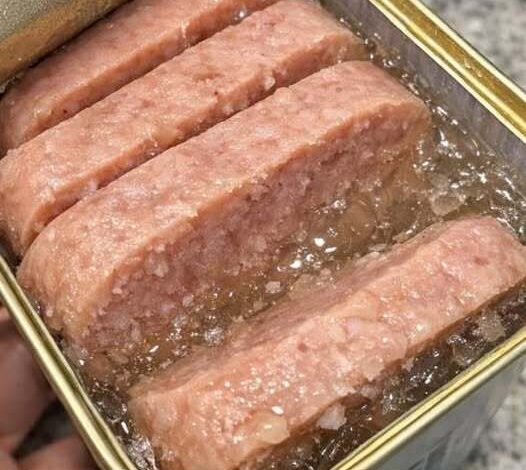
Opening a familiar pantry item and finding something unexpected can instantly put your lunch plans under review. In today’s food-conscious culture, discovering a clear, jelly-like layer on a freshly opened can of Spam can feel like uncovering a hidden flaw. But the reality is far less alarming—and far more scientific. That translucent layer is a normal and intentional result of the preservation process, a quiet success of protein chemistry that helps keep the meat moist, stable, and safe for long-term storage.
Knowing why this jelly forms—and how to quickly verify that your food is still safe—goes a long way toward maintaining confidence in your kitchen. Despite persistent online myths, the substance isn’t artificial or spoiled. It’s aspic: natural gelatin created when meat is pressure-cooked during canning.
Why the Jelly Forms: The Simple Science
During production, the meat is sealed inside the can and heated to high temperatures to eliminate harmful bacteria. In this process, the pork’s natural collagen breaks down into gelatin. That gelatin disperses through the small spaces around the meat and, once cooled, solidifies into the clear or light amber layer you see.
This isn’t filler or waste—it’s a hallmark of traditional canning. The same process is deliberately used by chefs when making terrines or pâtés. When heated again during cooking, the gelatin melts, releasing moisture that helps baste the meat and enhance its savory flavor.
A Practical 3-Step Safety Check
Even though the jelly itself is normal, it’s still important to know how to recognize a genuinely unsafe can. Storage damage or age can occasionally compromise shelf-stable foods. A quick three-step check can help you decide with confidence.
1. Inspect the Can Before Opening
The integrity of the seal is everything.
- Safe signs: Flat ends, smooth sides, no leaks
- Discard immediately if:
- The can is bulging or domed
- There are deep dents along seams
- Rust is flaking or moisture is leaking
- Opening the can releases a strong hiss, foam, or spray
Bulging often indicates gas buildup from bacterial activity and should never be ignored.
2. Examine the Meat and Jelly
Once opened, look closely.
- Normal:
- Jelly is clear or pale amber
- Meat is evenly pink and firm
- Warning signs:
- Jelly is cloudy, dark, greenish, or stringy
- Meat shows gray, green, or uneven patches
- Visible bubbles trapped in the jelly
Any of these indicate spoilage.
3. Trust Your Sense of Smell
Your nose is a reliable final check.
- Normal aroma: Mild, salty, and meaty
- Unsafe: Sour, rancid, sharp, or rotten odors
Never taste canned meat to “test” it—discard it if the smell is off.
Cooking the Jelly Away
If the jelly’s texture isn’t appealing on sight, heat resolves it completely.
- Pan-frying or baking: The gelatin melts into liquid, acting as a natural cooking fat
- Lower-fat varieties: These may produce less jelly due to reduced collagen, but some moisture is still expected and normal
The Takeaway
That clear jelly isn’t a defect—it’s evidence of a preservation method that has worked reliably for generations. When the can is intact, the jelly is clear, the meat is pink, and the smell is mild, you’re looking at a product exactly as it was designed to be.
Quick Reference
| Feature | Normal | Discard If |
|---|---|---|
| Can ends | Flat | Bulging |
| Jelly color | Clear / pale amber | Cloudy / dark / green |
| Meat color | Even pink | Gray / green / patchy |
| Texture | Firm | Slimy / mushy |
| Smell | Mild, meaty | Sour or rancid |
Sometimes the strangest-looking details in our food are actually signs of careful preparation—not failure. Understanding that difference turns uncertainty into confidence, and keeps your pantry decisions grounded in science rather than suspicion.