My Grandmother Left Her House to the Neighbor and Gave Me Only Her Old Sewing Machine – Then I Found a Key and a Note Taped to It!

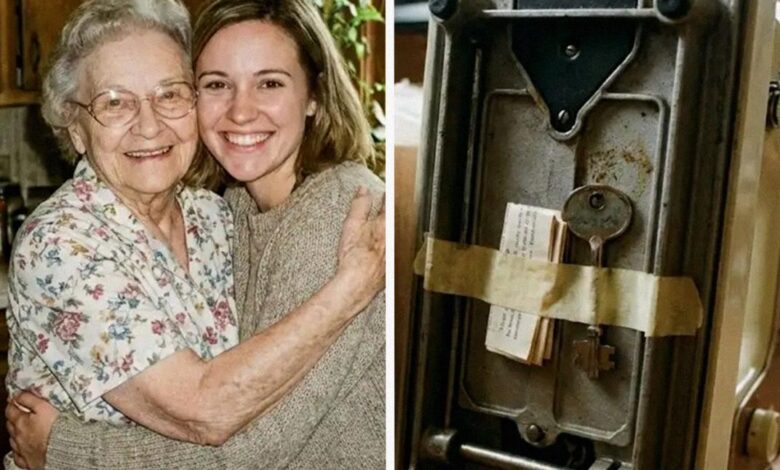
Grandma Rose’s passing felt like more than losing a beloved family member—it felt as if the warmth of the yellow house on Juniper Lane had gone out with her. That house had been the center of my life for as long as I could remember. Its rooms held every memory of growing up: birthday parties filled with laughter, long afternoons baking in the kitchen, and quiet nights when Grandma and I shared tea and stories long after midnight.
Three days after her funeral, everything felt strangely empty. The stream of casseroles from sympathetic neighbors had stopped. The bouquets of lilies left by visitors were already beginning to wilt. And I found myself sitting in a polished law office, waiting to hear the final instructions left behind by the woman who had raised me.
Across the room sat Margaret.
She had lived next door to Grandma Rose and had become increasingly involved in her life during the last few years. Margaret looked composed—almost too composed—dressed neatly in a navy suit and holding a leather folder in her lap like someone attending a business meeting rather than a reading of a will.
She gave me a polite smile.
“Rose liked things organized,” she said quietly. “She wanted everything settled quickly.”
The lawyer began reading.
At first, the words barely registered. Then they hit me all at once.
The house on Juniper Lane—Grandma’s house, the place where I had grown up—was being transferred entirely to Margaret.
For a moment, I couldn’t breathe. That house was more than property. Every corner carried a memory. Even the doorframe still held pencil marks showing how Grandma had tracked my height as I grew.
Margaret placed her hand dramatically against her chest.
“Rose wanted me to feel secure,” she said softly. “Sometimes the person who’s there every day matters more than the one who visits on weekends.”
The remark cut deeply.
I had visited every weekend I could, handled her bills from my apartment in the city, and made sure she never lacked groceries or medication. But according to the legal document in front of us, it seemed none of that mattered.
Then came the final line.
“To her granddaughter, Taylor, Rose leaves her sewing machine.”
The room fell silent.
A house worth nearly a million dollars had gone to the neighbor. I had inherited an old cast-iron sewing machine.
I left the office before anyone could see the tears forming in my eyes.
Returning to the house later felt strange, almost like stepping into someone else’s home. The rooms were quiet without Grandma’s presence. Sunlight filtered through the curtains and landed on the sewing machine by the window—the same machine she had used for decades.
It was beautiful in its own way: heavy, polished, and worn from years of use. Grandma had used it to repair my clothes, make quilts, and stitch countless small things that made the house feel warm.
When I tried to lift the machine’s head to move it, my fingers brushed against something taped underneath.
A small brass key.
And a folded note written in Grandma’s familiar handwriting.
My heart raced as I opened it.
The message was short, direct, and very much like her.
“Don’t challenge Margaret until you’ve visited the address below. Go with a clear mind. You deserve to know everything.”
The address led me to a small white house in the neighboring town.
There I met Helen.
She introduced herself as a private patient advocate—someone Grandma had hired during her final months. Instead of condolences, Helen handed me a thick blue folder filled with documents.
Inside was the truth.
Grandma had not simply given the house to Margaret out of affection.
She had created something called a Conditional Care Agreement.
According to the contract, Margaret would receive the house only if she fulfilled specific caregiving responsibilities. The agreement required documented visits, medication management, transportation to appointments, and coverage of certain daily needs.
If Margaret failed to meet those obligations—even once—the ownership of the house would automatically transfer back to me.
Grandma hadn’t made a careless decision.
She had made a calculated one.
Helen explained gently that Grandma feared something more than anything else: that I would abandon my career and move home to care for her full time.
“She knew you would give up everything for her,” Helen said. “She didn’t want that. So she created a system that paid for her care without forcing you to sacrifice your future.”
The house wasn’t a gift.
It was leverage.
If Margaret truly cared for her as promised, she would earn it. If she didn’t, the house would return to the family.
Grandma had protected both of us.
The next afternoon I found Margaret outside the house on Juniper Lane.
She was speaking confidently with neighbors, already discussing renovation plans.
I approached quietly and opened the blue folder.
Margaret’s smile disappeared instantly.
“You told everyone this house was a gift,” I said calmly. “It wasn’t. It was a contract.”
I showed her the documents, the pharmacy records, and the mileage logs.
“You stopped visiting her three months before she died,” I continued. “You didn’t fulfill the agreement.”
Margaret’s confident posture collapsed into nervous excuses—talk of stress, misunderstandings, and circumstances beyond her control.
But the facts were clear.
Two days later, after the estate attorney reviewed everything, the title of the house officially reverted to me.
That evening I sat in the living room as the late sunlight filled the house with a soft golden glow.
The sewing machine stood in front of me.
Suddenly I understood why Grandma had left it to me.
It wasn’t just an heirloom.
It was the key to uncovering the truth.
She knew I would be the only one who cared enough about it to look beneath it.
I ran my fingers across the worn wooden surface and remembered something she once told me when I was a child.
I had ripped my favorite dress and cried, convinced it was ruined forever.
Grandma simply laughed, threaded her needle, and began repairing the tear.
“Nothing is ever truly ruined,” she told me with a smile. “You just have to stitch it back together.”
I placed a spool of thread onto the machine, lowered the presser foot, and pressed the pedal.
The sewing machine came alive with a steady rhythmic hum that filled the quiet house.
It sounded like healing.
The house was safe.
The truth had been revealed.
And piece by piece, like fabric under a needle, my life was beginning to come back together.
Nothing had been destroyed.
We were simply starting a new pattern.