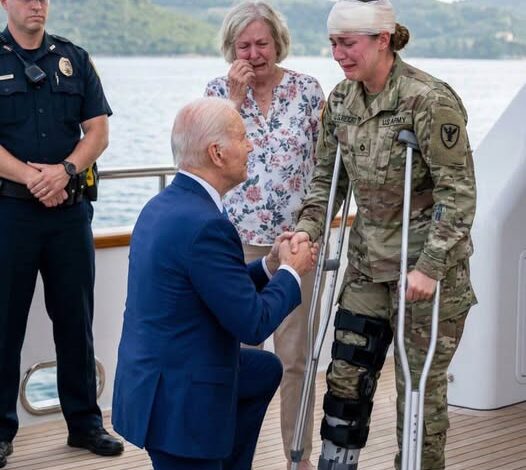
The phone call I made from the military base that day altered the way I understood my family forever. I was still wearing my uniform, sitting on the edge of a clinic bed with my knee swollen and wrapped in ice, when the doctor used a word that froze everything inside me: disability.
It wasn’t a distant possibility—it was a very real outcome if I didn’t have surgery within a week. When I called my parents to ask for help covering the $5,000 procedure, I learned more about loyalty and family in that moment than I had through years of holidays and shared dinners.
The Injury
Military training is meant to push you beyond your comfort zone, but this wasn’t about endurance or determination. During what should have been a routine exercise just a couple of hours from home, something inside my knee gave way with a sharp pop that I could feel and hear at the same time.
Heat shot through my leg and I collapsed before I even understood what had happened.
When I tried to stand, my knee simply refused to support me.
Later, inside the stark lighting of the base clinic, a physician’s assistant brought up my MRI results. The gray images on the screen told the story clearly—major ligament damage.
“You need surgery,” she said firmly. “Within the next seven days.”
She paused before continuing.
“If you wait longer, there’s a serious risk of permanent damage and limited mobility.”
In the military, getting medical procedures approved can be a slow process filled with paperwork and approvals. She explained that the system wouldn’t likely authorize my surgery for several weeks.
Then she lowered her voice.
“If you can get it done off-base sooner, you should.”
She slid a note toward me with a number written on it.
$5,000.
That amount stood between me and the ability to walk normally again.
The Call Home
That evening, I sat on my bunk in the barracks and called my parents.
My father answered, sounding relaxed, the faint noise of a television playing somewhere in the background. I explained everything: the injury, the doctor’s warning, and the urgency.
I promised I would repay every dollar.
For a moment there was silence.
Then I heard the familiar sigh my father made whenever he was about to refuse something.
“We just bought the boat,” he said. “The timing isn’t great.”
“It’s my leg,” I replied quietly.
“Well,” he said, almost casually, “you’re young. You’ll adjust.”
My mother picked up another phone in the house. Her voice was softer but carried the same message.
“Maybe this is a lesson,” she said. “You chose the military life. A little hardship builds character.”
Then my sister joined the conversation, sounding amused.
“You’re the tough one,” she joked. “You’ll survive.”
She laughed.
I was still sitting there with bandages around my knee.
Understanding My Role in the Family
I didn’t cry.
Instead, I felt something shift inside me—something clear and undeniable.
Growing up, my sister had always been the focus of my parents’ financial support. When her first business failed, they helped her recover without hesitation. When another venture collapsed, they borrowed against their home to keep it afloat.
I, on the other hand, was always considered the dependable one—the person who managed on his own.
Years earlier, when my car broke down, they had agreed to lend me money only after I signed a formal repayment agreement with interest.
Looking down at my injured leg, I realized something simple:
They had money.
They just weren’t willing to use it for me.
The Brother Who Showed Up
Two days before the scheduled surgery, my brother knocked on the door of my small apartment.
He had grease stains on his jacket from working long hours at the mechanic shop.
He didn’t ask many questions.
He just looked at my leg and shook his head.
Then he handed me a stack of cash—$800.
“I sold some of my tools,” he said. “You need to get fixed. I’ll figure the rest out later.”
I accepted the money because it mattered who had been there when I needed help.
To cover the remaining cost, I took out a high-interest loan from a lender that specialized in desperate situations.
The office smelled like stale coffee and anxiety.
The morning of the surgery, as the anesthesia started to take effect, the last thing I remembered thinking was about my father’s words:
“We just bought the boat.”
Recovery and an Unexpected Turn
The surgery went well.
But recovery brought new challenges—financial stress, medical bills, and weeks of rehabilitation.
Then something unexpected happened.
One afternoon, while picking up medication from a pharmacy, I checked a lottery ticket I had purchased on impulse.
The amount I won wasn’t life-changing in the grand sense—but it was enough to lift the immediate financial pressure I had been under.
For the first time since the injury, I could breathe.
Looking at the Bigger Picture
Instead of telling my family about the money, I focused on protecting my future. I consulted a lawyer to help manage my finances and plan carefully for the years ahead.
During that process, something surprising emerged.
My parents’ financial situation was not as strong as they had always claimed. Their lifestyle was supported by large debts and loans, including financing on the house and the boat.
“They aren’t nearly as secure as they appear,” my attorney explained.
That realization didn’t make me feel victorious.
It simply confirmed what I had already learned.
Appearances can hide a lot.
Moving Forward
After my recovery, I returned to active duty.
My knee gradually regained strength, and eventually I was able to walk without assistance again.
One of the first things I did was thank my brother. Without his help, I might have faced a very different outcome.
I also made sure he had support in return—helping him pursue opportunities that would allow him to keep doing the work he loved without sacrificing his stability.
What I Learned
That injury taught me something deeper than resilience.
It taught me that family is not defined only by blood or shared history.
It’s defined by who stands beside you when things fall apart.
Some people who share your name may step back when you need them most.
Others—sometimes the quiet ones—step forward without hesitation.
When I returned to service, walking steadily again, I understood something clearly:
I was no longer the person who quietly accepted whatever came my way.
I was someone who had learned exactly who mattered—and who showed up when it counted.