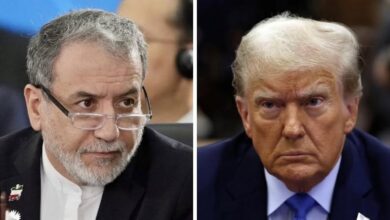
In the closing days of February 2026, the already fragile balance of power in the Middle East collapsed as a dramatic military escalation pushed the region into open warfare. On February 28, the United States and Israel initiated a coordinated series of precision airstrikes inside Iran. The Pentagon referred to the operation as Operation Epic Fury, a large-scale campaign aimed at crippling Iran’s military infrastructure. Strategic targets included command facilities, missile sites, and air defense networks located in key cities such as Tehran, Isfahan, and Qom. Early reports from the strikes carried enormous symbolic and political implications: the alleged death of Iran’s Supreme Leader, Ayatollah Ali Khamenei. If confirmed, the event marked a profound turning point, transforming a targeted military operation into a crisis with far-reaching geopolitical consequences and setting the stage for a rapidly expanding regional war.
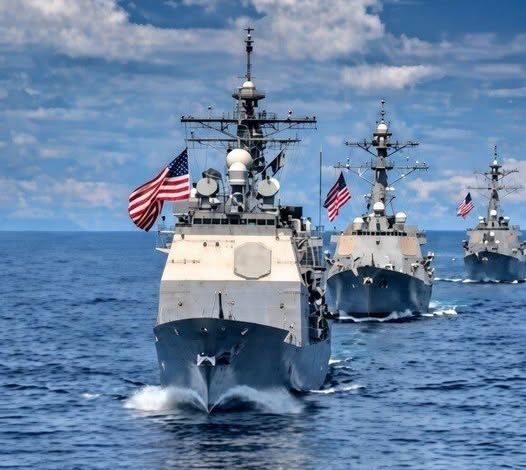
The origins of the 2026 conflict stretch back years rather than emerging from a single event. Throughout 2024 and 2025, tensions between Iran, Israel, and the United States intensified as their long-standing shadow conflict became increasingly overt. A series of missile and drone exchanges eroded regional stability, while Iranian-aligned Houthi forces launched attacks on commercial shipping routes in the Red Sea. These disruptions to global maritime trade prompted an expanded U.S. naval presence in the region. Combined with the pressure of international sanctions and rising military posturing, these developments created a volatile environment where a major confrontation seemed increasingly unavoidable. Washington and Jerusalem framed the February air campaign as a preventative measure, arguing that Iran’s advancing missile and drone capabilities posed an immediate danger to allies in the region and to critical global trade corridors.
Since the first strikes were launched, the conflict has escalated at remarkable speed. The joint U.S.-Israeli campaign relied heavily on technological superiority and long-range strike capabilities. Carrier-based aircraft operating from the USS Abraham Lincoln, along with strategic bombers, targeted Iranian air defense systems and military facilities. Tomahawk cruise missiles and precision weapons fired from HIMARS platforms were used to destroy missile launch sites and underground drone production centers. Iran responded swiftly with its own retaliation, deploying large waves of unmanned aerial vehicles and ballistic missiles. These strikes were directed not only at Israeli territory but also at U.S. military installations throughout the Persian Gulf, including bases in Kuwait, Bahrain, Saudi Arabia, Qatar, and the United Arab Emirates. Although many of these projectiles were intercepted by advanced air defense systems, several penetrated defenses and caused damage to both military installations and civilian infrastructure.
The human toll of the conflict has been severe. In Iran, sustained bombardment in and around major urban centers has resulted in thousands of civilian casualties and widespread destruction of infrastructure essential for daily life. The United States has also suffered military losses following missile attacks on regional bases. President Trump presided over ceremonies honoring American service members killed in action, events that intensified political debate within the United States. Critics have questioned the legal basis for the operation, noting that the conflict began without a formal declaration of war from Congress. Meanwhile, the violence has spread across additional fronts. Hezbollah forces in Lebanon have exchanged fire with Israel along the northern border, and U.S. troops in Iraq have resumed combat operations against Iranian-backed militias in areas such as Jurf al-Sakhar and al-Qaim.
The economic impact has been felt worldwide. The Strait of Hormuz, one of the most important maritime energy corridors on the planet, has become a focal point of strategic tension. Concerns over potential disruptions to oil shipments pushed global crude prices above $100 per barrel. Financial markets across the world reacted with heightened volatility as investors struggled to anticipate the broader economic fallout of a prolonged conflict. European governments have faced difficulty presenting a unified diplomatic response, with divisions emerging over military cooperation and humanitarian responsibilities. At the same time, major global powers such as China have urged restraint, publicly calling for immediate ceasefire negotiations in order to prevent further destabilization of the global economy.
The ultimate objectives of the U.S.-led campaign remain a topic of intense debate. President Trump and senior defense officials have stated that the operation is intended to fundamentally weaken Iran’s ability to project power through its missile and drone programs. However, statements referencing the possibility of “unconditional surrender” have complicated the diplomatic landscape, leaving uncertainty about what specific conditions would end the conflict. While the White House has emphasized that the campaign is designed to rely primarily on air and missile strikes, the possibility of ground operations has not been completely dismissed, though it is described as a last option. This uncertainty has placed neighboring Gulf states in a delicate position as they attempt to maintain security partnerships with Washington while avoiding internal instability and broader regional escalation.
Humanitarian organizations are increasingly alarmed by the scale of civilian suffering. Large numbers of people have begun fleeing conflict zones across the Middle East, placing additional pressure on already fragile refugee systems. The destruction of transportation infrastructure and the closure of regional airspace have complicated the delivery of humanitarian aid and the evacuation of civilians. In both Iran and neighboring Gulf states, disruptions to energy systems, transportation networks, and public services have intensified the hardship faced by ordinary populations. As the war moves into its third week, many analysts believe the conflict has fundamentally reshaped the global security environment.
At the same time, competing narratives about the war are spreading across international media and digital platforms. Some governments and commentators argue that the campaign is necessary to prevent Iran from achieving greater military and nuclear capabilities. Others emphasize the legal and humanitarian concerns surrounding preemptive military action and the mounting civilian casualties. This struggle over information and public perception has become an important dimension of the conflict itself, with both sides seeking to shape global opinion.
As the war of 2026 continues to unfold, it represents a pivotal moment in international politics. The shift from indirect proxy confrontations to direct clashes between powerful states has altered the strategic landscape of the 21st century. Calls for diplomacy are growing louder, but the path toward negotiations remains uncertain amid the ongoing violence. The choices made in the coming weeks will likely shape the future of global security and geopolitical stability for many years to come.