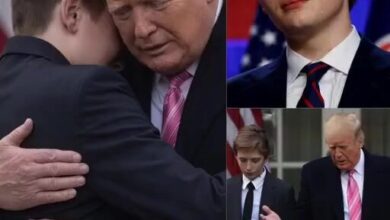
For many people watching, the sight of Donald Trump appearing visibly emotional felt jarring, almost surreal. For years he has cultivated a public image built on certainty, confrontation, and unwavering confidence. Yet in that moment, the familiar cadence of forceful speeches and sharp retorts gave way to something far more fragile. His voice slowed, the pauses between words stretched longer than usual, and the composure that typically defines his public appearances seemed to falter. Regardless of where people stand politically, the shift in tone was impossible to ignore.
Moments like that have a way of cutting through the noise that usually surrounds political figures. Campaign slogans, policy debates, and partisan arguments briefly faded into the background as viewers focused instead on the human side of a man who has spent decades projecting strength and resilience. For supporters, it felt like seeing the weight of leadership and years of public battles finally surface in a way they had rarely witnessed before. Some interpreted the moment as proof that beneath the tough rhetoric was someone carrying immense personal and political pressure.
Others watching saw the moment through a different lens. Critics who have spent years opposing his leadership still acknowledged that vulnerability, when it appears unexpectedly, can reshape how people perceive a public figure. While many remained firm in their views about his policies and legacy, the emotional tone of the moment added a new layer to the national conversation—one that was less about strategy and more about the personal toll of life at the center of constant scrutiny.
As clips of the moment spread across television and social media, reactions poured in from every corner of the political spectrum. Supporters described it as deeply moving, saying it strengthened their loyalty and reminded them that leadership often comes with burdens few people fully understand. Others viewed it as a moment that revealed how deeply the pressures of politics can affect even the most outwardly confident figures.
In the hours that followed, discussions shifted from the speech itself to the broader meaning of what people had witnessed. Commentators debated whether the moment marked a turning point in how Trump presents himself publicly, or whether it simply revealed a rare glimpse of emotion during an unusually intense period. Either way, the image lingered in people’s minds—an image that contrasted sharply with the persona many had come to expect.
By the time the moment ended and the crowd began to settle, one thing was clear: something about the atmosphere had changed. The speech, the reaction, and the visible emotion had created a pause in the usual rhythm of political spectacle. Supporters spoke of resilience and standing together, while others reflected on the unpredictability of the political era the country continues to navigate.
Whatever interpretations people take away, the moment left a lasting impression. It reminded viewers that even the most polarizing leaders are still human beings shaped by pressure, expectations, and the relentless spotlight of public life. And for many who watched it unfold, the realization lingered long after the cameras moved on—that sometimes a single moment of vulnerability can shift the tone of a conversation that once seemed permanently locked in conflict.