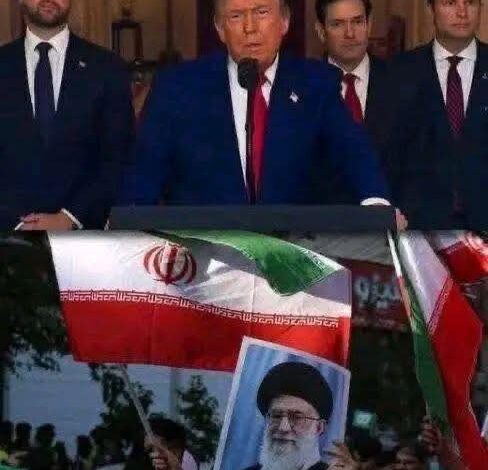
Global tensions often fluctuate, but moments of heightened uncertainty can make the international balance of power feel especially fragile. Recently, speculation surrounding Iran intensified after reports about the death of the country’s supreme leader circulated widely. The situation has triggered increased alert levels in defense and intelligence circles around the world. Conversations about possible retaliation against the United States—once largely theoretical—have moved into more serious strategic discussions. Despite the dramatic language sometimes used in public commentary, the realities of such a conflict are governed by military strategy, historical precedent, and the calculated deterrence systems that shape modern warfare.
Understanding the potential for an Iranian response requires examining how Iran’s military strategy has evolved over the past decade. Rather than relying primarily on traditional military confrontation, Iran has increasingly emphasized asymmetric tactics. These include the development of advanced missile systems and the cultivation of regional allies and proxy groups. A direct attack on the U.S. mainland would represent a dramatic shift away from that approach. Instead of operating within regional conflicts or indirect engagements, it would escalate tensions into a direct confrontation between two powerful states.
Security experts generally believe that if a confrontation were to escalate, the initial stages might not involve conventional military attacks. Modern conflicts between technologically capable nations often begin with actions designed to weaken an opponent without immediately triggering full-scale war. One area of concern frequently discussed by analysts is cyber warfare. Over the past several years, Iran has invested significant resources in expanding its cyber capabilities. These tools could potentially target infrastructure systems such as electrical networks, financial services, transportation systems, or communication platforms.
Cyber operations can disrupt essential services without requiring physical weapons, making them an attractive tool in the early stages of conflict. Such attacks might be directed at locations with major economic or political importance in order to create confusion and strain emergency response systems. Because these operations occur in digital space, they can complicate attribution and delay a coordinated response.
Beyond cyber operations, strategic planners also examine physical targets that could hold military significance in a hypothetical conflict. In military theory, potential targets are often evaluated based on their strategic importance rather than their geographic identity. For example, infrastructure associated with the United States’ nuclear deterrent has historically been viewed as a critical component of national defense strategy. Facilities connected to intercontinental ballistic missile systems or military command structures would naturally draw attention in strategic discussions because of their role in deterrence and response capabilities.
At the same time, coastal and political centers also hold strategic importance. Regions that host major naval bases, government leadership, or large economic hubs play significant roles in national operations. Analysts frequently note that symbolic value can be as influential as strategic value when nations consider potential targets during conflicts.
Another important factor influencing global tensions is the internal political environment within a country. Leadership transitions can create periods of uncertainty in any government system. In Iran, organizations such as the Islamic Revolutionary Guard Corps hold considerable influence in both military and political matters. During times of transition or perceived external pressure, governments sometimes adopt stronger rhetoric or actions to reinforce domestic unity. This dynamic can increase the risk of misinterpretation between nations, where signals intended to demonstrate strength may be interpreted as preparation for escalation.
Despite these concerns, deterrence remains one of the most powerful stabilizing forces in modern geopolitics. The United States maintains an extensive network of defense systems designed to detect and respond to potential threats. Early-warning satellites are capable of identifying missile launches within seconds by detecting heat signatures in the atmosphere. Missile defense systems, including ground-based interceptors and naval platforms equipped with defensive technologies, are intended to neutralize potential ballistic threats before they reach their targets.
The existence of these systems plays a psychological as well as strategic role. Nations considering aggressive action must account for the likelihood that such actions would trigger overwhelming retaliation. This balance of deterrence has been a central feature of international security since the Cold War.
Nevertheless, current tensions also reflect broader changes in the global order. The international system established in the mid-20th century is facing new pressures from emerging technologies, evolving alliances, and shifting geopolitical priorities. Cyber capabilities, space-based systems, and autonomous weapons have introduced new variables into the strategic equation.
Additionally, relationships among major powers add complexity to any potential conflict scenario. Actions taken by one country can quickly draw in allies or regional partners through defense agreements or shared security interests. Because of this interconnected structure, even limited confrontations carry the risk of wider consequences.
These realities highlight an important truth about modern geopolitics: physical distance no longer guarantees safety from global instability. Economic systems, communication networks, and security infrastructures are tightly interconnected. Disruptions in one region can quickly ripple across international markets and societies.
For this reason, diplomacy remains a critical tool in preventing escalation. Behind the scenes, governments often rely on quiet communication channels, intermediaries, and international organizations to reduce tensions and clarify intentions. These mechanisms help prevent misunderstandings that could otherwise lead to conflict.
As the international community continues monitoring developments, many leaders emphasize the importance of restraint and dialogue. Decisions made during moments of tension carry long-term consequences, and once military conflict begins, reversing its course becomes extremely difficult.
The coming period will likely test the effectiveness of diplomatic communication and global cooperation. Whether tensions subside or intensify will depend on the choices made by leaders on all sides. In a world where information travels instantly and military technologies are increasingly sophisticated, maintaining stability requires careful judgment and a shared recognition of the enormous cost that conflict would bring.