My Wife Gave Birth to Twin Boys with Different Skin Tones — The Truth Behind It Left Me Speechless

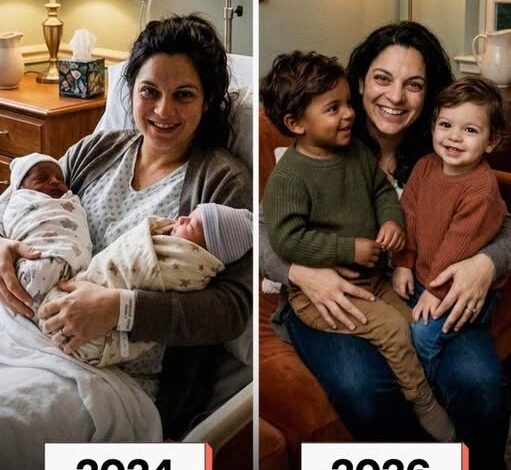
When my wife Anna finally gave birth, I believed the hardest part of our journey was finally behind us.
For years, the path to parenthood had been anything but easy. Doctor visits, long waits in hospital hallways, and the quiet heartbreak of loss had become a painful routine in our lives. Every miscarriage took a piece of the hope we once carried so easily.
There were times we tried to stay optimistic, convincing ourselves that things would eventually turn around. But there were also nights when neither of us had the strength to say anything at all—nights when we silently wondered if becoming parents simply wasn’t meant for us.
So when Anna managed to carry a pregnancy all the way to term, it felt almost unbelievable. We were afraid to celebrate too soon. Instead, we moved through each month cautiously, hoping nothing would go wrong.
The night Anna went into labor is something I’ll never forget.
I stayed beside her the entire time, holding her hand as the hours stretched on. She was exhausted, but she kept going with a determination that left me in awe.
Finally, the doctor announced that our babies had arrived safely.
The relief that washed over me in that moment is impossible to describe. Years of fear, disappointment, and waiting suddenly led to that single moment of joy.
Then I looked at our sons.
At first, I thought I was imagining things.
Our twins looked completely different from one another.
One of the boys, Josh, had pale skin and soft features that strongly resembled mine. Even as a newborn, the similarity was obvious.
But the other baby, Raiden, looked different.
His skin tone was darker, and many of his features clearly resembled Anna.
The contrast between them was impossible to ignore.
I must have looked puzzled because Anna immediately noticed the expression on my face.
Before I could say anything, tears filled her eyes.
“I promise you,” she said through sobs, clutching my hand, “I have never been unfaithful. Please believe me.”
Her voice shook with fear.
In that moment, I realized she thought I might doubt her.
But despite my surprise, I knew the woman I had married. I knew her character, her honesty, and her loyalty.
“I believe you,” I said softly.
Still, both of us had questions we couldn’t answer ourselves.
The doctors noticed the difference as well and decided to run several tests.
When the results came back, the explanation surprised everyone.
Both boys were biologically mine.
The doctors explained that genetics can sometimes behave in unexpected ways. In rare cases, twins can inherit very different combinations of traits from their parents. Certain genes can remain hidden in a family for generations before appearing again.
While uncommon, it’s entirely possible.
Medically, the explanation made sense.
Unfortunately, the outside world didn’t always see it that way.
As the boys grew older, the differences between them became more noticeable.
Whenever we went out as a family, people stared.
Some whispered quietly.
Others asked blunt questions.
“Are they really twins?”
“Are they both yours?”
“Why do they look so different?”
Anna handled those situations with quiet strength. Most of the time, she didn’t respond. Instead, she focused on our children, doing everything she could to protect them from the judgment and curiosity around us.
For a long time, I believed those awkward encounters with strangers were the hardest part.
But years later, I discovered something deeper had been weighing on Anna.
One evening, three years after the boys were born, she finally sat me down and told me a secret her family had carried for generations.
Anna’s grandmother had been mixed-race.
Decades earlier, in the place where her family lived, that fact had been treated as something shameful. Because of prejudice, the family chose to hide that part of their background completely.
They stopped talking about it.
They avoided mentioning it.
Over time, the truth slowly disappeared from conversation until almost no one outside the family knew about it.
When Raiden was born with darker skin, Anna’s mother panicked.
She feared people would start questioning their family’s history.
So she urged Anna to keep the truth hidden.
“People will judge us,” her mother warned. “It’s easier if they assume something else.”
That meant allowing people to make their own conclusions—even if those conclusions suggested Anna had been unfaithful.
Anna believed she was protecting her family by staying silent.
But that silence became a heavy burden.
For years she endured the looks, the whispers, and the painful questions without explaining the truth.
When she finally told me everything, I realized something important.
The shame she had been carrying never belonged to her.
There was nothing wrong with our family’s past.
Our sons were not a mystery that needed explaining. They were simply a beautiful reflection of a heritage that had been hidden for too long.
From that day forward, Anna and I made a promise.
Our children would grow up knowing the truth about who they are and where they come from.
There would be no secrets.
No shame.
And no hiding parts of their identity.
Because family isn’t defined by appearances.
It’s built on honesty, trust, loyalty, and the courage to stand together—even when the world doesn’t understand.