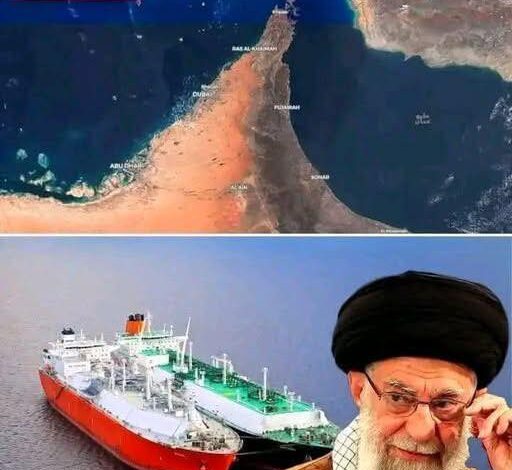
In recent days, the fragile balance of power in the Middle East has come under renewed strain, capturing the attention of governments, markets, and observers around the world. Reports from Tehran suggest that Iran’s parliament has approved a proposal related to the possible closure of a key maritime route. Although the exact details of how or when such a decision might be carried out remain unclear—and would require additional governmental procedures—the announcement alone has sparked concern across global energy markets, shipping networks, and diplomatic communities.
Central to the rising tension is the Strait of Hormuz, a narrow yet critically important waterway linking the Persian Gulf to international waters. Despite its limited size, this passage functions as one of the most vital corridors for global trade, particularly in energy supplies. Each day, a substantial share of the world’s oil and liquefied natural gas shipments move through the strait, making it one of the most strategically important maritime chokepoints on Earth. Because many major energy-exporting countries rely heavily on this route to reach international buyers, even the suggestion of disruption immediately triggers global concern. Oil refiners, maritime transport companies, insurers, and national governments are closely tracking developments, aware that any interruption could ripple across economies worldwide.
Financial markets often provide the earliest signal that geopolitical tensions are rising. Commodity traders and analysts frequently observe that oil prices react rapidly to perceived risks, sometimes well before governments finalize official responses. In this case, the political messaging alone has been enough to move markets. Energy specialists note that even the possibility of restrictions can introduce a “risk premium” into oil prices, increasing costs for crude, shipping insurance, and freight transport. These price increases are often driven not by an actual blockade but by uncertainty about future supply stability. For consumers, the impact can be direct: higher fuel prices, increased transportation costs for goods, and broader inflation affecting everyday products.
Beyond the immediate economic effects, the situation also raises complex legal and strategic questions. International maritime rules, including frameworks established under the United Nations Convention on the Law of the Sea, are designed to protect the principle of free navigation through major international straits. Any attempt to limit access to such waterways is widely interpreted as a major escalation and could lead to coordinated diplomatic pressure or increased naval presence from multiple countries. Security analysts often draw parallels to earlier periods of tension in the region, including the so-called “Tanker Wars,” when naval patrols intensified to safeguard commercial shipping. Military planners emphasize that strong deterrence measures and open communication channels are essential to prevent misunderstandings that could escalate into broader conflict.
At the same time, the interconnected nature of the modern global economy means that decisions taken within one nation’s political system can quickly influence industries and households across the world. This reality has revived ongoing debates about energy security and the importance of diversifying supply sources. Nations that have invested in renewable energy, alternative shipping routes, and strategic petroleum reserves are generally better positioned to withstand geopolitical disruptions. Over the past decade, diversification has shifted from being a long-term policy ambition to becoming a practical strategy for managing geopolitical risk.
While headlines focus on official statements and legislative decisions, a significant amount of diplomatic activity is taking place behind closed doors. Governments from different regions are reportedly engaging in quiet negotiations to clarify intentions and explore opportunities for de-escalation. High-stakes diplomacy requires careful balancing of national priorities with global stability, and history suggests that persistent communication often plays a key role in preventing tensions from escalating into open conflict. International monitoring organizations also contribute by supplying reliable data that can counter rumors or misinformation during volatile moments.
The rapid spread of information in the digital age adds another layer of complexity. News, analysis, and speculation can circulate globally within minutes, sometimes blurring the line between verified policy decisions and exaggerated commentary. During periods of geopolitical tension, investors and the public alike must distinguish between confirmed developments and unverified claims. Clear communication from credible institutions becomes especially important to prevent unnecessary panic or market instability.
Historical episodes involving the Strait of Hormuz highlight several consistent lessons. First, energy markets are highly sensitive to perceived risks, even if those risks never materialize into real disruptions. Second, prolonged uncertainty can cause significant economic strain, sometimes more damaging than brief interruptions. Third, coordinated international responses have historically proven more effective at preserving stability than unilateral measures taken by individual states. These lessons are shaping the contingency planning currently underway among global leaders as they review emergency reserves and strengthen maritime security cooperation.
It is also important to recognize that a parliamentary vote in Iran does not automatically translate into an immediate closure of the strait. Implementing such a decision would require additional political, administrative, and logistical steps. Many analysts believe the announcement may function primarily as strategic signaling—an attempt to gain leverage in broader geopolitical negotiations—rather than a declaration of imminent action. Even so, the episode highlights how vulnerable global systems remain to disruptions in a few critical locations.
Ultimately, the situation underscores the deep interdependence of today’s global landscape. Energy supply, international law, economic stability, and geopolitical strategy are tightly interconnected. Decisions made within national political institutions can quickly influence global markets and everyday life across continents. As the international community continues to watch developments closely, the priority remains preserving the flow of trade and maintaining diplomatic cooperation. The coming days will test the resilience of global institutions and the ability of nations to manage high-stakes tensions without allowing them to escalate further.