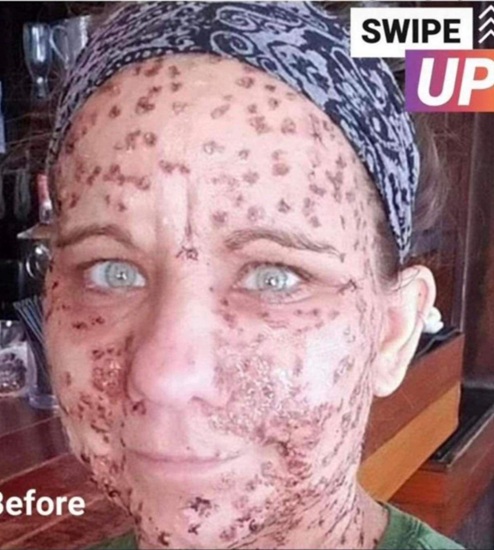
Woman With Rare Condition Causing Thousands of Tumors Reveals Remarkable Change After Medical Treatment

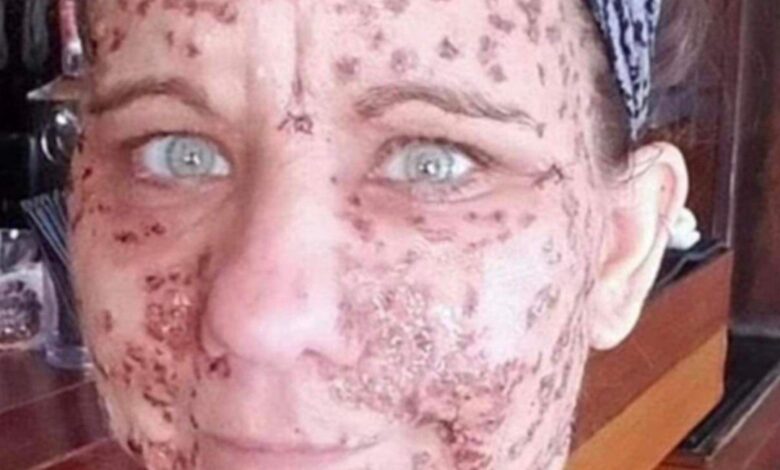
Libby Huffer, a 45-year-old woman, has spent much of her life living with a rare genetic condition called Neurofibromatosis Type 1 (NF1). The disorder causes tumors to grow along nerves throughout the body and can lead to visible physical changes that affect both health and appearance.
NF1 is a condition people are born with. It can be inherited from a parent or occur through a spontaneous genetic mutation. Medical experts estimate that the disorder affects roughly one in every 3,000 people worldwide, making it uncommon but not extremely rare.
Libby has known about her condition since childhood. As she grew older, however, the symptoms gradually became more severe. Over the years, thousands of small tumors began forming across her body.
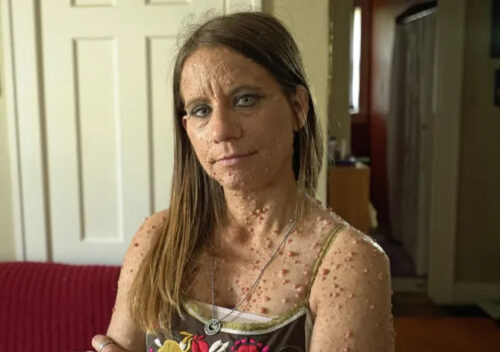
These growths are known as neurofibromas. They are usually non-cancerous tumors that develop on or under the skin along nerve pathways. Although they are typically benign, they can appear almost anywhere on the body, including the face, arms, legs, and back.
In Libby’s case, the number of tumors eventually became overwhelming. According to her own account, more than 6,000 tumors developed across her body, significantly affecting both her physical comfort and emotional well-being.
Living with such a visible condition was extremely difficult, especially during her childhood. Libby recalls facing frequent bullying at school from classmates who did not understand her medical condition.
Some children mocked her appearance, while others avoided her entirely. Among the insults she remembers hearing were hurtful nicknames such as “toad” and “lizard breath.” These experiences left deep emotional scars and affected her confidence during her early years.
Despite these challenges, Libby worked hard to build a normal life. She continued her education and focused on creating a future for herself beyond the judgment she often encountered.
Later in life, another major change occurred when she became pregnant. Hormonal changes during pregnancy can sometimes trigger additional tumor growth in people with NF1, and Libby experienced this firsthand.
After giving birth to her daughter 23 years ago, the number of tumors on her body increased dramatically. What had once been dozens or hundreds grew into thousands, appearing across her arms, back, legs, and face.
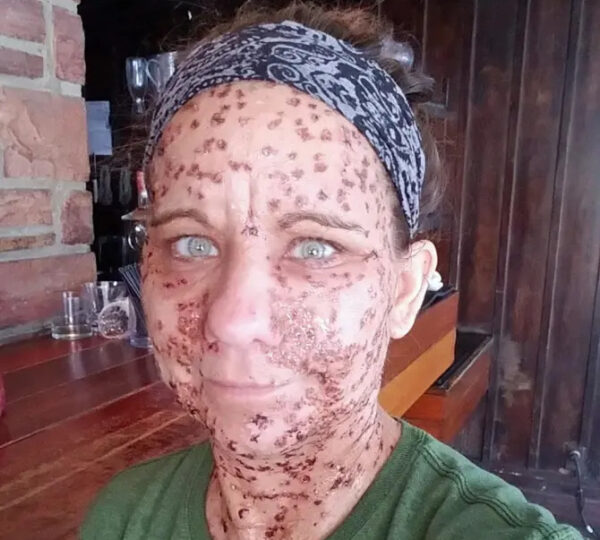
The physical effects went beyond appearance. Many of the tumors caused chronic pain, making everyday activities far more challenging.
Simple actions such as wearing certain clothing, taking a shower, or even receiving a gentle hug could cause discomfort. Tumors along her back created constant aching, while nerve involvement in her feet produced persistent tingling sensations.
These symptoms often interfered with sleep, leaving Libby exhausted and struggling to maintain energy for daily life.
Despite the ongoing pain and emotional strain, Libby remained determined to keep moving forward. She wanted to create a stable life for her daughter and began searching for medical treatments that might reduce the tumors and ease her symptoms.
Eventually, she learned about a procedure called electrodessication, a technique used by dermatological surgeons to remove certain skin growths using controlled electrical energy.
The treatment can be effective in removing neurofibromas that appear on the surface of the skin. However, it is often expensive and may require several procedures depending on the number of tumors.
For Libby, the estimated cost of surgery was about $23,500, a price far beyond what she could easily afford.
Determined to find a solution, she decided to share her story publicly. In 2016, Libby launched an online fundraiser explaining her condition and the challenges she faced.
Opening up about her experience was not easy. For years she had tried to avoid attention because of how people reacted to her appearance. Still, she hoped that honesty might help others understand her situation.
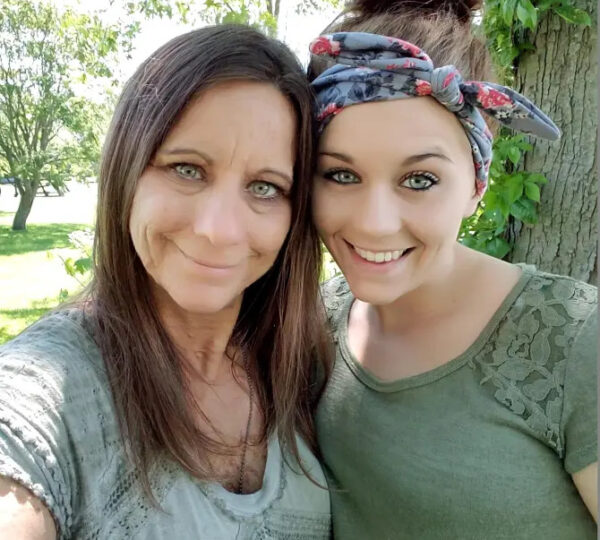
In her fundraising message, Libby explained that her goal was simple: she wanted the opportunity to feel more comfortable in her own skin.
Her story began to resonate with people around the world. Slowly, donations came in from individuals who were moved by her courage and determination.
After months of support, Libby finally raised enough money to move forward with the surgery.
In June of the following year, she underwent the electrodessication procedure. During the operation, surgeons carefully removed a large number of tumors from her face and other areas of her body.
Doctors were able to remove around 1,000 tumors, creating a significant change in her appearance and providing relief from some of the physical discomfort she had endured for years.
However, recovery was not immediate. Removing so many growths left scars that required additional treatment.
To help improve the appearance of these scars, Libby later received CO₂ laser therapy, a dermatological treatment commonly used to smooth the skin and reduce surgical marks.
The healing process required time and patience. Years of living with NF1 had affected both her physical health and emotional confidence, and rebuilding that confidence would take continued effort.
Still, Libby noticed an important change after the surgery. With many of the larger tumors removed from her face, people in public stared less frequently than before.
Although curious looks still occurred occasionally, the intense reactions she once experienced had decreased noticeably. For Libby, even this small shift meant a great deal.
Reflecting on her past, she often speaks about how painful the bullying during childhood had been. Those early experiences shaped her self-image for many years.
Today, she hopes that sharing her story will encourage greater empathy and understanding toward people living with visible medical conditions.
Libby emphasizes that individuals with conditions like NF1 are still people with feelings, dreams, and ambitions. She believes compassion and kindness can make a tremendous difference in someone’s life.
Now focused on recovery and personal growth, Libby remains hopeful about the future. Additional treatments may still be necessary, but she continues to approach life with determination and optimism.
Her journey has become a powerful reminder of resilience. By speaking openly about her experiences, she has helped raise awareness about Neurofibromatosis Type 1 and the challenges faced by those living with rare genetic conditions.
For Libby, the surgery represented more than a physical transformation. It marked the beginning of a new chapter—one in which she could reclaim confidence that had been overshadowed by years of misunderstanding.
Above all, she hopes her story encourages people to treat others with dignity, respect, and compassion, regardless of appearance or medical circumstances.