The History of This Mysterious Cleaning Item Is Finally Uncovered, Revealing Its Surprising Origins, Forgotten Household Uses, and the Ingenious Way Generations Before Us Used It to Keep Homes Spotless, Leaving Many People Today Shocked That Such a Simple Object Once Played Such an Important Role in Everyday Cleaning Routines

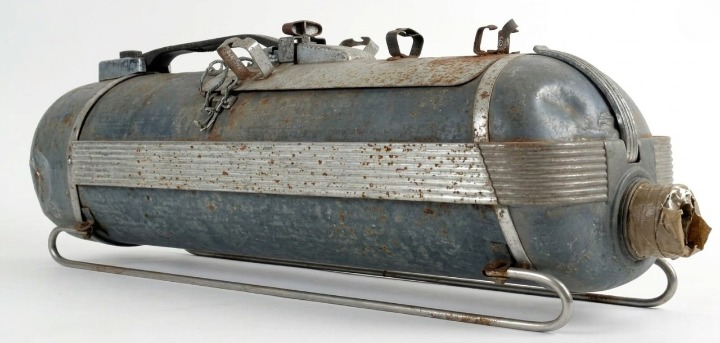
Sometimes the internet introduces objects so strange or unfamiliar that they immediately grab attention and spark curiosity across social media. A single photograph of an odd-looking item can quickly go viral, leaving thousands of people staring at their screens, trying to make sense of what they are seeing. Humans are naturally drawn to puzzles, and when an object appears simultaneously recognizable and completely foreign, it invites speculation and discussion. Viewers examine every detail—the materials, shapes, and mechanisms—trying to figure out how it works. Comment sections quickly fill with guesses, transforming what started as a simple image into a worldwide guessing game that unites people across cultures and time zones.
This phenomenon occurred with one particular mysterious object that circulated online and baffled viewers for quite some time. At first glance, it looked like a large, heavy machine with an unusual structure and several mechanical parts attached. Its design appeared industrial and old-fashioned, with metal chambers, curved pipes, and handles suggesting it was meant to be operated manually. Unlike modern household appliances—which are typically lightweight, compact, and made from smooth plastics—this device seemed almost alien, reflecting a time when machines were constructed primarily from metal with visible, functional components. The stark contrast between old and modern design made it difficult for people to immediately recognize the object’s purpose.
As the photo spread across online communities, more people joined the effort to identify it. Some suggested it was an antique agricultural tool, perhaps for processing crops or assisting with farm work. Others speculated it was early industrial machinery from a factory or workshop, given its complex mechanical structure. A few even proposed it might be a nineteenth-century scientific or medical instrument, since lab equipment from that era often shared a similarly intricate design. These varied guesses highlighted how much technology has changed over the past century. Objects that were once ordinary can appear completely unfamiliar to modern eyes because materials, engineering methods, and design philosophies have evolved so drastically.
Eventually, experts in antiques and historical machinery were able to solve the mystery. The unusual device turned out to be an early vacuum cleaner from the nineteenth century. For modern viewers, this revelation was surprising, as it bore little resemblance to today’s vacuums. Contemporary models are lightweight, electrically powered, and easy to maneuver, whereas early vacuum cleaners were bulky, manually operated, and made almost entirely of metal. Despite their cumbersome size and mechanical complexity, these machines represented a significant innovation at the time and laid the groundwork for the household appliances we now take for granted.
During the nineteenth century, attitudes toward cleanliness and hygiene were shifting rapidly, especially in growing cities. Overcrowded living conditions and rising awareness of health risks made keeping homes clean increasingly important. Before vacuums, people relied on brooms, brushes, cloths, and sometimes even took carpets outside to beat out dust—a labor-intensive and often inefficient process. Inventors recognized the potential of machines that could generate suction to remove dust more effectively and reduce airborne debris.
One of the earliest examples was the “Whirlwind,” patented in 1869 by American inventor Ives W. McGaffey. This hand-cranked device powered bellows that created suction, drawing dust into a collection chamber. Though it required significant effort to operate and produced weak suction by today’s standards, it proved that mechanical suction could clean floors and carpets. Over time, inventors refined these ideas, seeking greater power and convenience. The major breakthrough came in 1901 when British engineer Hubert Cecil Booth developed one of the first successful electric vacuum systems. By replacing manual cranking with an electric motor, Booth greatly increased efficiency and usability. While initially large and used mainly by professional cleaning services, his invention showcased the potential of electric cleaning technology.
In the decades that followed, engineers continued to improve vacuum design, making machines smaller, lighter, and more practical for everyday homes. The bulky metal device that once puzzled internet users is now recognized as an important milestone in technological history—a reminder of how far ordinary tools have come and how innovations from the past continue to shape modern conveniences.