Fears Spread as Claims About Countries Running Out of Oil During a Supposed U.S.–Iran War Circulate Online, but Key Details Are Misleading, Unverified, or Exaggerated, Highlighting How Energy Supply Risks Are Real While Viral Narratives Often Distort What Is Actually Happening in Global Markets and Geopolitics Today

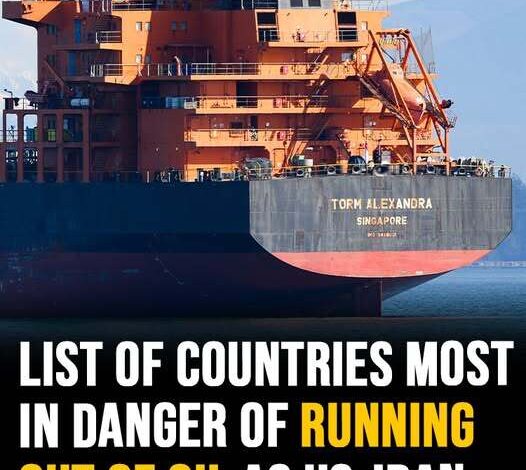
The narrative claiming that multiple countries are on the brink of running out of oil due to a sudden U.S.–Iran war has gained traction largely because it blends real geopolitical tension with dramatic, worst-case assumptions. At a glance, it feels urgent and believable—mentions of blocked shipping lanes, dwindling reserves, and countdown-style “days left” figures create a powerful sense of crisis. But when you separate verified facts from speculation, the picture becomes far more measured.
A key point is this: there is no confirmed, large-scale war between the United States and Iran unfolding in the way these claims suggest. Likewise, there is no verified evidence that the Strait of Hormuz—one of the most critical oil transit routes in the world—has been fully closed. If such an event were actually happening, it would dominate global headlines across every major news outlet and trigger immediate, coordinated responses from governments and international organizations. That level of disruption cannot remain vague or partially reported—it would be unmistakable.
That said, the Strait of Hormuz is incredibly important. Roughly one-fifth of the world’s oil supply passes through it, which is why even the risk of disruption can affect prices and markets. But risk is not the same as reality. Markets often react to uncertainty before any physical disruption occurs, which can make situations feel more severe than they actually are on the ground.
The idea that certain countries could “run out of oil in weeks” also needs context. Nations like Vietnam, the Philippines, or Singapore do rely heavily on imports, but global energy systems are not that fragile. Countries maintain strategic reserves, diversify suppliers, and adjust consumption when needed. Oil supply chains are dynamic—they reroute, adapt, and rebalance under pressure. A sudden, total cutoff leading to immediate depletion would require prolonged and extreme conditions, not just short-term tension.
The commonly cited “days of supply” figures are another source of confusion. These numbers assume a hypothetical scenario where imports stop entirely and consumption remains unchanged. In reality, neither of those conditions holds true during a disruption. Governments actively respond—securing alternative shipments, releasing reserves, and implementing policies to stabilize supply. So those figures are indicators of vulnerability, not countdown timers to collapse.
References to major financial institutions or analysts can make these claims seem more credible, but it’s important to understand how those reports work. Analysts often model hypothetical scenarios—“what if the strait closes,” “what if exports drop by X%”—to understand potential impacts. These are not predictions; they are stress tests. When those scenarios are presented as if they’re already happening, the result is misinformation that feels authoritative but isn’t grounded in current reality.
Large economies such as China, Japan, South Korea, and India are also frequently mentioned in these narratives. While they are indeed major energy consumers, they are far from unprepared. Many have built extensive strategic reserves, diversified supply routes, and long-term contracts to reduce dependency on any single region. For example, China has invested heavily in alternative pipelines and suppliers, while Japan and South Korea maintain robust emergency reserves. These countries would feel the impact of a disruption—but not in the immediate, catastrophic way viral claims suggest.
The United States itself is often included in these discussions, but its situation is different. As one of the world’s largest oil producers, it relies significantly on domestic production. While global price spikes would still affect the economy, the risk of physically “running out” of oil is much lower compared to heavily import-dependent nations.
What makes these stories so compelling is that they start with something real—geopolitical tension, energy vulnerability—and then extend it into an extreme conclusion. That leap is where accuracy breaks down. In reality, global energy systems are designed with layers of redundancy precisely to prevent sudden collapse. Disruptions lead to adjustment, not immediate failure.
The broader lesson here is about how information spreads. In complex systems like global energy markets, partial truths can easily turn into misleading narratives when stripped of context. The situation in regions like the Strait of Hormuz is always worth paying attention to—but it should be understood through verified reporting and careful analysis, not amplified speculation.
In short: the risks are real, but the “imminent global oil collapse” narrative is not supported by current evidence.