When My Father Split the Inheritance, My Brother Got Everything While I Got Only Grandpa’s Cabin – and a Secret He Took to the Grave

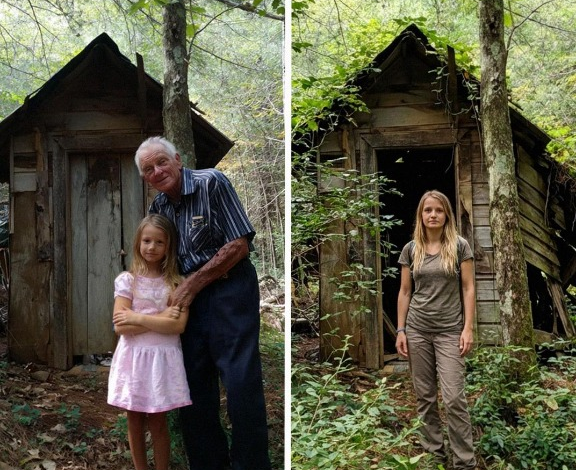
When my father divided what he had, it felt simple on the surface. My brother got the family home—the place everyone could see, measure, and value. I got my grandfather’s cabin, the one people barely remembered unless they needed a punchline. At the time, it didn’t feel like a gift. It felt like an afterthought.
The decision came at the kitchen table, quiet but heavy. My father spoke like a man trying to prevent a future argument, not realizing he was starting one.
“The house goes to Chris,” he said. “He’s got a family. He needs it.”
Chris didn’t hesitate. Of course he didn’t.
Then Dad looked at me. “And you’ll get your grandfather’s cabin.”
I blinked. “The old hunting place?”
He nodded, a little too quickly. “You don’t need much right now.”
Chris laughed under his breath. “You got the shack. Congrats.”
I didn’t argue. I didn’t even know how to. Some moments don’t give you time to process—they just stamp themselves into your life and move on. By the time I found words, it was already “settled.”
Outside, in the driveway, Chris made sure I understood exactly what that meant.
“You got memories,” he said, leaning against his truck. “I got something real.”
At the time, part of me believed him.
Because from the outside, that cabin didn’t look like much. It leaned slightly to one side, buried behind overgrown brush, the wood gray with age and neglect. When I finally drove out there alone, years of distance sitting heavy in my chest, I expected disappointment.
Instead, I found something waiting.
The door barely opened, the hinges screaming like they hadn’t been touched in years. Inside, dust hung in the air, thick and unmoving. The narrow bed was still there—or what was left of it. The same space where my grandfather used to sit beside me, reading stories by lantern light, his voice steady, patient, never rushing.
That place had never made me feel small.
It had made me feel seen.
And then I noticed the floor.
It had caved in.
At first, it scared me—a dark gap where the boards had rotted through. But when I looked closer, I realized it wasn’t just damage.
There were steps.
Stone steps, leading down.
I grabbed a flashlight and descended slowly, the air changing as I moved—cooler, drier, untouched. At the bottom was a small cellar, carefully arranged. Not abandoned. Not forgotten.
Hidden.
Shelves lined the walls, stacked with metal boxes. A trunk sat near the steps, worn but intact. Everything had been placed there with intention.
My hands shook as I opened it.
Inside were documents—maps, land deeds, records. At first, they meant nothing. Just numbers and lines and names.
Then I saw the envelope.
My name was written on it in my grandfather’s handwriting.
I sat down before opening it, like my body already knew this moment mattered.
“My girl,” it began.
And just like that, I was back in that cabin as a child, listening to his voice.
He told me he hadn’t hidden anything out of distrust—but because he trusted me most. He wrote that my brother had always wanted what was obvious, what could be taken quickly. But I had stayed. I had listened. I had cared for the place when there was nothing to gain.
Then came the truth.
The land—everything around that cabin—was worth more than the house.
Far more.
But that wasn’t why he gave it to me.
He gave it to me because I wouldn’t treat it like something to use up.
I wouldn’t strip it down to numbers.
I would understand it.
By the time I finished reading, something inside me had shifted. Not loudly. Not dramatically. Just… firmly.
Like a piece of myself had finally locked into place.
A week later, a lawyer confirmed it. The land was valuable—more than anyone in my family had realized.
My father was stunned.
Chris was furious.
He showed up unannounced, anger already in his voice.
“You knew,” he accused. “You let everyone think you got nothing.”
“I didn’t know,” I said. “Not until now.”
He didn’t believe me. Or maybe he didn’t want to.
I handed him the letter.
He barely read it.
“So what?” he snapped. “That makes it fair?”
“No,” I said calmly. “It explains it.”
That’s when the real choice came.
I could have split it. Tried to smooth things over. Made peace at my own expense.
But I didn’t.
“I’m keeping it,” I said. “I’m restoring the cabin. And I’m protecting the land.”
He laughed like I’d said something ridiculous. “You’re throwing away millions.”
My father, quiet until then, finally spoke.
“Your grandfather hated waste.”
“And greed,” I added.
Chris left the same way he always did—angry, certain he’d been wronged, unwilling to understand anything that didn’t benefit him.
And for once, I let him go without trying to fix it.
Months later, the cabin stood straight again.
The land breathed the way my grandfather said it would.
I worked with my hands, learned the soil, turned down offers that would’ve changed my life overnight.
People asked me why.
The answer was simple.
“Because I was trusted with it.”
I framed his letter and hung it above the bed.
Not as proof.
Not as justification.
But as a reminder.
Because in the end, the inheritance wasn’t the land.
It wasn’t the money.
It was the certainty of being known—completely, quietly, and without condition.
And finally understanding that being chosen wasn’t about what I could take.
It was about who I had always been.