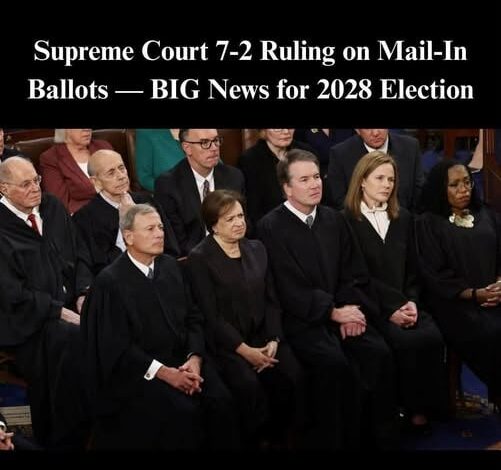
The battle over mail-in ballots has now reached the top of the judicial system, placing the issue squarely before Supreme Court of the United States. In Watson v. Republican National Committee, the justices are being asked to decide a question with sweeping consequences: does federal law effectively prohibit states from counting mail-in ballots that arrive after Election Day, even if they were sent on time?
At first glance, the issue may seem technical—but its implications are anything but. Many states currently allow a grace period for mailed ballots, recognizing the realities of postal delays and the reliance millions of voters place on absentee voting. A ruling that invalidates those practices could force states to rapidly rewrite their election rules, potentially disenfranchising voters who followed existing guidelines in good faith. For elderly voters, military personnel, and those living in rural areas, the outcome could reshape how—or whether—their votes are counted.
The Court has already indicated a willingness to step more directly into election disputes. In Bost v. Illinois State Board of Elections, a 7–2 majority held that federal candidates have the legal standing to challenge how elections are administered. That decision alone lowers the barrier for lawsuits, effectively inviting more frequent legal challenges whenever outcomes are tight or contested.
Taken together, these developments suggest a significant shift. Election procedures—once largely managed at the state level with limited federal intervention—are becoming central legal battlegrounds. Questions that were once administrative, like ballot deadlines or counting procedures, are now being framed as constitutional issues with national consequences.
This evolving landscape raises broader concerns about consistency and trust. If rules vary widely between states—or change abruptly due to court rulings—voters may struggle to keep up with what’s required of them. At the same time, increased litigation risks turning every close election into a prolonged legal fight, with outcomes potentially decided in courtrooms rather than at the ballot box.
What emerges is a picture of an electoral system under pressure, where the mechanics of voting are no longer just background details but focal points of political and legal conflict. As Supreme Court of the United States weighs in, its decisions will likely define not only how votes are counted, but how Americans understand the rules of participation in their democracy for years to come.