WWE’s Jesse Ventura claims key detail proves Donald Trump’s assassination attempt was fake

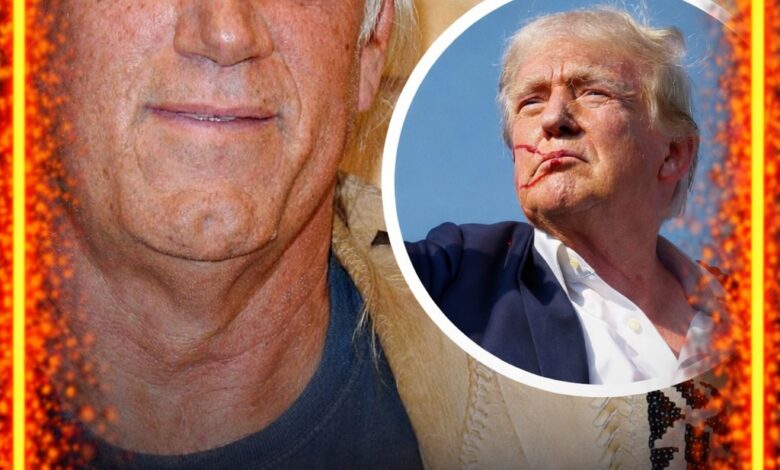
Jesse Ventura’s remarks hit with explosive force in an already polarized climate. By likening Donald Trump’s visibly injured ear to a wrestling “blade job,” he pulled a deeply provocative analogy from his past in entertainment—one that blurred the boundary between staged spectacle and real-world violence. The implication wasn’t subtle: it suggested that what many experienced as a shocking, near-fatal ઘટના could instead be interpreted as performance, crafted for impact.
During the exchange, Piers Morgan pushed back, pointing to the confirmed death of a rally attendee—a volunteer fire chief—as evidence of the event’s gravity. That detail underscored the human cost and challenged the idea that the moment could be dismissed or reframed so casually. Yet Ventura remained largely unmoved, doubling down on skepticism and even dismissing the language of heroism surrounding the victim. In doing so, his comments shifted from questioning the event itself to directly attacking character—portraying Trump not as a figure of resilience, but as someone who provokes conflict without bearing its consequences.
Once outside the studio, those remarks didn’t stay contained. They fed directly into an already volatile online environment, where speculation spreads faster than verification. Social media quickly filled with altered images, unsupported claims, and sharply divided reactions. In that ecosystem, even the most serious घटनાઓ can become raw material for competing narratives, each shaped by prior beliefs rather than shared facts.
Fact-checkers and mainstream outlets moved to clarify what was known and push back against misinformation. But as is often the case, correction lags behind virality. By the time accurate information circulates widely, initial impressions have already taken hold, reinforcing divisions rather than resolving them.
What this moment reveals is less about one controversial comment and more about the fragile boundary between reality and perception in the digital age. When trust in institutions and media is already strained, even clear-cut events can be reframed, questioned, or weaponized. The result is a landscape where truth competes not just with error, but with interpretation itself.
In that environment, the stakes are high. When real violence and human loss can be recast as spectacle, it becomes harder to maintain a shared understanding of what actually happened. And without that shared ground, public discourse shifts further from debate into fragmentation—where every event risks becoming just another version of the story someone is willing to believe.