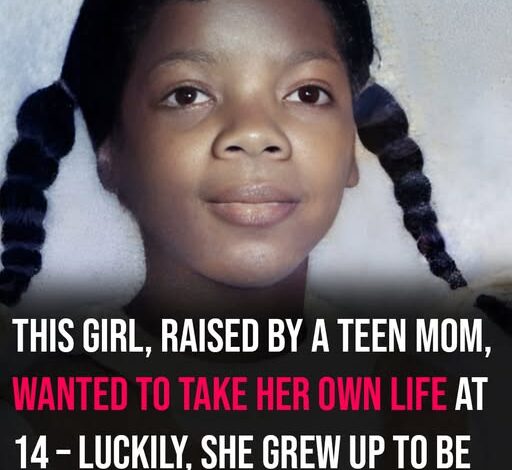
Oprah Winfrey’s story begins in the red soil of Mississippi, shaped by a childhood marked by instability, silence, and trauma she would only later speak about openly. As a teenager, she endured a loss that could have defined her life—a premature son, whom she would later name Canaan, a name symbolizing hope and the possibility of renewal. At the time, however, it carried overwhelming weight: grief tangled with shame, in a world that offered little space for either.
What followed could have been a quiet unraveling. Instead, a shift came when she moved to Nashville to live with her father, whose structure and discipline created something she hadn’t yet known—stability. It was there that her voice began to take shape, first on local radio, where words became more than sound; they became a way forward. Speaking wasn’t just performance—it was survival, expression, and eventually, connection.
Her early television career wasn’t seamless. In Baltimore, she was reassigned from hard news to daytime talk—a move that might have been seen as a step down. Instead, it became the turning point. Sitting across from everyday people, she found something deeper than ratings or format: a space where vulnerability mattered. The questions she asked others were often reflections of the ones she had once been unable to face herself. In that exchange, her past stopped being a burden and started becoming a bridge.
When The Oprah Winfrey Show rose to global prominence, it carried that same emotional core into millions of homes. Fame expanded her reach, but it also exposed her to countless stories of pain, resilience, and survival—especially those rooted in childhood. Witnessing those patterns reinforced something she came to understand about herself: the depth of care required to nurture a child, and the cost it might demand from her own sense of purpose.
Her relationship with Stedman Graham reflected a different kind of partnership—one not bound by traditional expectations. Though she once imagined a life that included marriage and children, even preparing space for that possibility, she ultimately made a choice that defied convention. She recognized that motherhood, as she understood it, required a level of presence she could not reconcile with the work she felt called to do.
That decision was not rooted in absence, but in clarity. Rather than narrowing her care to a single household, she expanded it outward. Through her platform, her philanthropy, and her storytelling, she created space for others—especially those whose voices had been dismissed or ignored. In doing so, she redefined what nurturing could look like.
Oprah Winfrey didn’t simply overcome her past; she transformed it. The pain she carried became a source of empathy, the questions she once feared became invitations for others to speak, and the life she built became proof that healing doesn’t always follow traditional paths. Sometimes, it expands—reaching far beyond the boundaries we once thought we needed to fulfill.