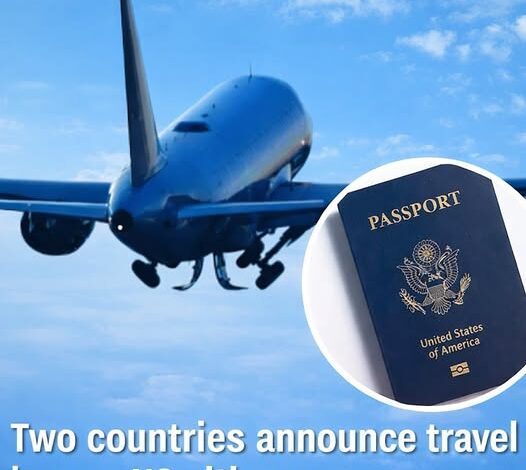
Mali and Burkina Faso’s moves to bar U.S. citizens go beyond symbolic pushback—they point to a deepening rift between Washington and a region long viewed as strategically important. By invoking “reciprocity,” their leaders are framing these decisions not as simple retaliation, but as assertions of sovereignty and parity, signaling that they see the relationship as increasingly uneven. In that context, Niger’s indefinite visa halt and Chad’s earlier suspension begin to look less like isolated policies and more like the outline of a broader regional posture.
Beneath the formal language of policy and diplomacy, the effects are deeply personal. Families find themselves separated across borders with no clear path to reunite. Aid initiatives—often dependent on international coordination—face delays or disruption. Students, researchers, and workers are left in limbo, caught between shifting rules they had no role in shaping. What appears at the state level as strategic positioning translates, on the ground, into uncertainty and interruption.
The divide is sharpened by competing narratives. U.S. officials maintain that expanded travel restrictions are rooted in security concerns and administrative standards. Leaders across the Sahel, however, increasingly describe them as discriminatory measures presented under bureaucratic justification. These opposing interpretations don’t just clash—they reinforce a cycle of mistrust, where each side sees its position as defensive and the other’s as unjustified.
That mistrust may prove more enduring than the policies themselves. Visa rules can be revised, restrictions lifted, agreements renegotiated. But once confidence erodes—once intentions are questioned and motives doubted—it becomes far harder to rebuild the foundation those policies depend on.
What is emerging is not just a diplomatic disagreement, but a shift in tone and alignment. As countries in the region assert greater independence in their foreign relations, the expectation of automatic cooperation with Washington appears to be fading. Whether this moment becomes a temporary охлаждение or a lasting realignment will depend on how both sides navigate not only the policies in question, but the perceptions shaping them.