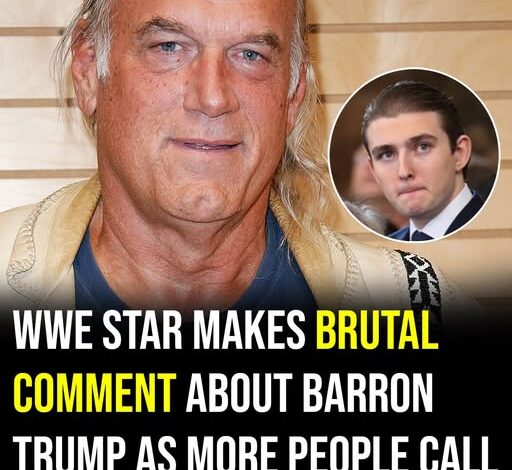
WWE star Jesse Ventura makes savage comment about Barron Trump as people call for him to be drafted

Jesse Ventura’s remarks went well beyond a typical political swipe, cutting into both narrative and legacy. Appearing on Piers Morgan’s show, he raised doubts about the 2024 assassination attempt on Donald Trump, using language drawn from his wrestling background to suggest the ઘટના might not have been what it seemed. By pointing to the lack of a visible scar, he leaned into speculation that blurred the line between skepticism and conspiracy—an approach that quickly drew criticism.
But Ventura didn’t stop there. He pivoted from questioning the event itself to challenging the Trump family on a more personal level, singling out Barron Trump. His call for Barron to enlist in the military—framed as doing “what your father didn’t”—shifted the tone from commentary to confrontation. It wasn’t just about politics anymore; it became a statement about character, duty, and expectations of leadership.
For Ventura, those expectations are rooted in his own past. As a veteran of the Vietnam War era, he often frames military service as a defining measure of commitment and sacrifice. That perspective shaped his sharp criticism of Trump, whom he labeled a “draft-dodging coward,” referencing the former president’s deferments during that time. Ventura extended that critique to the broader family, noting that none have served in uniform.
To reinforce his point, he invoked figures like David Robinson—someone whose height and public profile did not prevent him from serving. In Ventura’s framing, such examples undercut arguments or assumptions that might excuse others from similar paths.
The broader reaction reflects how charged the moment is. For supporters of Trump, Ventura’s comments cross a line into disrespect and unfounded speculation. For others, they echo a long-standing debate about leadership, sacrifice, and the standards applied to those in power.
In the end, Ventura’s remarks are less about a single interview and more about competing ideas of what credibility and service mean in public life. By tying personal history, political identity, and family legacy together, he turned a media appearance into a flashpoint—one that continues to ripple through an already divided conversation.