Aneurysm: Doctors misdiagnosed my ruptured brain aneurysm at 37 — the key wa.rning sign they overlooked

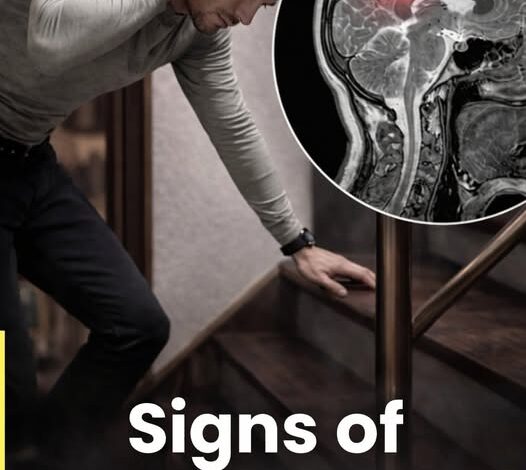
She was 37, busy, and accustomed to pushing through discomfort. So when the sudden, blinding headache exploded behind her eyes, she tried to convince herself it was nothing serious. “Stress,” friends suggested, offering sympathetic nods. “Probably just a migraine,” a clinician had said. She nodded along, trying to rationalize it, clinging to normalcy. But the pain didn’t ease. It sharpened, spreading like wildfire, accompanied by nausea, dizziness, and a sense that something was terribly wrong. Fear, undeniable and urgent, finally cut through her attempts at denial.
By the time she reached the emergency room, the truth hit like a physical blow: a ruptured brain aneurysm. Seconds felt like hours as medical staff rushed to act. Surgeons moved with precision and urgency, navigating the delicate maze of blood vessels to seal the rupture before it could take everything from her in an instant. She survived, but the battle was far from over.
Julie awoke to a body that felt unfamiliar. Tasks that had once been effortless—walking to the kitchen, holding a cup, reading a sentence—now felt monumental. Her mind, once sharp and reliable, struggled to focus. Frustration and fear came in waves. She cried over small setbacks, seethed at her limitations, and sometimes wondered if she would ever feel like herself again.
The road ahead was painstaking. Weeks of physical therapy tested her patience; cognitive exercises stretched her mind to exhaustion. But Julie discovered that progress often arrived in the smallest increments: taking a few steps without assistance, remembering the name of a colleague, tying her shoes on her own. Each victory, no matter how minor, became a beacon of hope.
Returning to work was another milestone. The office, once a familiar environment, now demanded her full concentration. She leaned on her colleagues, asked for help when needed, and slowly regained confidence. Running, which she had once taken for granted, became a symbol of recovery. Her first jog after months of inactivity was short, tentative, and exhausting—but when she crossed the imagined finish line of her 5K months later, it felt like reclaiming a part of her life that had been stolen.
Julie also relearned how to laugh without fear. Simple moments—a shared joke with a friend, the warmth of sunlight on her face, a spontaneous hug from a loved one—became profound reminders of the life she had almost lost. Each small joy was a declaration: she had survived, she would continue, and she would not let fear dictate the rest of her story.
Now, Julie shares her experience with urgency and compassion. She urges others to listen to their bodies, to insist on answers when something feels profoundly wrong, and to trust their instincts—even when it means going against advice, ignoring doubts, or disrupting the routines of daily life. She stresses that survival is not passive; it’s active, demanding courage, persistence, and self-advocacy.
Her journey is more than a tale of near-tragedy; it is a testament to resilience. It is proof that even when life seems to collapse in an instant, the human spirit can rebuild, step by step. It is a story that reminds us that the ordinary—walking, working, laughing, running—can feel extraordinary once reclaimed. And it is a call to everyone to honor their own survival, to fight for their health, and to celebrate the victories that follow even the darkest moments.
Julie survived the aneurysm, but in doing so, she discovered something far greater: the strength, patience, and determination that reside within all of us, waiting to be summoned when life demands it most.