I can still remember the smell, even after twenty years: industrial wood glue, burnt hair, the faint metallic tang of old desks that had soaked up decades of teenage restlessness.
Fluorescent lights buzzed overhead, harsh and unyielding, casting that pale, clinical glow unique to 1970s public schools.
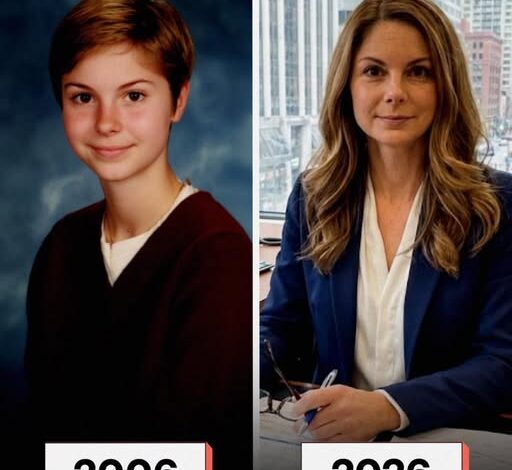
It was sophomore chemistry. I was sixteen—quiet, observant, and practiced in the art of invisibility. I knew how to disappear: sitting in the back row, speaking only when spoken to, dressing in muted tones, my braid pulled straight down my back.
Blending in felt safer than standing out. Attention, from experience, was rarely kind.
But he made me noticed. He sat behind me that semester, clad in a football jacket, broad-shouldered and loud—the kind of boy teachers overlooked, the kind classmates admired.
His laugh echoed across the room. His name was spoken with respect in the hallways. Coaches praised him. Girls watched him. Other boys followed. Popularity clung to him like armor.
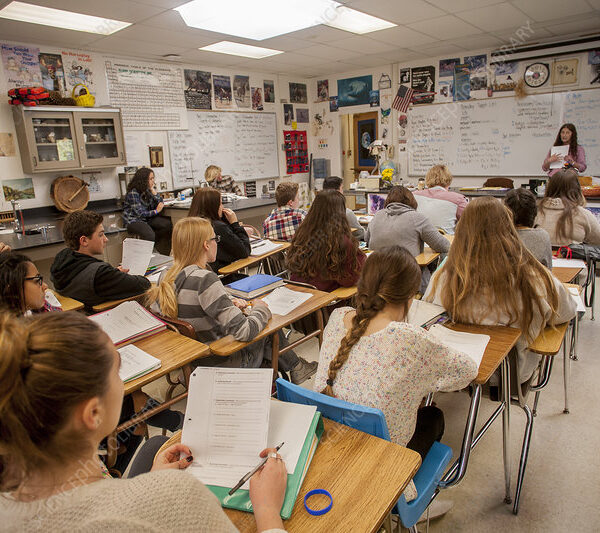
While Mr. Jensen droned on about covalent bonds and molecular structures, I felt it first: a sharp tug at my braid. I flinched, forcing my gaze back to the periodic table projected at the front of the room.
It wasn’t the first time someone had messed with my hair. I told myself it was just another tiny attempt to get a reaction.
I refused to give him one.
Forty minutes later, the bell rang. Chairs scraped against the linoleum as the classroom surged toward the door. I gathered my notebook, slid my pencil into the spiral binding, and rose to stand.
Pain exploded across my scalp.
It was instant and blinding—a tearing, searing ache that rooted me in place. I gasped and reached back instinctively. My braid didn’t budge. I tugged harder. The pain doubled.
Then came the laughter, before comprehension.
His voice rang out, bright with amusement. “No way,” someone said. “That’s savage.” A girl near the front covered her mouth, not in horror, but in barely concealed delight.
He had glued my braid to the metal frame of the desk.
Not a small dab. Not a fluke. While I’d been focused on the board, he had wound the end of my braid around the cold bar beneath the desktop and coated it with industrial-strength glue, probably stolen from shop class.
I stood trapped, humiliated, while thirty students watched.
Mr. Jensen shouted for quiet, but his voice felt distant, meaningless. My scalp throbbed, tears blurring my vision. The humiliation outweighed the pain—the cruel spectacle of being reduced to entertainment.
The nurse had to cut me free.

She worked carefully, murmuring reassurances as scissors sliced through hair I had tended for years. When she finished, I touched the back of my head and felt the damage.
A bald patch the size of a baseball. Jagged strands where my braid had been. By the end of the day, everyone knew. For the rest of high school, they called me “Patch.”
Humiliation like that does not fade. It hardens. It embeds itself in memory, reshaping the way you navigate the world.
I stopped raising my hand in class. I stopped going to football games. I stopped believing that invisibility would protect me.
If I could not be popular, I decided, I would be powerful.
That choice didn’t arrive in a single, dramatic flash. It crept in quietly—in late nights studying while others went to parties, in scholarship applications filled out with painstaking care at the kitchen table, in the refusal to let anger control me. Anger is loud, and I had learned that loudness attracts the wrong attention.
I chose discipline instead.
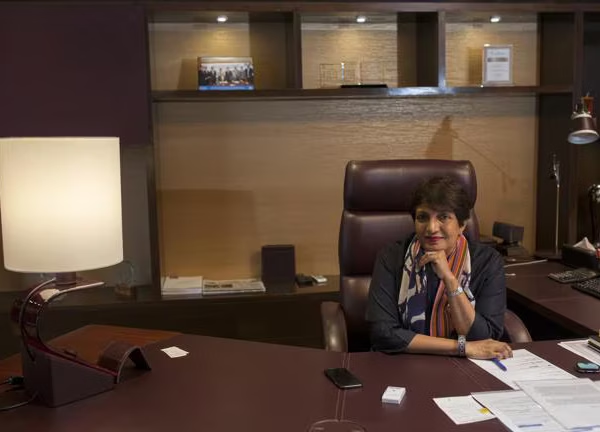
Twenty years later, I held controlling interest in a regional community bank. Nothing was handed to me. I started as an intern in college, stayed through graduate school, and worked my way from analyst to risk officer to executive leadership.
I learned how money moves, how risk is measured, how decisions ripple through families and communities. By the time I became majority shareholder, I no longer entered rooms with my head down.
I reviewed high-risk loans personally. Not because I doubted my team, but because I understood how fragile financial life can be. A single medical emergency. A failed contract. A downturn in the local economy. Behind every application was a story.
Two weeks before everything shifted, my assistant placed a folder on my desk.
“You’ll want to see this one,” she said. Neutral, curious, nothing more.
I opened it.
The name froze my fingers.
Mark H.
Same town. Same birth year.
I do not believe in fate. But I understand irony.

I studied him for a long moment, noting the hollows beneath his eyes, the slight slump in his posture. The arrogance, the bravado, the laughter that had tormented me—gone, replaced by exhaustion and desperation.
“Why are you here?” I asked, voice even, betraying none of the memories I carried.
“My son,” he said, swallowing hard. “He needs surgery. Pediatric cardiac… it’s urgent. I… I don’t have the funds. That’s why I’m here.”
I nodded slowly, letting the words settle between us. The numbers on the file had screamed ‘high risk,’ but the reason behind them softened the edges in a way spreadsheets never could.
“Do you understand why this is unusual?” I asked.
He nodded, his throat tightening. “Yes. I know my history. I—” He paused, struggling for words. “I’ve made mistakes.”
I leaned back, folding my hands. The irony was impossible to ignore. The boy who had glued my braid, reduced me to a spectacle, now sat before me, asking for my help to save a life.
“Tell me everything,” I said. “All the financials, the current obligations, and how this surgery fits into your timeline.”
He hesitated, then began to explain, stumbling over words, admitting failures, and acknowledging missteps. For the first time, he was unguarded. Not arrogant. Not dismissive. Just human.
As he spoke, I felt the old anger flicker briefly, but it was tempered by something stronger: perspective. He wasn’t the boy in the chemistry classroom anymore. He was a man grappling with fear, a father desperate to protect his child.
When he finished, I sat in silence. The weight of history pressed against the present, but it didn’t dictate the outcome. Decisions weren’t about revenge. They were about life.
“Okay,” I said finally. “We can structure this. It’s not ideal, but we’ll make it work.”
Relief flooded his face, unsteady and raw. He blinked rapidly, as if afraid it might vanish.
“Thank you,” he whispered.
I gave him a small, measured nod. “Just… make sure this counts for something good.”
For the first time in decades, the past and present coexisted in a way that felt neither punitive nor vindictive—just human, complicated, and real.
He walked onto the stage slowly, shoulders slightly hunched, eyes scanning the crowd like he was seeing them for the first time. Murmurs rippled through the auditorium as recognition spread.
He cleared his throat. “My name is Mark H.,” he began, voice tentative. “I went to this school years ago. I was… I was not a good person.”
Some students shifted in their seats. Others glanced at their phones, uncertain whether to watch or scroll past.
“I want to tell you about someone I hurt. Her name is Claire Thompson. You might know her as ‘Patch.’ That’s what I called her in high school because of something I did — something cruel.”
He paused, swallowed hard, and the silence pressed around him like a weight. “I glued her hair to a desk. I laughed. Other kids laughed. I humiliated her. I took something from her that wasn’t mine to take: her dignity, her safety in a place that’s supposed to be safe.”
A few gasps. One teacher’s hand pressed over her mouth. He lifted his gaze, finally meeting mine in the back row. I nodded once, almost imperceptibly.
“I was a kid,” he continued, voice stronger now, “but that doesn’t excuse it. And now I know better. I see what cruelty can do. I see the long shadow it casts. I don’t get to erase the past, but I get to own it, and I want to make sure no one else has to endure what she did.”
He swallowed again. “That’s why I’m here. To tell the truth. To acknowledge the pain I caused. And to ask all of you to think about your actions, your words, the weight they carry. You might think something is funny, or small, or harmless… but for someone else, it could be everything.”
Silence followed. Not the restless, impatient silence of a high school crowd, but the kind of silence that signals understanding.
Then, slowly, a few students clapped. One teacher joined. Then another. The applause grew — hesitant at first, then genuine.
He exhaled, shoulders relaxing. He stepped down from the stage and, for the first time in years, I saw a man humbled by truth, shaped by responsibility.
Outside, later, he thanked me quietly. “I don’t know how to repay you for this,” he said.
“You just did,” I replied. “By owning it.”
The money, the surgery, the truth — all of it connected in ways neither of us could have predicted. Some lessons, it seemed, required time, courage, and the willingness to face what we once feared most: ourselves.

Mark stepped onto the stage like he was walking into a spotlight that burned with memory.
He gripped the podium, took a steadying breath, and began.
“I played football here,” he said. “I thought being popular made me important.”
He could have taken the easy route — a vague lecture on kindness, empty platitudes, lessons learned. But then he saw me.
“I glued her braid to her desk,” he said, voice steady.
Gasps rippled through the auditorium.
“I led the nickname. I egged on the laughter. That wasn’t a joke. It was cruelty,” he continued.
The room went quiet.
“We were old enough to know better, and I chose not to.”
Then he met my gaze.
“Claire Thompson, I am genuinely sorry. You deserved respect. I was wrong.”
No flourish, no excuses — just acknowledgment.
“I have a daughter now,” he added. “When I picture someone treating her the way I treated Claire, it makes me sick. That’s when I understood the weight of what I did.”
The applause began softly, then swelled.
Afterward, students lined up to speak with him. I watched as a teenage boy approached, eyes cast down. Mark knelt to meet him at eye level. Humility, something I hadn’t seen twenty years ago, was clear.
When the auditorium emptied, he approached me.
“I almost didn’t do it,” he admitted. “I’ve been protecting the wrong image for two decades.”
“You fulfilled the condition,” I said. “The hospital will have the funds within the hour.”
Relief washed over his face.
“But come back to the bank with me,” I added.
He blinked in surprise.
“Some of your debt isn’t recklessness,” I explained later in my office. “It’s medical bills and failed contracts in a volatile economy. We can restructure, consolidate high-interest debts, create a sustainable plan. I’ll oversee it personally.”
“You’d do that?” he asked.
“For Lily,” I said. “And because accountability should lead to growth.”
Tears slipped down his cheeks as he tried to compose himself.
“I don’t deserve this,” he whispered.
“Maybe not then,” I said, “but now you do.”
We embraced — not to erase the past, but to acknowledge it.
Driving home later, I realized something had shifted inside me. For years, I thought power was control — the ability to deny, to protect myself from vulnerability.
Real power is more subtle.
It’s the choice of who you become when given the chance.
I didn’t require a public apology for revenge. I required it because silence protects the wrong people, because the students in that auditorium needed to see accountability, because harm doesn’t disappear simply with time.
For the first time in twenty years, the memory of that chemistry classroom didn’t sting.
It felt resolved.
And I ask, not from bitterness but reflection:
Was I right to demand public accountability? Or did I blur the line between justice and retribution?
Perhaps it depends on how we define growth.
What I know is this: cruelty thrives in silence. Change begins with truth. And sometimes, the most powerful choice isn’t punishment — it’s transforming pain into prevention.