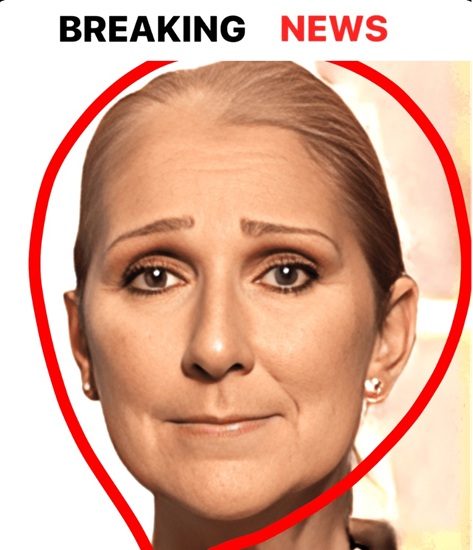
Celine Dion’s story has entered a new and deeply personal chapter—one defined not by sold-out arenas or chart-topping hits, but by resilience, adaptation, and an ongoing battle with a rare medical condition.
For decades, Dion has been synonymous with vocal brilliance and emotional connection. Rising from modest beginnings in Quebec, she built a global career that placed her among the most celebrated artists of her generation. Her powerful voice, disciplined artistry, and ability to connect with audiences made her a defining presence in music worldwide.
But in late 2022, everything shifted.
Dion revealed that she had been diagnosed with Stiff-Person Syndrome (SPS), a rare neurological disorder that affects the central nervous system. The announcement marked a turning point—not only in her career but in how fans and the public understood her journey moving forward.
SPS is an uncommon and complex condition. It is characterized by severe muscle stiffness, involuntary spasms, and an extreme sensitivity to stimuli such as noise, touch, or emotional stress. For most individuals, it presents serious daily challenges. For a professional singer, however, the impact is even more profound.
Singing at Dion’s level requires extraordinary control—of breathing, muscle coordination, and vocal precision. The diaphragm, vocal cords, and surrounding muscles must work together seamlessly. SPS disrupts this delicate balance, making even basic vocal exercises unpredictable and, at times, physically painful.
Following her diagnosis, Dion made the difficult decision to postpone and eventually cancel several major performances, including parts of a highly anticipated world tour. These choices were guided by medical advice, emphasizing that her long-term health had to come before professional commitments.
While many initially hoped for a quick recovery, it has since become clear that SPS is a chronic condition with no known cure. Treatment focuses on managing symptoms and improving quality of life rather than eliminating the condition entirely.
To navigate this, Dion has been working with a team of specialists, including neurologists, physiotherapists, and vocal coaches. Her care plan includes medications to ease muscle stiffness, therapies aimed at addressing autoimmune factors, and structured rehabilitation to maintain mobility and strength.
Even with these efforts, the condition remains unpredictable.
Some days allow for limited activity or light vocal practice. Other days bring intense spasms that restrict movement and make speaking or singing difficult. This inconsistency has been one of the most challenging aspects of her journey, requiring constant adjustment without a clear timeline for improvement.
Beyond the physical impact, the emotional shift has been equally significant.
Dion has spent most of her life performing—drawing energy from live audiences and expressing herself through music. Adapting to a reality where her body cannot always meet those demands has required a redefinition of identity, purpose, and pace.
Yet throughout this period, she has remained closely connected to her fans.
Through public messages and occasional appearances, she has shared her experience with honesty and gratitude. Her openness has not only strengthened her bond with her audience but also brought awareness to a condition that was previously unfamiliar to many.
At the same time, glimpses of her attending events or appearing in public have sparked hope. However, experts caution that neurological conditions like SPS do not follow a predictable path. Progress can be uneven, and setbacks are often part of the process.
Triggers such as stress or loud environments can provoke symptoms, making high-pressure situations—like live performances—especially difficult to manage.
Still, Dion’s dedication to her craft remains evident.
She continues to engage in vocal training and therapy, doing what she can to preserve her abilities. Her commitment reflects a lifelong passion for music, even in the face of uncertainty.
Her strength is not new.
Throughout her life, Dion has faced profound personal challenges, including the loss of her husband and longtime manager, René Angélil. That experience revealed her emotional resilience—something that continues to define her approach today.
Now, as a mother, her focus has expanded to include balancing her health with family life, adding another layer of responsibility and purpose to her daily routine.
Fans around the world have responded with unwavering support, offering encouragement and admiration. This global connection reflects the deep emotional bond she has built over decades.
The conversation surrounding her future has also evolved.
Instead of expecting an immediate return to the stage, many now recognize that her health must come first. There is still hope that she may find ways to engage with music again—whether through recording, smaller performances, or new creative avenues—but any such steps will depend entirely on her condition.
Documentaries and interviews have provided further insight into her experience, revealing a journey defined not just by illness, but by perseverance and courage.
Her story has taken on a broader meaning.
It highlights the importance of awareness and research for rare conditions like SPS, encouraging greater understanding and support. Her willingness to share her reality has contributed to this awareness, helping others who face similar challenges feel less alone.
While the future remains uncertain, one thing is clear:
Celine Dion’s legacy is already firmly established.
Her voice, her performances, and her influence continue to resonate across generations. And now, her story carries an additional message—one of strength, honesty, and resilience in the face of adversity.
In many ways, this chapter represents a different kind of performance.
Not one measured by applause or stage lights, but by courage, endurance, and the ability to keep moving forward despite uncertainty.
And in that sense, her voice has not faded.
It has simply taken on a new, deeply human form—one that continues to inspire millions around the world.