The Inheritance Trap, Why My Fake Marriage to a Waitress Exploded When She Produced a 25-Year-Old Photo of My Familys Greatest Sin

In my family, love was never something that happened naturally—it was arranged, negotiated, and carefully calculated. Growing up surrounded by wealth and legacy, I learned early that relationships were less about connection and more about strategy. My future, it seemed, had already been decided long before I had any say in it.
By the time I turned thirty, my parents stopped hinting and started demanding. The message was clear and cold: marry a woman they approved of within a year, or lose everything tied to the family name. The trust fund, the properties, the lifestyle—it would all disappear.
On paper, I had everything. Status, money, influence.
In reality, I felt trapped.
The women my parents introduced me to were all the same—polished, rehearsed, and more interested in appearances than authenticity. Every conversation felt like a transaction. Every smile felt practiced.
So I decided to break their script.
That’s how Claire came into my life.
She worked at a quiet café, far from the polished world I came from. She was direct, unpretentious, and grounded in a way that felt almost unfamiliar to me. There was no performance with her—just honesty.
Our agreement was simple.
We would marry, but only on paper. I would meet my parents’ condition, and in return, I would help her financially. It wasn’t romantic. It wasn’t meant to last. Just two people solving separate problems with a single arrangement.
At least, that’s what I believed.
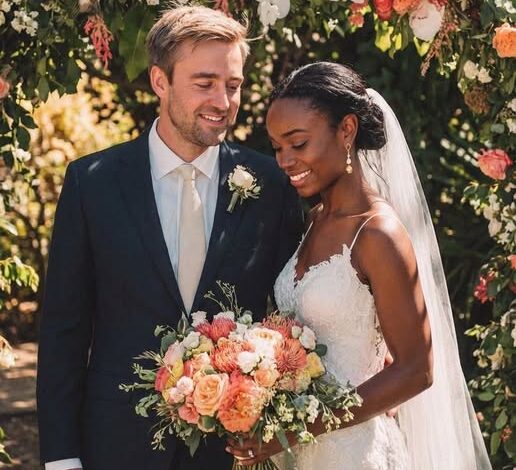
Everything changed the night of our wedding.
After the spectacle of the reception faded and we returned to my penthouse, the atmosphere shifted. Instead of treating it like a transaction, Claire asked me for something unexpected—my patience.
She pulled out an old photograph, worn at the edges, and told me to listen before reacting.
When I looked at it, something inside me froze.
It was a picture from my childhood home. I recognized the setting immediately—the backyard, the pool, the light. But what caught my attention was the woman in the frame.
Martha.
Our housekeeper.
The only person in that house who had ever treated me with genuine kindness.
She was the one who comforted me when I was hurt, who made me feel seen in a home that often felt cold and distant. And standing beside her in the photo was a young girl.
Claire.
“Martha is my mother,” she said quietly.
The words hit harder than anything I’d heard in years.
I remembered the day Martha disappeared. I was told she had stolen something valuable—a family heirloom. There was no discussion, no doubt. She was dismissed immediately, her name erased from our lives.
Later, the truth came out.
The missing item had never been stolen—it had simply been misplaced.
But by then, it didn’t matter.
No apology was given. No attempt was made to fix the damage. My parents moved on, leaving Martha to carry the consequences of something she never did.
And now, decades later, that past had come back to stand in front of me.
Claire explained everything.
She had recognized me the moment I walked into that café. She knew my name, my face, my family. Her mother had spoken about me—not with resentment, but with quiet affection for the lonely child I once was.
When Claire learned about my situation—my parents’ ultimatum—she saw an opportunity. Not just for stability, but for truth.
She didn’t enter our arrangement by accident.
She entered it with purpose.
The next morning, everything changed.
We went to my parents’ estate—not as participants in their plan, but as challengers to it.
Sitting in the same room where they had tried to control my future, I placed the photograph on the table.
For the first time in my life, I saw something crack in them.
There was no shouting. No dramatic confrontation. Just silence—heavy and undeniable.
The truth didn’t need volume.
It spoke for itself.
I told them I didn’t want their conditions, their expectations, or their wealth—not if it came at the cost of ignoring what they had done.
For years, I had feared losing everything they could take from me.
In that moment, I realized what I had almost lost by staying.
My integrity.
My ability to choose.
Myself.
Walking away from that house felt different than I expected. Not like loss—but like release.
And standing beside Claire, I understood something I hadn’t before.
Our marriage may have started as an agreement, but it had uncovered something real. Not just between us, but within me.
She had forced me to confront a truth I had avoided for years.
That respect isn’t inherited.
It’s earned.
That wealth doesn’t define a person.
Their choices do.
As we left the estate behind, the future felt uncertain—but for the first time, it was mine.
And the woman I had married to satisfy a demand had become the reason I finally broke free from it.
Sometimes, the life you’re given isn’t the one you’re meant to live.
Sometimes, it takes the truth—unexpected, uncomfortable, and undeniable—to show you the way out.