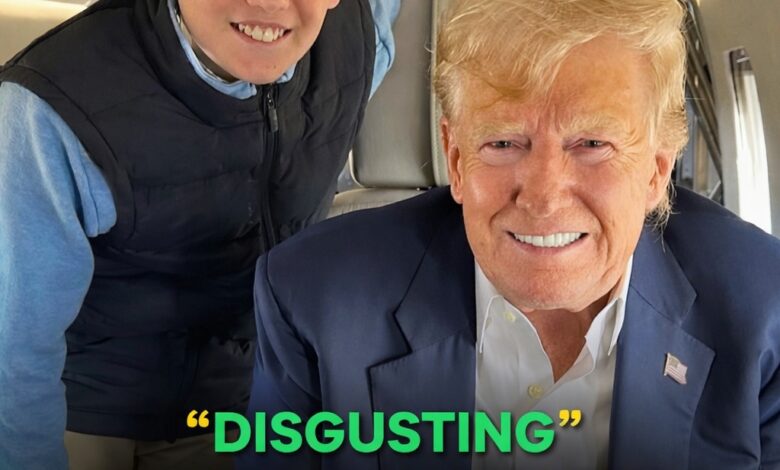
He was being introduced to traditions his father and grandfather believed were meaningful—rituals rooted in discipline, identity, and a sense of heritage that, to them, stretched far beyond modern political divides. In their eyes, it was about passing something down: a way of life, a connection to place, and a belief in self-reliance shaped over generations.
But to many others, the image told a very different story.
What some saw as tradition, others saw as something deeply troubling—a child holding an object associated with violence in a country where such images are inseparable from real, ongoing tragedy. In a place where children grow up practicing lockdown drills and headlines too often recount lives cut short, the symbolism felt impossible to ignore. The photo quickly became more than a personal moment; it turned into a reflection of a national divide, a kind of mirror that revealed not just opinions about one family, but the deeper fractures within the country itself.
At the center of it all is Spencer.
He didn’t choose to become a symbol, yet he finds himself caught between opposing interpretations—projected onto by people who have never met him. To some, he represents everything they fear; to others, everything they want to defend. But neither version fully captures who he actually is.
He is still just a child.
A child growing up in an environment where even private moments can become public debates. Where family traditions are scrutinized, and where something as simple as a birthday photo can carry meanings far beyond its original intent. In that space, even affection can feel performative, shaped by the awareness that eyes are always watching and judgments are always forming.
What remains long after the public conversation fades isn’t the argument itself, but the lesson it leaves behind. About how visibility can turn personal life into public spectacle. About how symbols can overshadow individuals. And about how inheritance—whether cultural, political, or emotional—can carry a weight that a child never asked to bear.
In the end, the image says less about Spencer as a person and more about the world he is growing up in—a world where identity is debated, meanings are contested, and even the most ordinary moments can become something much larger than they were ever meant to be.