Every Evening My Neighbor’s Boy Tapped Out SOS in Morse Code — Then One Night the Message Terrified Me

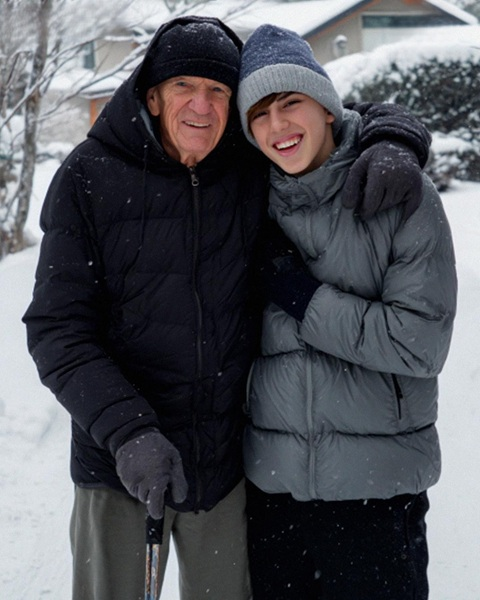
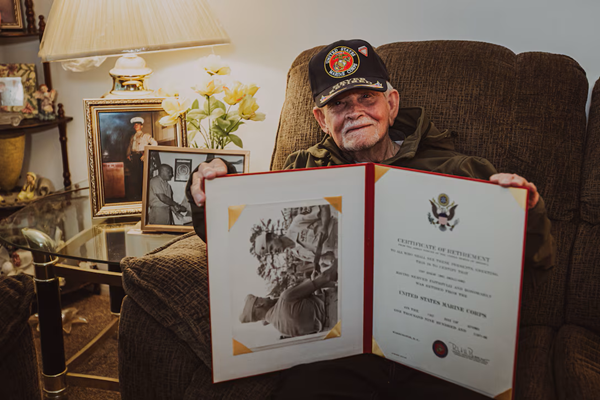
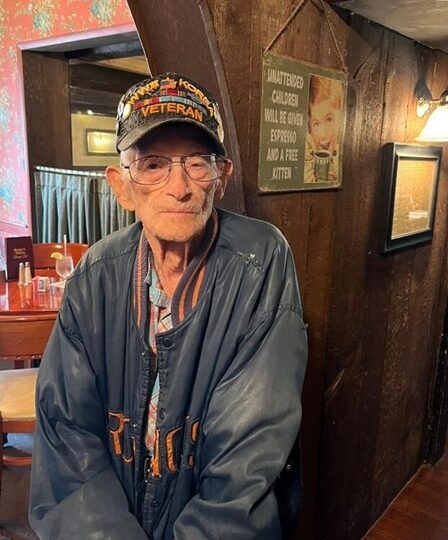
My name is Harold. I’m a former Marine. These days, the battles are quieter: stiff knees, changing weather, the slow creak of an old house settling at night.
The uniforms are gone, folded into a cedar chest in the hallway closet. The medals are tucked away too—not from shame, but because I’ve never liked polishing the past.
At seventy-three, life had settled into something predictable. Mornings meant coffee on the porch. Afternoons meant light yard work if my joints allowed it. Evenings were the six o’clock news and a book I’d read twice before. Predictable isn’t empty. But it is quiet. That changed the morning the family across the street moved in.
It was early June, the kind of day that makes even tired houses seem hopeful. A moving truck lumbered into the driveway, followed by a blue SUV stuffed with boxes and blankets.
I watched from behind the living room curtains at first—old habits die hard—but by noon I was on the porch, leaning on my cane, observing openly.
The father caught my attention first: mid-forties, solid build, efficient movements. Not loud, not harsh, just precise. The mother—Sarah, as I’d later learn—radiated warmth, carrying smaller boxes and smiling at neighbors.
Then the kids. A teenage boy, Leo, climbed out and immediately hunched his shoulders, folding himself smaller. A little girl, Mia, spun in the driveway until her mother called her back.
By late afternoon, they were on my porch with a cherry pie.
“I’m David,” the father said, extending a firm, practiced hand. “This is my wife, Sarah. Our kids are Leo and Mia.”
Mia waved. Leo nodded quickly, eyes down.
“Harold,” I said. “Welcome to the neighborhood.”
We talked about trash pickup, the local hardware store, and work. David managed commercial construction. Sarah had taken a break from teaching while relocating. Leo stayed mostly silent—but I noticed his posture.
I’d seen that stance before. Not defiance. Not laziness. It was the weight of expectations carried too heavily.
Over the next week, I learned their routines. David left early in crisp shirts and steel-toed boots. Sarah tended the garden.
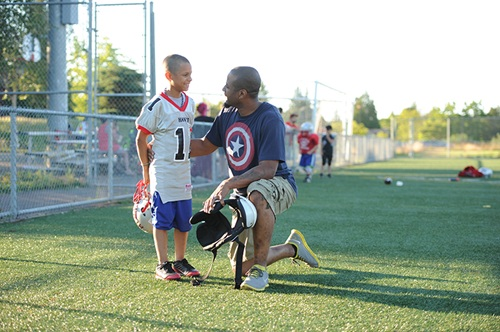
Mia rode her scooter in circles. Leo mostly stayed inside, except for late afternoons when David would call him out to throw a football.
At first, it looked like a normal father-son ritual. But David’s tone carried an edge.
“Keep your elbow up. Focus.”
When a pass went wide, he corrected. When Leo hesitated, David timed him against the brick wall.
One afternoon, I called out casually: “Keep your elbow up.” Both turned. Leo flinched; David forced a polite smile. Leo adjusted, threw again, and I gave him a thumbs-up. His shoulders lifted for a moment—he looked like a boy, not a project.
Then the unusual began.
One night, insomnia keeping me company, I noticed a flicker across the street: a flashlight in Leo’s window. Three short, three long, three short. S.O.S.

My pulse jumped. Patterns like that stick deep. That rhythm was ingrained before I was twenty.
Nothing visible—no shouting, no smoke—just the steady rhythm of distress. After a minute, it stopped.
The next morning, life looked normal. Sarah watered flowers, David left for work, Leo rode to the mailboxes. I told myself it was a joke. Teenagers do Morse code online now, maybe it was curiosity.
But it repeated. Night after night. On the fourth night, I responded instinctively: flicked my living room lamp once. The light stopped immediately. Darkness felt heavier than silence.
Two days later, I found Leo at the mailboxes.
“Son,” I said quietly, “that signal is serious. Not a joke.”
“I never joke,” he replied, voice steady. “Watch carefully.”
The signals stopped for a few nights. I almost convinced myself I’d imagined it.
Then Monday came. The flashlight blinked again, spelling out:
W-E
N-E-E-D
Y-O-U-R
H-E-L-P
C-O-M-E
I-N-T-O
T-H-E
H-O-U-S-E
Clarity settled over me. Not panic. Just certainty. I grabbed my cane and crossed the street. The front door was open—a first in my observations. Inside, a side table had toppled. A frame lay broken. David was red-faced; Leo clenched his fists.
“I am not letting you throw this away!” David shouted.
“I’m not throwing it away! I’m choosing something different!” Leo shot back.
They both saw me.
“Harold?” David’s voice sharpened. “What are you doing in my house?”
“Your door was open,” I said evenly. “Sounded like trouble.”
David snapped, “It’s a family disagreement. We’ll handle it.”
“Leo asked for help,” I said.
David turned slowly toward his son. “You’ve been signaling the neighbor?”
Leo met his gaze. “Every time I try to talk, you talk over me. I needed someone to see I’m here.”
David shook his head. “I’m trying to give you a future. I’ve lined up college, called favors. You have the grades to be anything.”
“I want to be an EMT,” Leo said.
David stared. “You want to drive an ambulance?”
“For people who need help.”
“That doesn’t pay bills,” David said, voice cracking. “I swore you wouldn’t carry that weight.”
“I’m not scared of the weight. I’m scared of hating my life,” Leo replied.
I stepped forward. “In the service, the men remembered most weren’t always the ones with medals. They were medics. The ones who knelt beside strangers and made them feel less alone. That takes steel.”
David’s anger softened to confusion, then reflection.
“I’m not trying to crush you,” he said quietly. “I’m trying to protect you.”
“I’d rather struggle for something that matters,” Leo said.
The tension eased. I left them to talk, to listen, to breathe.
A week later, Leo came to my door. “Dad said I could ask you about first aid,” he said. Hands visible, posture straighter.
We sat at my kitchen table. I pulled out old manuals. We discussed bandages, calm voices, steady hands. Not glory, just showing up.
Over time, Leo laughed more. Mia tagged along with questions about Marines. David crossed the street one evening, quietly saying, “I’ve been looking at EMT programs. Not what I pictured, but respectable.”
“It’s honest work,” I told him.
Months later, Leo’s flashlight blinked once more:
T-H-A-N-K
Y-O-U
I flicked my lamp once. Message received.
I stood there, watching the quiet street, feeling something I hadn’t in years. Purpose. Not loud, not dramatic. Just steady.