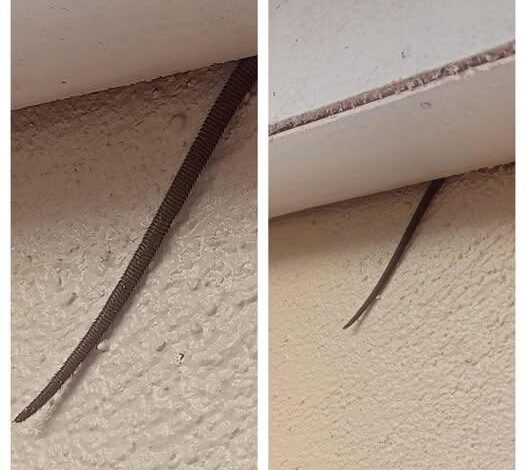
It turned out to be nothing more than a rat’s tail—thin, lifeless, and utterly unremarkable—sliding through a narrow crack in the ceiling from the attic above. No lurking monster. No supernatural explanation. Just a blunt reminder that something small, persistent, and unwanted had been living overhead, quietly out of sight. The viral video cut off as the tail disappeared back into the dark. What followed, though, didn’t make for dramatic footage: a tense phone call to pest control, a detailed inspection, an invoice that made the stomach drop, and the sharp, dusty odor of insulation disturbed after years of neglect.
While the internet raced ahead to its next jump scare, someone was left dealing with the unglamorous aftermath. Droppings had to be cleaned. Gaps had to be sealed. Traps were set, then checked, then reset again. The attic revealed chewed wiring, soiled insulation, and evidence that the problem hadn’t started last night—or even last month. It had been building quietly, hidden by drywall and indifference, growing worse the longer it was ignored.
What stayed with them wasn’t the image of the tail, but what it represented. How easily fear fills the vacuum left by inattention. How fast we turn minor, solvable problems into myths because confronting reality feels tedious and uncomfortable. The ceiling hadn’t concealed anything evil or otherworldly; it had concealed procrastination, small compromises, and the cost of putting things off.
There’s something unsettling about that truth. Not because rats are terrifying, but because neglect is familiar. It creeps in slowly, without drama. It lives in loose seals, postponed repairs, and the quiet hope that an issue will resolve itself if left alone. And then, one day, it reveals itself in the smallest possible way—just enough to demand attention.
The tail didn’t bring horror with it. It brought clarity. A reminder that most of what disturbs our peace isn’t mythical or mysterious, but practical and preventable. Maintenance isn’t exciting. Action isn’t viral. But ignoring problems doesn’t make them disappear—it just gives them time to settle in above our heads, waiting for the moment they finally slip into view and force us to deal with them.