The Earth Ripped Open at 3,42 AM, Why This 7,7-Magnitude Disaster Is the Wake-Up Call the World Wasn’t Ready For

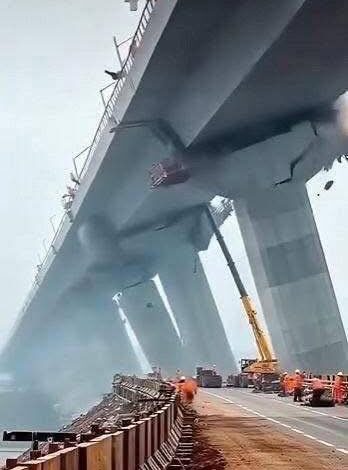
In the quiet, early hours of Monday, April 6, 2026, the ground beneath millions in Southeast Asia did more than tremble—it violently split apart, unleashing a catastrophe that has permanently changed the region. At exactly 3:42 a.m. local time, while most people were still asleep, a powerful 7.7-magnitude earthquake ripped through the mountainous border areas of southern China, northern Thailand, and Myanmar. The force of the quake, classified as “major” on the Richter scale, left devastation so extensive that rescue teams are still struggling to measure its full impact. This was not a minor shake—it was a seismic rupture that transformed entire communities into rubble within seconds.
Data from the U.S. Geological Survey explains why the destruction was so severe. Although the epicenter was located in a remote, high-altitude region near the China–Myanmar border, the real danger came from how shallow the quake was. Striking at a depth of around 10 kilometers, the energy surged directly toward the surface instead of dissipating underground. This intensified the shaking dramatically, creating one of the most destructive scenarios possible for populated areas. Even reinforced buildings struggled to withstand the violent lateral movement, while older structures collapsed almost instantly under the strain.
The timing of the earthquake made the situation even more tragic.
At 3:42 a.m., families were asleep, unaware of the danger until it was too late. Many were trapped under collapsing roofs before they could react. In the hours that followed, darkness became an additional threat. Power systems across China’s Yunnan province and Myanmar’s Shan State failed, plunging entire regions into complete darkness. Communication networks were also knocked out as cell towers fell, leaving survivors isolated and forced to search through debris by hand, guided only by voices and faint phone light.
As daylight broke, the scale of the destruction became clearer.
In northern Thailand, entire hillsides gave way under the force of the quake, triggering landslides that buried roads and small villages. These natural barriers created a second crisis—cutting off access. Emergency teams mobilized quickly, but many routes had been completely destroyed, turning once-passable roads into impassable gaps. The same mountainous terrain that once defined the region’s beauty now hindered rescue efforts, preventing aid, equipment, and medical supplies from reaching those in need.
The damage to infrastructure has been overwhelming.
In areas closest to the epicenter, buildings collapsed in what engineers call a “pancake” effect—floors falling directly onto each other, leaving almost no space for survival. Schools, hospitals, and government buildings were not spared. Temporary medical centers are being set up, but the number of injured has already exceeded local capacity. Broken water systems have also raised concerns about contamination, increasing the risk of disease in overcrowded emergency shelters forming in open areas.
In response, a large-scale international relief effort is now underway.
China has deployed military units and specialized rescue teams to affected areas, while Thailand and Myanmar have declared states of emergency. However, coordinating aid across three national borders presents significant challenges. Damaged infrastructure, combined with political and logistical barriers, complicates the delivery of essential supplies. Humanitarian groups are urging faster cross-border cooperation to ensure food, water, and medical assistance reach survivors without delay.
Beyond the physical damage, the psychological impact is profound.
Frequent aftershocks—some reaching magnitudes of 5.5—continue to shake the region, forcing people to remain outdoors. Many are afraid to return to standing buildings, choosing instead to sleep in vehicles or under temporary shelters despite harsh conditions. This ongoing fear, often described as “seismic anxiety,” adds another layer of suffering. Local volunteers and community groups have stepped in, offering food, comfort, and support to those who have lost everything.
Experts warn that this disaster highlights deeper vulnerabilities.
The earthquake has exposed a gap between rapid development and safety preparedness across the region. Fault lines throughout Asia remain highly active, and infrastructure has not always kept pace with that risk. Rebuilding will take years—possibly decades—and the financial cost will be enormous. But the human cost, measured in lives lost and futures altered, is far greater.
Still, amid the devastation, stories of resilience are emerging.
Survivors are being pulled from the rubble hours after the collapse. Teachers are credited with guiding children to safety moments before buildings fell. Families are finding each other in the chaos.
These moments of hope stand in contrast to the destruction.
The earthquake of 3:42 a.m. is not just a regional tragedy—it is a global one.
While the earth itself may have shifted, the strength of the people affected has not. As recovery begins, the world’s attention and support remain critical. Rebuilding lives will take time, but it is a shared responsibility—one that extends far beyond the borders where the ground first broke.