The Pincer Panic, Why This Common Backyard Insect Turned My Home Into A Horror Movie, And The $2 Kitchen Staple That Ended The Nightmare Instantly

When I finally got to him, he was gripping his arm tightly, his face drained of color, caught somewhere between confusion and real pain. My heart dropped as I followed his gaze to the spot on his skin. The mark looked unnatural—angry, swollen, and marked by two small but very clear punctures. It was the kind of thing you’d expect to see in a textbook, not on your child in your own backyard. A wave of panic hit me instantly.
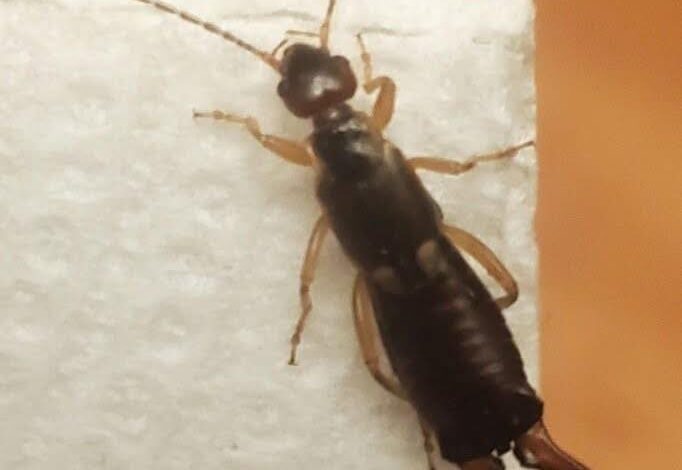
I looked around the grass where he had been playing, trying to make sense of what could have caused it. That’s when I saw it—a quick, unsettling movement near the edge of the lawn. Something dark, elongated, and segmented darted between the blades. I froze for a second before moving closer, and there it was: a strange insect with a glossy body and curved pincers at its tail. My hands were shaking, but I managed to snap a photo. My mind was racing, and without thinking twice, I posted it in a local community group, hoping someone—anyone—could tell me what we were dealing with.
The response came almost immediately, faster than I expected. Notifications flooded in, comments piling up with guesses, warnings, and advice. Then a message popped up from my sister-in-law. She lives just a few streets away, and her tone was urgent. She told me she had been seeing the exact same insect in her house—on her kitchen counters, in laundry baskets, even near her kids’ beds. She sent pictures to prove it. My stomach sank. This wasn’t just a one-time encounter outside. This was something bigger.
Within minutes, dozens of people identified the insect: earwigs. Some tried to reassure me, saying they’re mostly harmless, more of a nuisance than a danger. But in that moment, with my child in pain and the image of those pincers burned into my mind, “harmless” didn’t feel very convincing. Seeing one in the garden is easy to ignore. Knowing they might be inside your home, near your family—that’s something else entirely.
Over the next few days, the anxiety grew. Every small movement caught my attention. A shadow on the wall, a speck on the floor—everything started to look suspicious. I found myself checking corners, lifting cushions, and inspecting bedding before bedtime. It wasn’t just about the bite anymore; it was the feeling that our space—our safe place—had been invaded. That loss of control was the hardest part.
As concern spread through our neighborhood group, people began sharing their own experiences. Some had seen a few earwigs outside; others were dealing with them indoors. Alongside the fear, though, came advice—some practical, some questionable. Among it all, one suggestion stood out because of how simple it was.
A parent named Alicia shared a method she had used successfully: olive oil traps. It sounded almost too basic, but she explained that earwigs are drawn to the scent. Once they crawl into the oil, they can’t escape. No chemicals, no complicated setup—just a shallow container and something most people already have at home.
Skeptical but desperate for a safe solution, I decided to try it. That evening, I placed a few small bowls with olive oil in areas where I had noticed activity—near the back door, along the patio, and close to the garden.
The next morning, I checked them—and I couldn’t believe what I saw. The traps had worked. Several earwigs had been caught overnight. By the following day, there were even more. It was unsettling to see just how many had been around, but at the same time, it was reassuring. For the first time, it felt like we had some control over the situation.
Gradually, things started to feel normal again. My son’s bite healed without complications, and the presence of earwigs around the house decreased as we continued using the traps and keeping the area clean and dry.
Looking back, the whole experience left a lasting impression. It was a reminder that even small, seemingly harmless things can feel overwhelming when they happen unexpectedly—especially when it involves your family. But it also showed how helpful shared knowledge can be. Without that quick response from others, we might have spent much longer in uncertainty.
Now, when I see my son outside playing again, I still keep a closer eye on things. Not out of fear, but out of awareness. The world around us hasn’t changed—but my understanding of it has. Sometimes, the smallest encounters teach the biggest lessons.