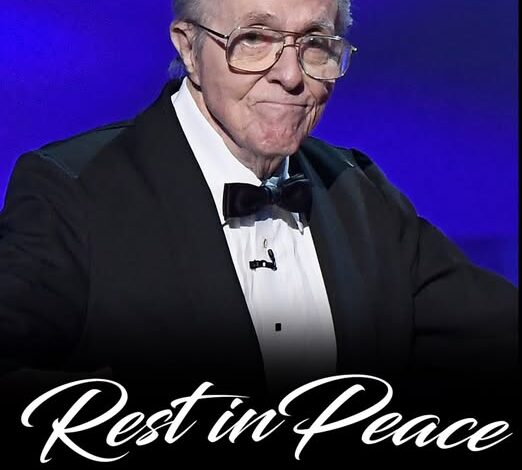
He was never the loudest presence on screen—and he never needed to be. While others delivered punchlines or commanded attention, he stood quietly in the background, bringing a steady, grounding presence that made every scene feel more real. For many viewers, he wasn’t someone you focused on immediately. He was simply there—familiar, reliable, essential in a way that didn’t ask to be noticed but always was.
Now, that presence is gone.
Charles C. Stevenson Jr., a veteran character actor whose career stretched across decades of television and film, has passed away at the age of 89. His family confirmed he died of natural causes on January 19 in Camarillo, California, closing a life defined not by fleeting fame, but by consistency, craft, and quiet impact.
For many, his role as Smitty the bartender on Will & Grace remains his most recognizable. It wasn’t a role built on grand speeches or emotional arcs. Smitty stood behind the bar—observing, reacting, grounding the moment. In a show known for its rapid humor and sharp dialogue, his calm presence gave the chaos something to rest against.
It’s the kind of role that often goes unnoticed in conversations about television.
But it’s also the kind that holds everything together.
Will & Grace itself became one of the most influential sitcoms of its era, celebrated for its bold storytelling and unforgettable chemistry. Within that world, even smaller roles carried weight—and Stevenson understood exactly how to make his count. Over 12 episodes spanning multiple seasons, including his final appearance in 2020, he continued to show up, perform, and contribute well into his late 80s.
That kind of longevity says something deeper than talent alone.
It speaks to discipline.
To dedication.
To a quiet commitment to the craft that doesn’t fade with time.
But his story didn’t begin—or end—with one show.
Stevenson’s acting career started in the early 1980s, with a debut on Voyagers. From there, he built what many would recognize as the life of a true working actor—not defined by a single breakout moment, but by steady, consistent work across an ever-changing industry.
On film, he appeared in titles that spanned genres and generations—The Naked Gun, Ed Wood, Men in Black, Pleasantville, and Ghost World. These weren’t always leading roles, but they didn’t need to be. His presence added texture, credibility, and a sense of authenticity that directors rely on but audiences often take for granted.
Television gave him even more space to leave his mark.
Over the years, he appeared in a remarkable range of series: Cheers, L.A. Law, Dynasty, Murder, She Wrote, Family Matters, Everybody Loves Raymond, The Office, Weeds, My Name Is Earl, Las Vegas, and Curb Your Enthusiasm. It’s a résumé that doesn’t just reflect experience—it reflects endurance.
He moved through different eras of television without losing relevance, adapting quietly as the industry evolved around him.
What set Stevenson apart wasn’t just his work ethic—it was his understanding of his place within the larger story.
He didn’t try to outshine the scene.
He made the scene better.
There’s a difference—and he understood it instinctively.
His son once shared a story that captured this perfectly. Because Stevenson often played clergy members or officiants, he joked that his job was simply “marrying or burying people.” It was humor, but also honesty—a recognition of the roles he was often given, and the ease with which he embraced them.
He didn’t take himself too seriously.
But he took his work seriously enough to do it well—every time.
Directors trusted him. Not just to deliver lines, but to fill in the quiet spaces, to bring something unscripted when a scene needed it. That kind of trust is not given easily.
It’s earned.
Before acting, Stevenson lived a very different life.
He served in the Navy during the Korean War, an experience that likely shaped the discipline and perspective he carried into his career. Afterward, he studied English at UC Berkeley, laying a foundation that would eventually support his transition into acting.
His path wasn’t direct.
It wasn’t built on overnight success.
It was built slowly—through persistence, adaptability, and a willingness to keep showing up.
Outside of the screen, he was a family man.
He was married more than once, had five children, and leaves behind grandchildren and great-grandchildren who carry his story forward. While audiences knew him through his roles, those closest to him knew him through something deeper—relationships that mattered far beyond any performance.
That balance—between a life in public and a life grounded in private connection—is something many strive for, but few sustain over decades.
As news of his passing spreads, the reactions aren’t loud.
They’re reflective.
People pause, trying to place where they’ve seen him. Then realizing—he was everywhere. Not in the spotlight, but just beside it.
That’s the nature of a character actor’s legacy.
You may not always remember the name immediately.
But you remember the presence.
The feeling that something in the scene was real.
Complete.
Stevenson brought that feeling again and again.
He wasn’t chasing attention.
He was building the world around it.
And in doing so, he became part of something larger than any single role.
Now, as audiences revisit the shows and films he helped shape, there’s a quiet shift in perspective. A deeper appreciation—not just for what he did, but for how consistently he did it.
Some actors are remembered for iconic moments.
Others for something less obvious, but just as lasting.
They make everything better simply by being there.
Charles C. Stevenson Jr. was one of those actors.
And that kind of presence doesn’t disappear.
It lingers—quietly, steadily—just like it always did.