“Check Your Pocket Change Carefully — A Rare Lincoln Penny, Mistakenly Circulated Decades Ago and Now Valued at an Astonishing $336,000, Could Be Sitting Unnoticed in Your Coin Jar, Offering Everyday Americans the Chance to Discover a Hidden Treasure Worth a Small Fortune in Ordinary Spare Change.”

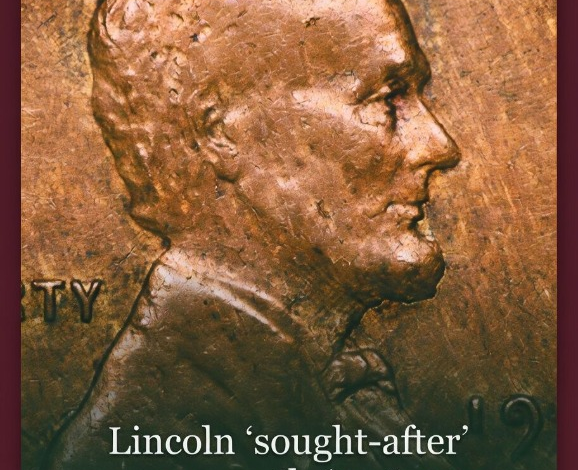
Among the most iconic rarities in American coin collecting, the 1943 Bronze Lincoln Cent holds a place that feels almost mythical. Its story begins in the middle of World War II, when even the smallest materials were redirected toward the war effort. Copper, essential for ammunition and communication equipment, became too valuable to use in everyday coinage. As a result, the U.S. Mint made a dramatic shift in 1943, producing pennies from zinc-coated steel instead of the traditional bronze alloy.
But in the midst of this large-scale transition, a small and remarkable mistake occurred.
A few leftover bronze planchets—the blank discs used to strike coins—remained in the minting equipment from 1942. When production switched to steel, these stray blanks were accidentally fed into the presses. The result was a tiny number of 1943 pennies struck in bronze, coins that technically should not exist at all.
When these unusual cents first appeared in circulation a few years later, they immediately captured public attention. People began hearing whispers of a “copper penny” from 1943, and curiosity quickly turned into obsession. Suddenly, ordinary Americans found themselves examining their pocket change, hoping to uncover a life-changing discovery hidden among everyday coins.
What makes the 1943 Bronze Lincoln Cent so compelling is not just its rarity, but the story it carries. It represents a moment when national priorities reshaped even the smallest details of daily life. A simple one-cent coin became a reflection of wartime sacrifice, industrial adaptation, and the complexities of mass production under pressure.
Experts believe that fewer than 20 genuine bronze 1943 cents exist across all three mints—Philadelphia, Denver, and San Francisco. Each version has subtle identifying features, such as the presence or absence of a mintmark, making them highly traceable and intensely studied. Because so few have survived—and even fewer in good condition—these coins have reached extraordinary values at auction. Some have sold for hundreds of thousands of dollars, while others have crossed into the million-dollar range, elevating them to legendary status among collectors.
In the early years, however, their existence was met with skepticism. The U.S. Mint initially denied that any bronze coins had been produced in 1943, attributing reported examples to fakes or altered coins. And indeed, counterfeits quickly flooded the market—steel cents plated with copper or later-date coins modified to appear older. It took careful metallurgical analysis and expert authentication to confirm that a small number of genuine bronze examples had, in fact, slipped through production unnoticed.
The difference between the real and the common 1943 steel cent is striking. While the standard coins have a silvery appearance and are magnetic due to their steel core, the bronze versions carry the familiar reddish-brown tone of pre-war pennies and are not magnetic. This simple distinction—combined with professional verification—became key to identifying one of these elusive treasures.
Over time, the search for the 1943 Bronze Lincoln Cent turned into something more than a collector’s pursuit. It became a cultural phenomenon, a kind of national treasure hunt fueled by the idea that immense value might be hiding in plain sight. Stories of lucky discoveries—like a teenager finding one in lunch money—only deepened the intrigue and kept the legend alive.
Beyond its monetary worth, the coin stands as a powerful historical artifact. It captures the intersection of necessity and accident, of wartime urgency and human oversight. In a year defined by precision and resource management, a few overlooked planchets created one of the most famous minting errors in history.
Today, the 1943 Bronze Lincoln Cent remains one of the most coveted coins in the world, often mentioned alongside other legendary rarities. Some are preserved in museums, others in private collections, each carefully documented and guarded. Whenever one resurfaces at auction, it reignites fascination—not just because of its value, but because of what it represents.
It’s a reminder that history doesn’t always unfold exactly as planned. Sometimes, it leaves behind small, unexpected traces—objects that carry stories far greater than their size. And in the case of the 1943 Bronze Lincoln Cent, that story continues to capture the imagination of collectors and dreamers alike, proving that even a humble penny can become a symbol of chance, history, and enduring mystery.