For Three Years, I Ate Lunch in a Bathroom Stall Because of My Bully – Twenty Years Later, Her Husband Called Me

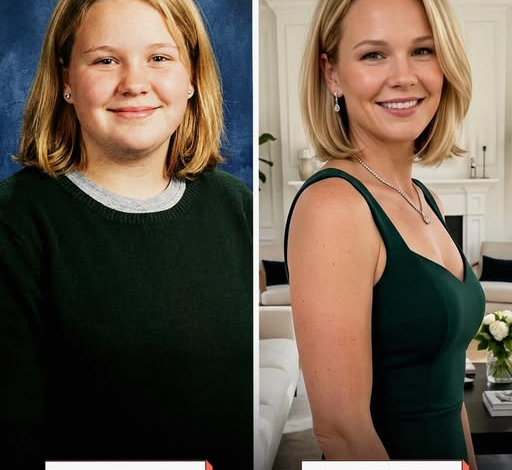
For years, I avoided my high school bully, burying the memories and trying to move on. Then, decades later, her family reached out to me. When my past suddenly resurfaced, I had no choice but to confront what I’d spent years running from. Some cycles only end when someone finally finds the courage to speak.
For three years, I ate my lunch hidden in a bathroom stall because of her. Twenty years later, her husband called me with a truth I never expected to hear.
People say high school fades with time, but it never really did for me. I can still recall the sting of cleaning chemicals in the air, the hollow echoes of laughter in the halls, and the anxiety that crept in whenever I heard heels clicking closer.
Rebecca always wore heels.
The first time she called me “the whale,” I stood frozen in the lunch line, clutching my tray and wishing I could disappear.
“Make room, everyone! The whale needs space!” she shouted.
The room burst into laughter. Someone clapped. Then she dumped a plate of spaghetti over me, sauce soaking into my clothes. Everyone watched, but no one stepped in.
That was the last time I ever sat in the cafeteria.
After that, lunch became something I hid. I’d slip into the furthest bathroom stall, sit with my feet up, and eat in silence.
I never told anyone. Not even Amanda from chemistry, who used to smile at me like she saw something worth noticing.
**
When I was fourteen, I lost my parents in a car accident. Grief changed everything, including my body. My weight started to climb, even though nothing else had changed.
The doctor said it was stress.
“Try to stay active,” she told me gently. “It’ll help regulate everything you’re going through. And if you need help, I’m here.”
But Rebecca didn’t see grief. She saw an opportunity.
She was the center of attention at school, flawless in every way that mattered there. And she had a way of spotting weakness.
She filled my locker with notes:
“No one will ever love you.”
“You’re pathetic.”
“Maybe you belong in the ocean.”
Looking back, just surviving those years feels like an achievement.
Still, there were small acts of kindness that kept me going.
My English teacher would quietly leave books on my desk with notes saying, “I think you’ll enjoy this.”
The janitor made sure the bathrooms were clean right before lunch.
Those moments didn’t fix everything, but they helped me hold on.
**
Eventually, I left for college far away. I changed my appearance, cut my hair, got tattoos — little reminders that I could become someone new.
I studied computer science and statistics. Numbers made sense. They didn’t judge.
Over time, I started to see myself differently.
By the time I graduated, I had lost most of the weight — not for anyone else, but for myself.
I built a career in data science and surrounded myself with people who didn’t know my past.
For a while, I believed I had truly moved on.
**
Rebecca became just a distant memory, something I only talked about in therapy. I knew she’d married a man named Mark and had become a stepmother to a girl named Natalie.
Sometimes I wondered if she even remembered me.
Then one day, my phone rang.
An unknown number.
Something made me answer.
“Hello?”
“Is this Maya?” a man asked.
“Yes.”
“My name is Mark… Rebecca’s husband.”
Everything inside me went still.
He explained how he’d found me — an old yearbook, my name, my LinkedIn profile.
“I know this is strange,” he said, “but I didn’t know who else to call.”
Then he told me about Natalie.
She had started isolating herself, eating alone, hiding food in her bathroom. He noticed how tense she became around Rebecca.
“She says it’s nothing,” he said, “but the way Rebecca talks to her… it doesn’t feel right.”
Then he found Rebecca’s old diaries.
They weren’t just memories — they were strategies.
“She wrote about you,” he said quietly. “About making sure people focused on your body so they wouldn’t notice your intelligence. She tracked it like a game.”
My chest tightened.
“And now,” he continued, “I’m seeing the same thing happening to my daughter.”
The pattern was undeniable.
“I want to help her,” he said. “But I think she needs to hear from someone who’s lived through it.”
He asked if I’d be willing to talk to Natalie.
After a pause, I said yes.
**
That night, I found an old interview I’d done about overcoming bullying and building a career in tech.
Watching it felt strange, like looking at a past version of myself.
Then I got an email.
From Natalie.
She wrote about hiding in the bathroom to eat. About being told she didn’t belong in STEM. About feeling like maybe she shouldn’t even try.
I recognized every word.
I wrote back:
“I understand more than you think. I used to feel the same way. But I found something that proved I belonged — and you will too. Don’t let anyone take that from you.”
We started talking regularly.
And somehow, the loneliness I once felt didn’t seem so heavy anymore.
**
A week later, I visited their house.
Rebecca answered the door.
She acted like nothing had ever happened.
During the conversation, she tried to dismiss everything as the past.
But this time, I didn’t stay silent.
“You didn’t just hurt me,” I said. “You created a pattern. And you’re repeating it.”
Mark backed me up.
Natalie spoke up too, her voice shaking but strong.
“You make me feel small so you can feel bigger.”
The truth filled the room.
The counselor named it clearly: emotional abuse.
Rebecca tried to justify herself, but it didn’t hold.
Mark made his decision.
“I’m moving forward with separation,” he said. “Natalie comes first.”
For the first time, Rebecca had no control.
Natalie looked at me and said, “Thank you for being here.”
“I said I would be,” I replied.
**
A week later, Natalie visited my office.
I introduced her to my team — women leading, coding, building.
She looked around, eyes bright.
“This is what I want,” she said.
“You already belong here,” I told her.
We had lunch together — not hidden, not in silence, but out in the open.
Sometimes breaking a cycle isn’t loud or dramatic.
Sometimes it’s as simple as opening a door, telling the truth, and letting someone step into the light.