UNMASKING THE SECRET MAGIC AND HILARIOUS ON SET BLUNDERS THAT THE PRODUCERS OF I DREAM OF JEANNIE TRIED TO HIDE FROM FANS

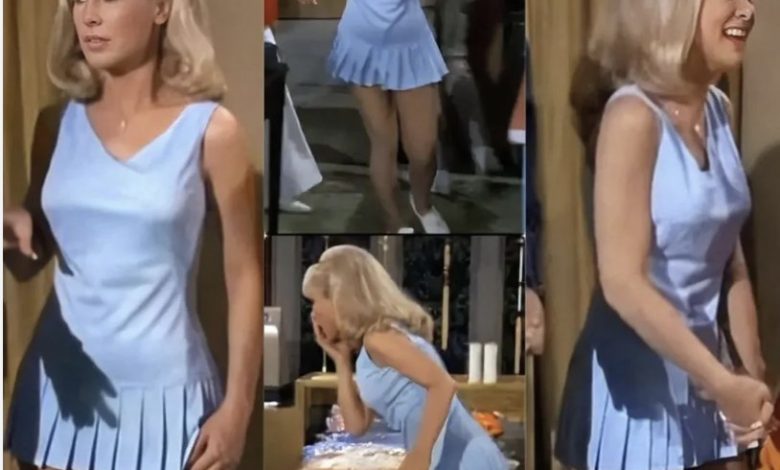
For more than fifty years, Barbara Eden has remained an enduring icon of television, forever remembered as the charming and devoted Jeannie. Paired with Larry Hagman’s straight-laced yet often bewildered Major Tony Nelson, she helped create a show that blended fantasy with the polished charm of 1960s sitcoms. I Dream of Jeannie brought magic, humor, and romance into millions of homes, becoming a cultural staple that still resonates today. While audiences fondly recall Jeannie’s signature pink costume, her magical bottle, and the playful chemistry between the leads, a closer look behind the scenes reveals a far more imperfect—and fascinating—reality.
Beneath the polished surface of the show was a production filled with small mistakes, technical workarounds, and occasional inconsistencies that only added to its charm. For attentive viewers, these moments have become part of the fun, offering a glimpse into how television magic was created in an era before modern special effects.
One memorable example comes from the Season 1 episode Guess What Happened on the Way to the Moon. In this storyline, Tony and Roger face a survival scenario in the desert, only for Jeannie to conjure a mountain lion out of jealousy. While the scene is meant to feel tense, careful viewers can spot a rope attached to the animal—clearly there to ensure safety during filming. The illusion of a barren desert is also broken by the background scenery, which includes pine trees rather than the vegetation typical of such an environment. Even the wardrobe choices weren’t entirely accurate, as Roger’s boots were actually designed for extreme cold, not desert heat.
Censorship in the 1960s introduced its own unique challenges, especially when it came to Jeannie’s costume. At the time, network standards strictly prohibited showing a woman’s navel on television. To comply, Jeannie’s iconic outfit was designed with high-waisted pants. However, during early episodes, quick movements occasionally revealed more than intended. This led to stricter wardrobe adjustments later on, highlighting the unusual and often rigid standards of the era.
Technical limitations also played a role in some of the show’s more noticeable quirks. In episodes involving weather effects, such as Jeannie creating a rainstorm, viewers can sometimes spot the equipment used to simulate rain moving across the set. Similarly, early special effects relied on practical methods—wires, hidden supports, and lighting tricks—which were occasionally visible on screen. In certain scenes, Jeannie’s levitation reveals glimpses of the apparatus used to lift her, reminding audiences of the hands-on creativity required at the time.
Continuity was another area where the show occasionally stumbled. Details about Jeannie’s history, such as how long she had been trapped in her bottle, sometimes conflicted between episodes. The show’s supposed Florida setting also clashed with its California filming locations, with mountains occasionally appearing in the background—something impossible in the flat landscapes of Florida.
Even Jeannie’s famous bottle had a surprisingly ordinary origin. Rather than being a rare artifact, it was actually a repurposed Jim Beam liquor decanter, decorated by the prop department to give it its magical appearance. This clever reuse is a perfect example of how creativity and resourcefulness shaped the show’s visual identity.
Behind the scenes, the production faced real-life challenges as well. Barbara Eden’s pregnancy during the early episodes required creative filming techniques to maintain continuity. Camera angles, props, and costume adjustments were all used to preserve the illusion. At the same time, there were reports of tension on set, particularly involving Larry Hagman’s strong personality and perfectionist tendencies. Despite this, Eden recognized the importance of their on-screen dynamic and supported keeping him in the role, understanding that their chemistry was central to the show’s success.
The supporting cast added stability and depth to the production. Hayden Rorke, who played Dr. Bellows, was known for his professionalism and often served as a steady presence during moments of tension. The show also featured early appearances from future stars, including Farrah Fawcett, adding another layer of interest for modern viewers revisiting the series.
In the end, these imperfections don’t take away from I Dream of Jeannie—they enhance it. They reveal the ingenuity, effort, and human touch behind every scene. From visible wires to shifting props, each mistake tells a story about how television was made during a time when creativity had to make up for limited technology.
Barbara Eden’s warmth, dedication, and enduring presence are what truly carried the show beyond its flaws. The magic of I Dream of Jeannie doesn’t come from perfection—it comes from the charm, imagination, and heart that continue to captivate audiences decades later.