The Hidden Meaning of Thumb Rings Explained in Depth: How One Small Piece of Jewelry Reflects Power, Identity, Confidence, History, Rebellion, and Self-Expression for Women and Men Across Cultures and Time

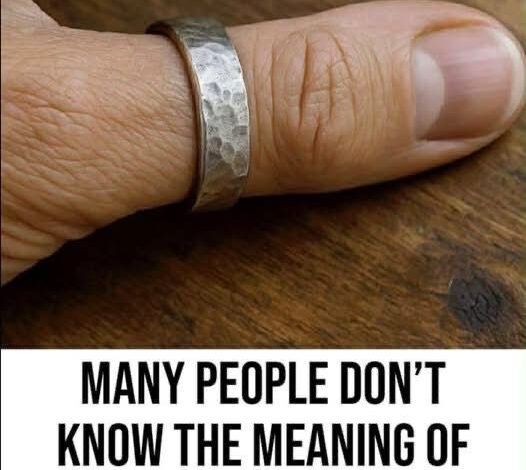
The Significance of Thumb Rings: History, Symbolism, and Modern Expression
Rings have been worn by humans for millennia, long before they were relegated to mere fashion statements or symbols of marriage. Across cultures, rings have conveyed messages of power, allegiance, wealth, spirituality, rebellion, and personal identity. While most people are familiar with the meanings associated with rings on the ring finger, far fewer recognize the symbolism of a ring worn on the thumb. Yet the thumb, by virtue of its position, function, and cultural history, carries meanings that are both ancient and remarkably relevant today.
The thumb is unique anatomically. It stands apart from the other fingers, enabling grip, dexterity, and strength. Without it, the human hand loses much of its power and functionality. This physical distinction has long translated into symbolic significance: the thumb is associated with willpower, autonomy, control, and personal agency. When someone chooses to wear a ring on the thumb, it is rarely arbitrary. Even if the wearer is not consciously aware of the symbolism, the gesture communicates strength, independence, and self-assuredness.
Understanding thumb rings requires looking through the lenses of history, psychology, gender norms, and modern self-expression. While the meaning can vary slightly between women and men, at its core, a thumb ring almost always signifies one thing: a strong sense of self.
Why the Thumb Is Different
In symbolism, body language, and cultural interpretation, the thumb represents decision-making, strength, and authority. Ancient philosophers and mystics saw the thumb as an extension of personal will, while in palmistry, it is tied to logic, determination, and independence. It is the finger that enables the hand to grasp firmly or form a fist, reinforcing its association with control and personal power.
Unlike the ring finger, which traditionally signals romance, union, or commitment, the thumb centers on the individual rather than a partnership. A ring on the thumb is a statement of self-ownership, signaling autonomy rather than attachment to another.
Visually, the thumb is prominent and unconventional as a jewelry placement, which naturally draws attention. Wearing a ring there conveys confidence and, often, a willingness to stand apart or challenge expectations.
The Psychological Meaning of Wearing a Thumb Ring
From a psychological standpoint, thumb rings are often associated with self-confidence and assurance. Those who choose them tend to exhibit comfort with asserting their identity and making independent choices. This does not imply aggression or ostentation; rather, it reflects internal certainty and groundedness.
Thumb rings can also function as tactile reminders of personal boundaries and values. Because the thumb is an active finger, the ring is continually felt, reinforcing awareness of one’s own agency.
Many wearers adopt a thumb ring during periods of personal growth, transition, or empowerment—after a breakup, during a career shift, or at moments of self-redefinition. In such cases, the ring becomes both a literal and symbolic anchor for new identity and personal strength.
What Thumb Rings Represent for Women
For women, thumb rings carry particularly powerful and sometimes subversive meanings. Historically, jewelry for women reinforced social expectations—signaling marital status, availability, or conformity to ideals of decorum. Rings on the thumb, however, disrupt these narratives.
Wearing a thumb ring communicates independence, self-determination, and comfort outside traditional roles. In the late 20th century, especially during the 1990s and early 2000s, thumb rings were sometimes linked to feminist expression and, in certain contexts, LGBTQ+ identity. While not universally understood in these terms, the placement served as a subtle assertion of resistance to patriarchal or heteronormative expectations.
Today, women often choose thumb rings to express boldness, creativity, and individuality. Chunky, minimalist, or unconventional designs emphasize strength and intentionality. For many, the thumb ring becomes a signature piece—essential to self-expression rather than merely decorative.
Emotionally, thumb rings offer women a sense of grounding and empowerment. The ring’s constant presence in daily movements reinforces personal boundaries, encourages confidence, and reminds the wearer of their autonomy.
What Thumb Rings Represent for Men
For men, the symbolism of thumb rings is rooted in history and tradition. In ancient civilizations, thumb rings were worn by archers, warriors, and leaders. Roman men used thumb rings to signify wealth, authority, and status, sometimes employing them as signet rings to stamp official documents.
In parts of Asia, noblemen and military figures wore thumb rings made of jade, gold, or ivory—functional tools for archery and markers of social rank. Throughout history, male thumb rings have symbolized strength, influence, and independence.
In modern contexts, men who wear thumb rings often communicate confidence, nonconformity, and individuality. In cultures where male jewelry remains less common, a thumb ring is a deliberate statement. Contemporary interpretations also suggest sexual confidence, projecting comfort with one’s body, presence, and desires without being overt.
Hand Placement: Left vs. Right
Traditional symbolism associates the left hand with inner states, intuition, and personal identity, while the right hand corresponds to action, logic, and external engagement. A left-hand thumb ring may therefore signal self-awareness and emotional independence, whereas a right-hand ring emphasizes outward assertiveness and interaction with the world.
Historically, women’s right-hand thumb rings were more noticeable statements of defiance, while men’s right-hand rings often conveyed decisiveness or leadership. Today, these distinctions are more fluid, with placement frequently reflecting personal comfort rather than strict symbolic intent.
Modern Fashion and Self-Expression
Today, thumb rings exist at the intersection of fashion and symbolism. Even when worn purely for style, they carry subtle cultural weight. Designers increasingly embrace thumb rings as identity markers, with oversized bands, minimalist metals, and unisex designs reflecting a growing emphasis on self-definition over rigid gender norms.
Thumb rings continue to fascinate because of their ambiguity. They are noticeable yet understated, meaningful without dictating interpretation. In an era where identity is curated rather than assigned, thumb rings allow wearers to assert autonomy, individuality, and confidence silently but unmistakably.
Final Reflection
The meaning of thumb rings is multi-faceted. For women, they often signify empowerment, independence, and defiance of limiting norms. For men, they communicate strength, authority, and individuality. Across genders, they convey confidence, self-ownership, and the courage to be visible as oneself.
Ultimately, a thumb ring is less about what society interprets and more about what it represents to the wearer. Whether chosen consciously or instinctively, it serves as a quiet yet powerful declaration of autonomy. In this way, the thumb ring remains one of the most enduring symbols of personal identity and self-expression, bridging history, psychology, and modern culture.