WHEEL OF FORTUNE CONTESTANT DELINDA ROOD STUNS RYAN SEACREST WITH A LIGHTNING FAST BONUS ROUND SOLVE THAT LEAVES THE AUDIENCE GASPING AND WALKS AWAY WITH A MASSIVE SIX FIGURE FORTUNE

The high-stakes world of television game shows is built on suspense—spinning wheels, ticking clocks, and contestants walking the fine line between triumph and collapse. Most episodes unfold in familiar rhythms: cautious guesses, incremental wins, and the occasional heartbreaking miss. But every now and then, someone steps onto that stage who seems to move differently, think faster, and operate on a level that turns a routine broadcast into something unforgettable.
That’s exactly what happened when Delinda Rood, representing the quiet town of Rosemount, appeared on Wheel of Fortune. At first glance, she didn’t command attention in the way some contestants do. There was no over-the-top energy or theatrical presence—just a calm, measured demeanor and a quiet confidence that didn’t need to announce itself. Competing against sharp opponents from Palo Alto and Chattanooga, she blended into the early rounds, navigating the board with patience rather than urgency.
The opening segments of the game played out as expected. Letters were called carefully, spins were taken with hesitation, and the usual mix of small victories and missed chances filled the board. But while others reacted to the moment, Rood seemed to be studying it—absorbing patterns, reading the board like a strategist rather than a participant. There was a sense that she wasn’t chasing the game; she was waiting for it to come to her.
Rood has described herself as an ambivert, someone who exists comfortably between introspection and expression. That balance became her greatest strength. She wasn’t overwhelmed by the lights or the audience, nor was she withdrawn. Instead, she stayed centered—observing, calculating, and choosing her moments with precision. Where others rushed, she paused. Where others hesitated, she acted decisively.
The turning point came during a toss-up puzzle, the kind that often flies by in a blur. As letters began appearing rapidly on the board, the tension in the studio tightened. Contestants leaned forward, searching for meaning in fragments. And then, almost instantly, Rood spoke. The answer came out with such clarity and certainty that it felt less like a guess and more like recognition. Her opponents barely had time to process what had happened.
From that moment on, the energy of the game shifted. Confidence settled in, not as arrogance but as control. Rood’s gameplay became increasingly efficient—she avoided unnecessary spins, minimized risk, and focused on solving puzzles before chance could intervene. It wasn’t flashy, but it was dominant. By the time the later rounds approached, her presence on the leaderboard felt less like competition and more like inevitability.
Still, Wheel of Fortune has one final test—the Bonus Round. It’s where even the strongest players can falter. The stage feels quieter, the clock louder, and the pressure more isolating. As Rood stepped into that moment beside host Ryan Seacrest, the atmosphere shifted again—this time from momentum to anticipation.
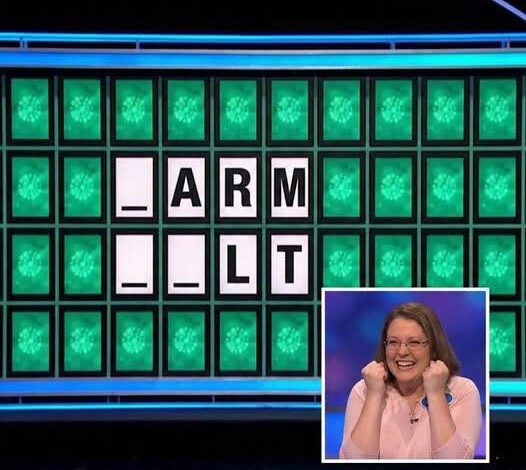
The category was revealed. The familiar R, S, T, L, N, and E appeared, forming the skeletal outline of a phrase that looked stubbornly incomplete. Rood selected her additional letters, and when they filled in, the board still offered only fragments—just enough to hint, not enough to confirm.
Then came the countdown.
What happened next felt almost unreal. Before the timer had truly begun to exert pressure, before the audience could even lean into the suspense, Rood answered. Instantly. No visible processing, no trial-and-error, no searching for words. Just a clean, decisive solution delivered with startling speed.
For a moment, there was silence—not from confusion, but from disbelief. Then the studio erupted. Applause, cheers, a wave of energy that filled the space. Even Ryan Seacrest, seasoned by years of hosting, paused—caught between surprise and admiration—before congratulating her on what was clearly an extraordinary moment.
The prize envelope revealed the final reward: $65,650 in cash and prizes. But the number, impressive as it was, almost felt secondary to what had just unfolded. The real impact came from how she won—not through luck alone, but through composure, timing, and an almost instinctive grasp of the game.
Within minutes of the episode airing, clips of her Bonus Round solve began circulating online. Viewers replayed the moment, dissecting it, marveling at the speed and certainty. Longtime fans pointed out just how rare it is to see a puzzle solved so quickly, especially with so few letters revealed. It wasn’t just impressive—it was exceptional.
Rood’s performance quickly became a talking point among game show enthusiasts. Many noted that her success reflected preparation as much as talent. She seemed to understand the rhythm of the game, the structure of its puzzles, and the importance of staying mentally composed under pressure. Where others might freeze, she remained fluid.
Back in Rosemount, her victory transformed her into something of a local icon. But beyond hometown pride, her story resonated more broadly. She became an example of what can happen when quiet focus meets opportunity—when someone steps into a high-pressure moment not with noise, but with clarity.
Her approach stood out in a landscape where bigger often feels better. She didn’t rely on showmanship or aggressive play. She trusted her instincts, stayed present, and acted when it mattered most. It was a reminder that confidence doesn’t always look loud—it can be steady, patient, and precise.
As the episode continues to circulate and find new audiences, Delinda Rood’s performance has already secured its place among the memorable moments of the season. That single instant—solving the puzzle before the clock could even take hold—has become the kind of highlight that endures.
For her, it was a life-changing win. For viewers, it was something just as compelling: a glimpse of what’s possible when preparation, awareness, and composure align perfectly under pressure. In a game defined by chance, she proved that the mind—focused and ready—can still be the most powerful advantage of all.