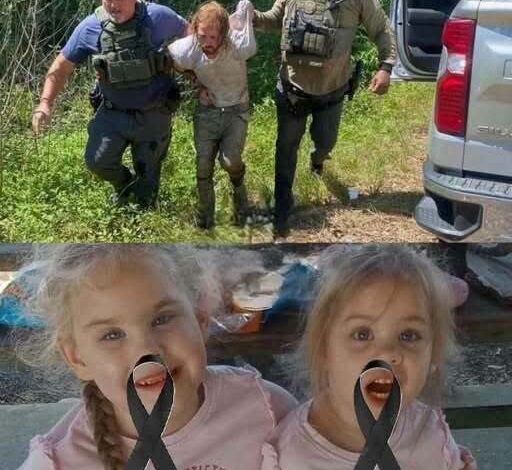
They didn’t wait for proof or permission. They acted on a feeling—something subtle but unsettling that told them things weren’t right. It wasn’t perfect judgment, and it wasn’t based on certainty, but it was human. That instinct pushed them forward, and because of it, everything shifted. The children were brought out of danger before emergency responders even had time to arrive, carried into the open air by people who refused to look the other way or convince themselves it was “probably nothing.”
In the immediate aftermath, relief washed over everyone in waves. The children were safe. That alone felt like a victory. But underneath that relief lingered a heaviness—questions that didn’t have easy answers. What had been missed? How long had things been building? And could this have been prevented if someone had spoken up sooner?
As more details have come to light, the situation has proven to be far more layered than the simple narrative of a “bad parent.” The father’s actions were undeniably dangerous, and there’s no excusing the risk he put his children in. But as people began to understand more about his circumstances, a different picture started to emerge—one of someone who had been struggling quietly, carrying burdens that had gone unseen or unaddressed for far too long.
That doesn’t erase what happened. Accountability still matters. The safety of those children will always come first. But the story has forced the community to sit with a more uncomfortable truth: sometimes harm doesn’t come from cruelty alone, but from isolation, stress, and untreated struggles that grow in silence.
Now, the neighborhood is left holding both realities at once. There’s a shared understanding that what happened cannot be dismissed—but also a growing recognition that compassion has a place alongside consequence. Conversations have changed. They’ve become quieter, more thoughtful. People are checking in with each other more often, asking questions they might have once avoided, paying closer attention to the signs they used to overlook.
There’s a sense that this moment, as painful as it is, has become a turning point. A reminder that intervention doesn’t always look perfect, and that waiting for certainty can sometimes cost too much. The hope moving forward is that people won’t just remember the crisis, but what led up to it—that they’ll learn to notice the small warnings, to step in sooner, and to support one another before situations reach a breaking point no one can ignore.