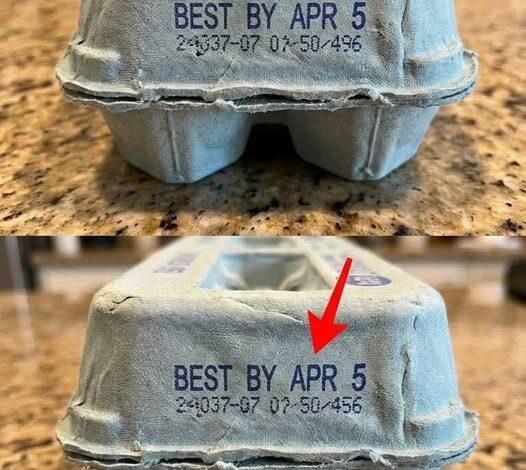
I didn’t think much of those three little numbers at first. They were just there, stamped in faint ink, easy to overlook. But later, I learned they carried more truth than the bold “sell by” date printed on the front. They were the Julian date—the exact day of the year the eggs had been packed. And once I understood that, everything clicked in a way that was both frustrating and eye-opening.
Those eggs I had trusted? They weren’t spoiled, not technically. But they weren’t fresh either. They had been sitting longer than I realized, slowly losing quality day by day while I relied on a label that felt more reassuring than it actually was. That realization lingered. It wasn’t just about the eggs—it was about how easily I had taken something at face value without really understanding it. That mix of embarrassment and concern stayed with me long enough to turn into a habit I haven’t broken since.
Now, grocery shopping looks different for me. I don’t just reach out and grab the nearest carton anymore. I pick it up, turn it over, and look for those three digits first. I compare them, sometimes checking a few cartons before choosing the one with the highest number—the freshest batch. It’s a small action, but it feels deliberate, like I’m no longer guessing.
I’ve also gotten into the routine of checking the plant code, something I never even noticed before. At first, it felt unnecessary, almost excessive. But then I realized how useful it could be, especially when recalls make the news. Instead of feeling uncertain or vaguely concerned, I know exactly where to look and what it means. There’s a quiet confidence in that—knowing I can make an informed decision without relying on assumptions.
Over time, I started noticing other details too. The grade stamped on the carton isn’t just a formality anymore—it tells me something about how those eggs will behave when I use them. If I’m baking, I think about structure, about consistency. If I’m cooking something simple, I still notice the difference in quality. Even labels like “cage-free,” “free-range,” or “pastured” don’t pass by unquestioned anymore. I read them more carefully, not as guarantees, but as pieces of information that deserve a second thought.
What’s changed the most, though, is how I feel when I’m standing there in the store. There’s no rush, no uncertainty, no quiet doubt about whether I’m making the right choice. Instead, there’s a sense of calm—like I’ve taken something ordinary and made it intentional. It’s not about overthinking or being overly cautious. It’s about understanding just enough to feel in control.
And that control carries over into something bigger. It’s a reminder that small details matter, that taking a moment to look closer can change the outcome in ways you don’t expect. What started as a minor realization has turned into a steady habit—one that makes me feel more aware, more capable, and a little more connected to the choices I make every day.
Now, when my hand reaches for a carton, it’s not automatic anymore. I know what I’m looking for. I know what those numbers mean. And I know exactly what I’m bringing home.