I found this at a yard sale but I have no idea what it is. l’m almost certain you won’t know what this strange object is either… Try to prove me wrong (if you can)!

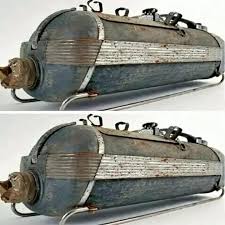
What initially struck people as some bizarre, almost unrecognizable device turned out to be something far more familiar: a vintage vacuum cleaner. Seen out of context, its bulky frame, exposed metal components, and oddly arranged attachments made it look more like a piece of industrial equipment than a household tool. But once identified, the design began to make sense—a machine built in an era when even routine chores required durability, weight, and a kind of mechanical presence that’s largely disappeared today.
These older vacuums weren’t designed for convenience so much as longevity. They were heavy, often difficult to maneuver, and powered by loud, hardworking motors. Cloth dust bags had to be emptied by hand, and the wheels clattered across floors instead of gliding smoothly. Compared to today’s lightweight cordless models and quiet, self-navigating robots, they feel almost excessive. Yet there’s something undeniably tangible about them—every part visible, every function mechanical and direct.
What gave the image its real depth, though, wasn’t just the reveal of the object itself, but the wave of recognition it sparked. People didn’t just say, “That’s a vacuum.” They remembered. They recalled grandparents slowly guiding similar machines across worn carpets, the steady hum filling the room, the faint smell of dust warming under the motor. For some, it brought back the rhythm of weekend cleaning routines; for others, the quiet presence of a home that no longer exists in the same way.
The object became more than its function—it turned into a trigger for shared experience. It highlighted how quickly everyday technology evolves, leaving behind designs that once felt ordinary but now seem almost foreign. And yet, those objects still carry something forward: the texture of daily life, the habits, the sounds, the small rituals that defined a different time.
In the end, recognizing the vacuum wasn’t just about solving a visual puzzle. It was about reconnecting with a piece of lived history—one that doesn’t show up in textbooks, but lingers in memory, embedded in the tools people once used without a second thought.