What It Truly Means When Women Choose Pinky Rings Today, How a Small Finger Became a Big Symbol of Independence, Self-Commitment, Healing, Style, Power, and Quiet Resistance Against Traditional Expectations About Love, Identity, and Personal Worth

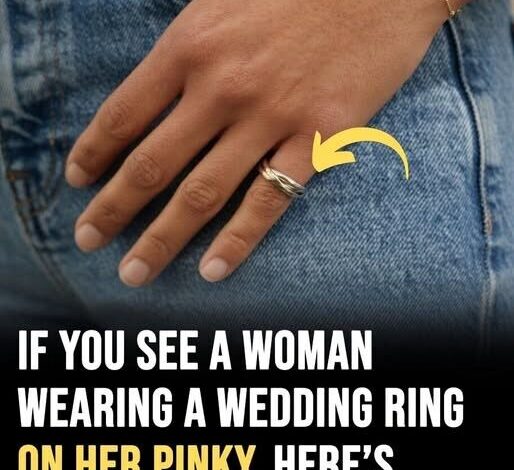
A pinky ring often marks a moment that doesn’t come with applause or announcement—the quiet end of something and the even quieter beginning of something else. It shows up after the last compromise that felt too heavy, after the realization that love should not require losing yourself, after the point where a woman stops asking, “Am I enough?” and starts answering that question for herself.
Placed on a finger untouched by tradition, it carries a meaning that isn’t inherited—it’s chosen. It doesn’t follow rules or expectations. There’s no ceremony attached to it, no script to read from. And that’s exactly what gives it power. It’s not about rejecting love, marriage, or connection. It’s about stepping outside the idea that those things are the only milestones worth honoring.
What makes the pinky ring different is how personal it is. It’s not worn for validation or display—it’s worn as a quiet agreement between a woman and herself. A promise that she will no longer abandon her needs to keep the peace. A reminder that she can build stability, happiness, and identity on her own terms.
Over time, it becomes something more than jewelry. It becomes a marker of growth. It holds the weight of invisible achievements—the therapy sessions where she finally said things out loud, the financial independence she fought to create, the boundaries she set and refused to break. It reflects the nights she chose herself, even when it was difficult, even when it meant starting over.
There’s also something deeply grounding about its constancy. Unlike life’s shifting circumstances—relationships, careers, expectations—the ring stays. It’s there in moments of doubt, catching light just enough to remind her of what she’s already survived and what she’s still capable of becoming. It doesn’t need to be explained to anyone else. Its meaning is fully intact, even in silence.
In a world that often frames a woman’s story around who she ends up with, the pinky ring quietly rewrites that narrative. It says her life is not a waiting room for love, nor a reflection of someone else’s choice. It’s a declaration that fulfillment doesn’t have a single shape—and that independence, self-respect, and growth are milestones worthy of recognition.
And maybe that’s what makes it so powerful. It answers a question most people never think to ask: not who chose her, but when did she finally choose herself?
Once that moment happens, the ring isn’t just symbolic anymore. It becomes something steady. Something lived. A small, constant reminder that her story belongs entirely to her—and that, on its own, is more than enough.