Born in a Bombed Hospital, He Became One of the Most Unforgettable Faces in Film, Now the World Says Goodbye

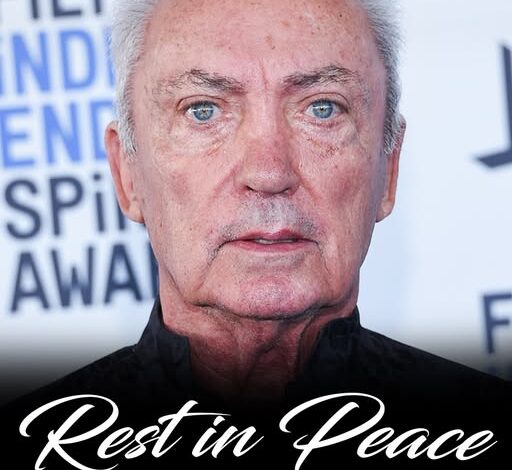
Some lives begin quietly, unfolding in predictable ways. Others begin in chaos—shaped by circumstances that seem almost impossible to overcome. Udo Kier’s story belonged firmly to the latter.
He entered the world under extraordinary conditions: a newborn in a hospital caught in the devastation of war, rescued from rubble alongside his mother after the building was bombed. It was more than a dramatic beginning—it was a reflection of the unpredictability that would define his life and career.
Decades later, that same child would become one of the most distinctive and enduring figures in film history.
A life that defied expectations
Udo Kier passed away at the age of 81 in Palm Springs, California, leaving behind a career that spanned over half a century and included more than 275 film roles.
His presence on screen was unmistakable. With sharp features, intense eyes, and a voice that carried weight even in silence, Kier had the rare ability to command attention instantly. Whether portraying villains, outsiders, or deeply unconventional characters, he brought a unique energy that made even brief appearances memorable.
But his journey to that point was anything but easy.
Born Udo Kierspe in Cologne, Germany, in 1944, he grew up in the shadow of war. His early years were marked by hardship—limited resources, instability, and the lingering effects of a country rebuilding itself. He spoke openly about those struggles, never romanticizing them, but recognizing how they shaped his resilience.
Even then, something in him pushed forward.
The discovery of a calling
From a young age, Kier felt drawn to performance—not just acting, but transformation. He was fascinated by the idea of stepping into different identities, of being seen and heard in ways that transcended ordinary life.
That curiosity led him to London, where he moved to learn English and explore opportunities beyond Germany. It was a bold decision, especially for someone with no clear path into the industry.
And then, as often happened in his life, everything changed through chance.
He was discovered in a coffee shop.
It wasn’t a carefully planned audition or a strategic breakthrough—it was a moment of coincidence that opened the door to an entirely new world. That single encounter set him on a path that would stretch across decades and continents.
A career built on unpredictability
Kier’s rise was unconventional. He didn’t follow the traditional trajectory of actors seeking mainstream fame. Instead, his career developed through unexpected meetings and bold choices.
One of the most pivotal moments came during a flight, where he met director Paul Morrissey. That encounter led to roles in Flesh for Frankenstein and Blood for Dracula, films produced by Andy Warhol that placed him firmly within a distinctive, boundary-pushing corner of cinema.
From there, his career expanded in all directions.
He became known for roles that lingered—characters that were strange, haunting, sometimes unsettling, but never forgettable. Kier embraced parts that others might avoid, understanding a simple but powerful truth:
Being memorable matters more than being conventional.
He often said that if you have a small role, it’s better to make it unforgettable than to disappear into the background. That philosophy became the foundation of his work.
Crossing worlds and genres
Throughout his career, Kier collaborated with some of the most influential filmmakers in both European and American cinema. Directors like Rainer Werner Fassbinder, Lars von Trier, and Dario Argento brought him into projects that challenged audiences and explored the edges of storytelling.
He moved effortlessly between art-house films and mainstream productions. From Breaking the Waves to Melancholia, from Ace Ventura: Pet Detective to Armageddon, his presence adapted to every environment without losing its intensity.
Even in supporting roles, he left a lasting impression.
That was his signature.
In Hollywood, he appeared in films like Blade, End of Days, and My Own Private Idaho. He also extended his talents beyond film, lending his voice to video games such as Command & Conquer: Red Alert 2 and Call of Duty: WWII. His portrayal of Yuri, in particular, became iconic among fans.
No matter the medium, he brought the same commitment and distinct presence.
A life lived authentically
Beyond his professional achievements, Kier lived with a quiet authenticity that defined his personal life.
He was openly gay at a time when many in the industry chose not to be. Yet he never made it the centerpiece of his identity. For him, the focus remained on the work—the craft, the performance, the ability to bring characters to life.
He once reflected that his sexuality was never treated as an issue in his career. It simply existed, like any other part of who he was.
That sense of self-assurance carried through everything he did.
In 1991, he settled in Palm Springs, where he lived in a converted mid-century library—a space that reflected his appreciation for creativity and design. He remained connected to his audience, attending festivals, meeting fans, and maintaining a presence that felt approachable despite his long career.
A legacy of individuality
Kier often spoke about his filmography with humor and honesty. Not every project, he admitted, was perfect. Some were forgettable, some were enjoyable, and a few were truly exceptional.
But that wasn’t the point.
What mattered was the journey.
His career wasn’t built on perfection—it was built on persistence, curiosity, and a willingness to take risks. He refused to be confined to a single image or genre, instead choosing roles that challenged both himself and his audience.
That willingness to explore made his work stand out.
Remembering an unforgettable presence
With his passing, the film world loses a figure who never fit neatly into any category.
Udo Kier was not defined by conventional success. He was defined by presence, by bold choices, and by a commitment to being unforgettable in every role he took on.
From a newborn pulled from the ruins of war to an actor whose face and voice became instantly recognizable across generations, his life was a testament to resilience and individuality.
His story reminds us that extraordinary paths are rarely straightforward.
And that sometimes, the most lasting impact comes not from following expectations—but from redefining them entirely.