Nostradamus and his predictions: three interpretations that some relate to the near future.

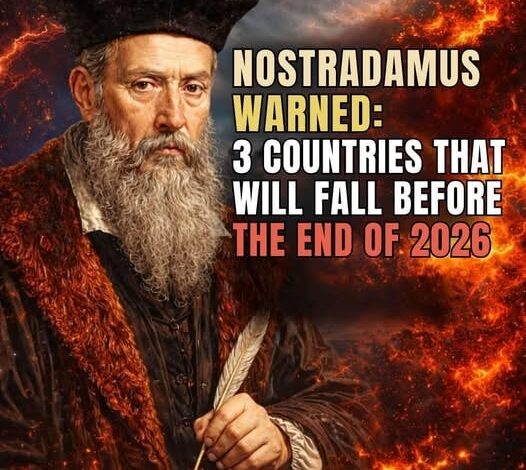
Nostradamus has endured for centuries not because he offered clear answers, but because he mastered ambiguity. His verses don’t tell the future—they invite interpretation. Images like a weakened eagle, a cornered bear, or a fading lion feel strikingly relevant today, not because they predict specific events, but because they reflect enduring patterns of uncertainty and tension. They echo what people already sense: shifts in power, instability in leadership, and questions about identity in a rapidly changing world.
That’s the quiet strength of his writing. It adapts. Each generation finds its own reflection in the same lines, projecting contemporary fears onto centuries-old words. In times of geopolitical strain, those symbols take on renewed meaning—America grappling with internal doubt, Russia navigating pressure and isolation, Britain reconsidering its place in a shifting global landscape. The quatrains don’t create these anxieties; they simply give them a poetic shape.
But what they ultimately reveal says more about us than about destiny.
Nostradamus’ work acts less like a roadmap and more like a mirror. It highlights how often history moves in cycles—how nations rise, struggle, recalibrate, and sometimes reinvent themselves entirely. The imagery feels prophetic because these patterns are familiar. Power has never been static. Alliances have always been fragile. Periods of uncertainty have always tested societies in ways that feel unprecedented in the moment, but recognizable in hindsight.
And within those cycles, something important remains constant: choice.
The verses don’t lock anyone into a predetermined future. They don’t dictate collapse or guarantee renewal. Instead, they underscore the space between the two—the moment where decisions are made, where leadership is tested, and where ordinary people adapt in ways that shape outcomes more than any prediction ever could.
That’s where their real relevance lies.
Not in forecasting doom, but in prompting awareness. In reminding us that instability, while unsettling, is not permanent. That moments of doubt can coexist with opportunities for reinvention. That history is not just something that happens—it’s something that is continually shaped.
So while Nostradamus’ words may feel haunting, their deeper message is quieter and more grounded: uncertainty is not the end of the story. It’s the point where the next chapter begins—and how that chapter unfolds is never written in advance.