MIKE PENCE SHOCKS THE NATION WITH A TEARFUL GOODBYE AS HE REVEALS THE HEARTBREAKING TRUTH BEHIND HIS SUDDEN EXIT FROM PUBLIC LIFE AND THE HIDDEN TOLL OF HIS FINAL POLITICAL BATTLE

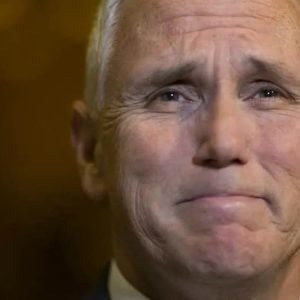
For a figure whose public identity had long been defined by composure and restraint, the moment felt strikingly out of character. The setting was familiar—a press room, cameras fixed, lights steady—but the tone was different. There was a stillness that didn’t belong to routine political appearances. When Mike Pence stepped forward, it wasn’t with the practiced cadence people had come to expect, but with a visible hesitation, as if the words carried more weight than usual.
He paused before speaking, looking out across the room in a way that suggested this wasn’t just another address. The prepared remarks were there, glowing on a teleprompter, but he seemed only loosely tethered to them. What followed felt less like a formal statement and more like something personal—carefully considered, but not polished to remove its edges.
As he began, there was a noticeable shift in tone. He spoke about the demands of public life, not in abstract terms, but as something lived and felt over time. The responsibilities, the scrutiny, the constant pressure—things often discussed from a distance—were described as cumulative, shaping both his work and his private life. There was an acknowledgment that the role had extended beyond policy and decision-making, reaching into areas that are harder to quantify: family, identity, and personal balance.
His voice, usually steady, carried a different texture—less controlled, more reflective. He spoke about the impact on those closest to him, about the challenges of maintaining a sense of normalcy in an environment that rarely allows for it. The idea that public service comes with personal cost wasn’t new, but hearing it framed in such direct terms gave it a different resonance.
At the center of his remarks was a broader realization: that the role he held had become deeply intertwined with his sense of self. Stepping back, he suggested, was not about a single moment or decision, but about reassessing what mattered most. The emphasis shifted toward family, toward a different understanding of success—one not defined solely by position or influence.
When he finished, there was no immediate response. The room remained quiet for a moment, as if people were processing what they had just heard. It wasn’t the kind of silence that follows confusion, but the kind that follows something unexpected.
As he left the podium, the formality of the setting remained, but the atmosphere had changed. The moment stood apart from the usual rhythm of public statements, not because of its content alone, but because of how it was delivered.
In the aftermath, reactions varied, as they often do. Some focused on the personal dimension of what had been shared, noting the departure from typical political messaging. Others viewed it through a broader lens, considering what it might mean in the context of public life and leadership. But across those perspectives, there was a common recognition that the moment had revealed something less frequently seen: the intersection of public role and private reflection.
Whatever interpretations follow, the scene itself remains distinct—not as a definitive statement, but as a pause in a larger narrative, where the usual boundaries between public image and personal experience briefly became less defined.