The Secret Grains In The Bed, Why I Panicked Over Tiny Black Seeds Under My Mattress Until A Call To My Grandmother Revealed Their Chilling Origin

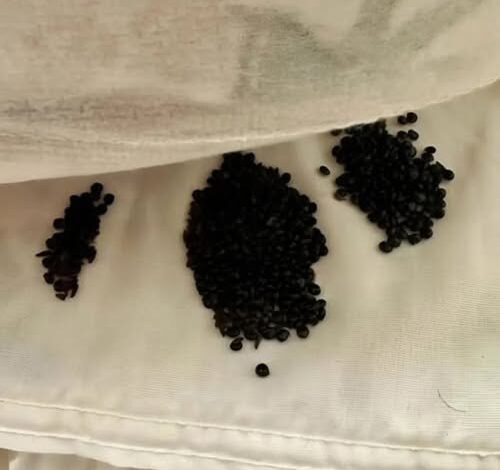
At first, it felt like I had uncovered something I really didn’t want to deal with. It was just a normal Sunday—one of those quiet days spent catching up on chores. I was flipping the mattress, shaking out the sheets, and clearing away the dust that collects in places you don’t usually see. Nothing unusual… until I reached the corner of the box spring.
That’s when I noticed them.
Small, black specks clustered together, tucked into the fabric as if they had been placed there on purpose. My heart immediately started racing. They weren’t random, and they definitely didn’t belong. I froze, staring at them, my mind jumping straight to the worst possibilities. Years of hearing about infestations and hidden pests kicked in all at once. In that moment, I was convinced I had discovered something alive—or at least something that had been.
Fear has a way of getting ahead of logic. I didn’t see harmless objects; I saw a problem waiting to get worse. The grains were dry, slightly shiny, and oddly uniform. They didn’t move, didn’t smell, didn’t react—but somehow that made it worse. I carefully picked a few up with a tissue, trying not to touch them directly. Even then, I felt uneasy, like I was handling something I didn’t understand.
My thoughts spiraled quickly—exterminators, deep cleaning, maybe even replacing the mattress. It felt like my space, the one place that should feel safe, had been quietly invaded.
Before letting panic take over completely, I snapped a photo and sent it to a friend who knows a lot about plants and traditional remedies. I expected concern, maybe even a warning. Instead, her reply came back almost instantly:
“That’s Kalonji.”
I stared at my phone, confused. Black seed? I knew the name, vaguely—from cooking or health articles—but that didn’t explain why it was under my mattress. If anything, it made the situation feel even stranger. Seeds don’t just appear there on their own.
That’s when curiosity started to push back against the fear.
I began looking into it, and what I found shifted everything. In many cultures, Nigella sativa—black seed—is more than just a spice or supplement. It’s tied to long-standing traditions, often used in quiet, symbolic ways. People place it in homes, near beds, or in personal spaces as a form of protection or comfort. Not in a dramatic or superstitious sense, but as a small, meaningful gesture.
Suddenly, the pieces started to come together.
My grandmother had visited recently.
She’s always been someone who expresses care through actions rather than words. I remembered how she spent time in my room, tidying up, organizing things, moving slowly and thoughtfully. At the time, it seemed like nothing unusual. Now, it felt intentional.
I called her.
When I asked about the seeds, she didn’t hesitate. She laughed softly, almost amused that I had finally noticed. There was no secrecy, no awkwardness—just calm reassurance. She told me she had placed them there herself. Not to hide anything, not to alarm me, but because she had noticed I seemed stressed, restless.
“I just wanted you to sleep better,” she said.
That was it.
No long explanation. No attempt to convince me of anything. Just a simple act, rooted in care.
In that moment, everything changed. What had felt unsettling just an hour earlier now felt deeply personal. The fear faded, replaced by something quieter—understanding, maybe even appreciation. It wasn’t about whether the seeds had any real effect. It was about what they represented.
We’re used to thinking of protection as something visible and measurable—locks, alarms, systems we can control. But this was different. This was quiet, almost invisible. Something done without needing recognition.
I left the seeds where they were.
Not because I fully believe in their traditional meaning, but because they now carry something else. A reminder that care doesn’t always look the way we expect it to. Sometimes it’s subtle, hidden, and easy to misunderstand at first.
That experience changed how I react to things I don’t immediately understand. Not everything unfamiliar is something to fear. Sometimes it’s just something waiting to be explained.
And sometimes, what looks like a problem at first turns out to be something much softer—something placed there out of love, quietly doing its job in the background, even when you don’t realize it.