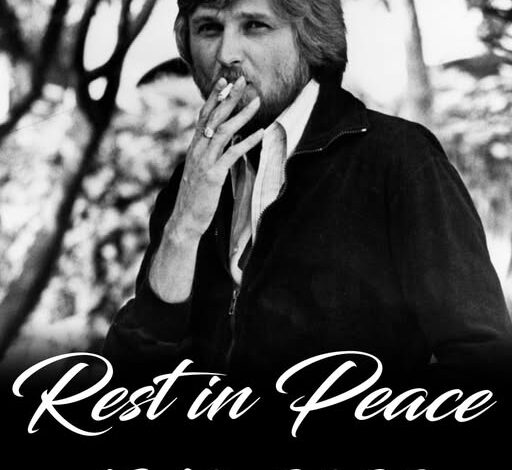
The passing of Chip Taylor at the age of 86 brings a quiet close to the life of a man whose music never really stopped speaking. Born James Wesley Voight, he emerged from a family that already had a foothold in the public eye, yet he chose a different kind of spotlight—one that didn’t center on his face, but on the feelings his songs could evoke. Over time, he proved that recognition isn’t always about visibility; sometimes, it’s about resonance.
From the start, Taylor’s gift was clear: he had an instinct for capturing emotion in its simplest, most universal form. His songwriting didn’t rely on complexity or ornament—it leaned into honesty. That’s part of what made tracks like Wild Thing so explosive in their impact. The song’s raw, stripped-down energy turned it into an anthem almost overnight, especially through its famous recording by The Troggs. It was bold, immediate, and unforgettable—a track that didn’t ask for attention so much as demand it.
In contrast, Angel of the Morning revealed another side of his artistry. Tender, reflective, and emotionally layered, the song became a vehicle for multiple artists across generations, including Merrilee Rush and later Juice Newton. Each version carried its own interpretation, yet the core feeling remained intact—an intimate vulnerability that listeners could recognize in their own lives. That ability to write songs that could be reimagined without losing their essence is part of what made Taylor’s work endure.
Throughout his career, he occupied a unique space in the music world. He wasn’t always the most visible figure, nor the loudest voice in the room, but his influence traveled far and wide. His songs crossed genres, moving from rock to country to pop without losing their emotional center. Artists sought out his writing not just for its structure, but for its soul. He understood that a great song isn’t just heard—it’s felt, remembered, and returned to in moments that matter.
Beyond the music itself, those who knew Taylor personally often describe a man who mirrored the tone of his work: unpretentious, warm, and deeply human. He treated collaborators not as stepping stones, but as partners in something meaningful. There was a generosity in how he approached both life and art, a sense that music was meant to connect rather than elevate one person above another. Friends recall conversations that felt easy and genuine, while family members speak of a steady presence—someone who valued closeness over acclaim.
In his later years, Taylor remained connected to his craft, continuing to write and perform in more intimate settings. There was no urgency to chase the spotlight again; instead, he seemed content letting the work speak for itself, just as it always had. His relationship with music had matured into something quieter but no less powerful—a reflection of a life lived with intention rather than excess.
When it came time for his final days, that same sense of calm carried through. Surrounded by those closest to him, he passed peacefully, in a way that echoed the grounded nature people had come to associate with him. It wasn’t a dramatic exit, but rather a gentle closing note—fitting for someone whose greatest strength was subtlety.
As news of his passing spreads, tributes from across the music world continue to surface. Fellow songwriters, performers, and fans alike are revisiting the tracks that shaped their memories—songs that played during road trips, heartbreaks, celebrations, and quiet moments alone. His catalog has become woven into the fabric of everyday life for millions, often without them even realizing the source.
And that may be the most powerful part of his legacy. Chip Taylor didn’t just write songs that succeeded in their time—he created pieces of emotional history that people carry with them. His work didn’t fade as trends shifted; it adapted, resurfaced, and found new meaning with each generation that discovered it.
So while his passing marks the end of his physical presence, it doesn’t signal silence. Every time the unmistakable chords of “Wild Thing” spark energy in a room, or the opening lines of “Angel of the Morning” stir something deeply personal, he is there in the background—steady, familiar, and enduring. His voice may never have been the one most people recognized, but his music ensured he would never truly be unheard.