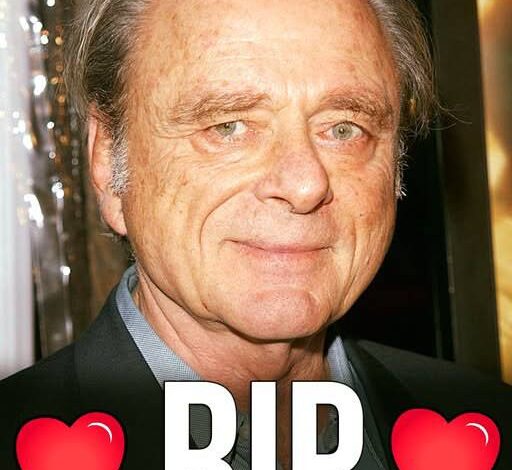
He was part of that uncommon group of actors whose very presence could ground a scene before a single line was fully delivered. Harris Yulin built a career not on spectacle, but on precision—on the quiet authority that comes from truly understanding a character rather than performing one. Whether appearing in Scarface, Training Day, Ghostbusters II, Frasier, Ozark, or across a long list of stage and screen credits, he rarely positioned himself as the focal point. Yet, time and again, he became the axis around which the emotional weight of a moment revolved. His performances did not demand attention; they earned it, unfolding gradually with a kind of disciplined subtlety that invited the audience to lean in rather than be overwhelmed.
There was something unmistakably deliberate in the way he worked. Every gesture, every pause, every inflection carried intention. Yulin understood that silence could be as revealing as dialogue, and he used that space masterfully. His characters often carried a quiet tension—an undercurrent of intelligence, authority, or even menace that never needed exaggeration. He trusted the material, and more importantly, he trusted the audience to meet him halfway. In an era that often rewards volume and visibility, his restraint felt almost radical.
Beyond his on-screen and on-stage work, his legacy extended deeply into the world of teaching. At Juilliard, he became known not only as an instructor, but as a steward of the craft itself. He approached acting as a discipline rooted in observation, empathy, and rigorous honesty. For Yulin, performance was not about being seen—it was about seeing clearly. He challenged students to strip away vanity, to resist shortcuts, and to engage fully with the complexities of human behavior. Those who studied under him often recall his insistence that the work demanded integrity above all else—that acting, at its best, is an act of responsibility as much as creativity.
His teaching style mirrored his performances: measured, thoughtful, and deeply committed. He was not interested in easy praise or quick validation. Instead, he pushed his students toward a deeper understanding of their own instincts and limitations, encouraging them to develop a lasting relationship with the craft rather than chasing fleeting success. Many of his students carried those lessons forward into their own careers, extending his influence far beyond any single production or performance.
In the end, Harris Yulin leaves behind something more enduring than a list of roles. Survived by his wife, Kristen Lowman, and by the countless actors who passed through his classrooms, his legacy is embedded in a philosophy of work—one that values listening over speaking, substance over display, and truth over recognition. He did not cultivate a persona; he cultivated a standard. And in doing so, he ensured that his presence would continue to resonate, not just in the scenes he inhabited, but in the generations of performers who learned from his example to approach their craft with the same quiet intensity and unwavering respect.