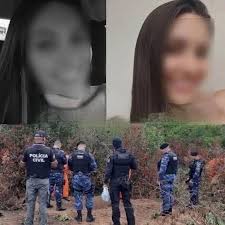
When the call finally came, it didn’t feel real at first. After days filled with dread, unanswered questions, and the quiet fear that no one wanted to speak out loud, the news arrived almost too suddenly to process: Carolina and Luiza had been found alive. For a brief moment, everything seemed to stand still—then relief came rushing in all at once.
Their family broke down in tears, the kind that come not from grief, but from the overwhelming release of it. Friends who had spent sleepless nights waiting for updates embraced each other tightly, as if letting go might somehow undo the moment. Neighbors stepped out of their homes, some crying, some simply standing in stunned silence, trying to take in what had just happened. The tension that had gripped the entire community for days finally began to loosen, replaced by something warmer, something human—relief shared across streets, across conversations, across people who had been strangers just days before.
What made it even more powerful was how far that concern had spread. Many who had never met the twins had followed their story closely, holding onto hope through every update. Their names and faces had become familiar, carried in thoughts, in prayers, in quiet moments of reflection. People checked their phones constantly, refreshed news feeds, and asked one another for updates as if they were talking about their own family. And now, finally, the outcome everyone had been hoping for had arrived.
But even in the midst of that relief, there is an understanding that the story isn’t over.
Behind the scenes, investigators continue their work—carefully, methodically—trying to understand exactly what happened and how such a situation unfolded. Questions remain, and answers will take time. For authorities, the focus now is not only on clarity, but on ensuring that whatever occurred can be fully understood and, if possible, prevented in the future.
For the family, however, the priority is much simpler, and much more personal.
Healing.
After days of fear and emotional exhaustion, they are now faced with the quiet, difficult process of recovery. Protecting Carolina and Luiza’s privacy has become essential, allowing them the space to rest, to feel safe again, and to begin making sense of everything they’ve been through. The public attention that once helped bring awareness is now something to be gently kept at a distance, as the family turns inward to focus on one another.
Around them, the community has changed in subtle but meaningful ways. People greet each other more often, conversations last a little longer, and there’s a shared awareness of how fragile normal life can be. Parents hold their children closer, lingering a few seconds more during hugs, walking them to doors instead of watching from a distance. Small gestures—once routine—now carry deeper meaning.
There’s also a quiet pride in how the community responded. During the search, people came together without hesitation—organizing, sharing information, supporting the family in any way they could. That sense of unity doesn’t disappear overnight. It lingers, reshaping how people see one another, reminding them of what can happen when individuals act together with a common purpose.
In the end, the return of the twins represents more than just the resolution of a frightening situation. It marks the restoration of something that had been shaken—trust, hope, and the belief that even in moments of uncertainty, people can come together and make a difference.
Carolina and Luiza came home.
And with them, a sense of shared humanity returned too—stronger, deeper, and not easily forgotten.