The Hidden Meaning Of The Green Glow, Why Your Neighbors Are Swapping Their Porch Lights And The Emotional Secret Every Veteran Knows

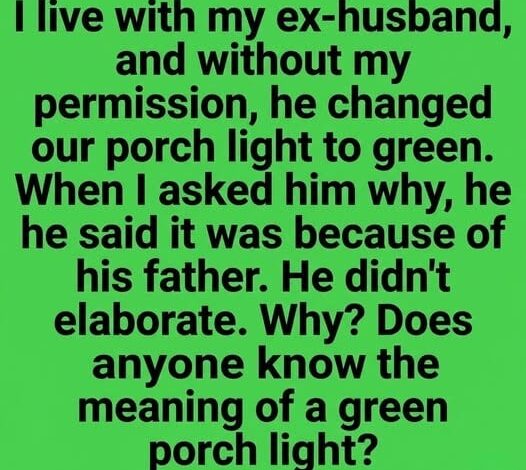
In neighborhoods that seem quiet and unchanged on the surface, a subtle shift has begun to take shape as evening falls. If you take a drive through suburban streets today, you may notice something different woven into the familiar glow of porch lights. Alongside the usual warm yellows and bright whites, a soft green light now appears here and there—steady, calm, and quietly intentional. At first glance, it might seem decorative or seasonal, but behind that gentle glow is a deeper meaning, one rooted in respect, awareness, and community support.
The green porch light has become a quiet symbol tied to veterans—those who have served and returned home carrying experiences that often go unseen. While public displays of appreciation tend to happen during specific holidays or ceremonies, the reality of a veteran’s transition back into civilian life is far less visible. It’s often a personal, ongoing process that doesn’t end when the uniform is put away. Many face challenges that are difficult to express, and the sense of connection they once had can feel distant in everyday civilian routines.
In that context, something as simple as a green light can take on a powerful role. It becomes a quiet signal—one that doesn’t demand attention but offers reassurance. For someone who has served, seeing that light can serve as a reminder that their presence is acknowledged, that their contributions are remembered, and that they are still part of the community around them.
The idea behind this movement is intentionally simple. Green is often associated with renewal, calm, and forward movement. By choosing this color, communities are creating a visual message that support doesn’t have to be loud to be meaningful. It’s not about grand gestures; it’s about consistency. Night after night, that light stays on, offering a steady reminder that appreciation doesn’t fade once the headlines do.
What makes the green light especially impactful is how it spreads. One home adopts it, a neighbor asks about it, and a conversation begins. Over time, that single point of light can grow into something larger—a shared understanding across a street, then a neighborhood. It becomes less about the bulb itself and more about the awareness it creates. People begin to think more intentionally about how they can support veterans in practical ways, whether through local initiatives, volunteering, or simply being more open to listening.
For many, it becomes a starting point. A small action that leads to deeper engagement. Changing a lightbulb may seem minor, but it can shift perspective. It encourages people to consider the experiences of others and recognize that support can take many forms, including the quiet ones.
There’s also something important about its visibility. In a time when much of our communication happens online, the green porch light brings that message back into the physical world. It’s local, immediate, and tangible. You don’t need to search for it—it’s just there, part of the environment, quietly reminding everyone who passes by of its meaning.
At the same time, it sparks curiosity. Someone unfamiliar with the symbol may ask why a light is green, and in that moment, a conversation begins. That conversation keeps awareness alive beyond designated days of recognition. It helps ensure that the topic of veteran support remains present throughout the year, not just during moments of national attention.
For veterans, especially those navigating difficult adjustments, these small signs can matter more than people realize. Even if no words are exchanged, the presence of that light can create a subtle sense of connection. It’s not a solution to every challenge, but it contributes to an environment where support is visible and ongoing.
Choosing to install a green porch light doesn’t require much effort, but it carries intention. It reflects a willingness to acknowledge others and to be part of something larger than oneself. It’s a reminder that community isn’t just about proximity—it’s about awareness and care.
As more people adopt the practice, the collective effect becomes clearer. Streets that once looked ordinary begin to tell a story, one light at a time. Not a loud statement, but a consistent one. A signal that appreciation doesn’t have to fade, and that even the smallest actions can carry meaning.
In the end, the green glow represents something simple yet enduring: a quiet promise that those who have served are not forgotten, and that support can exist in everyday spaces—even in something as ordinary as a light left on at night.