A Former Navy Sniper Bought 800 Acres In The Rockies. When Intruders Came, She Used One Tactic That Changed Everything

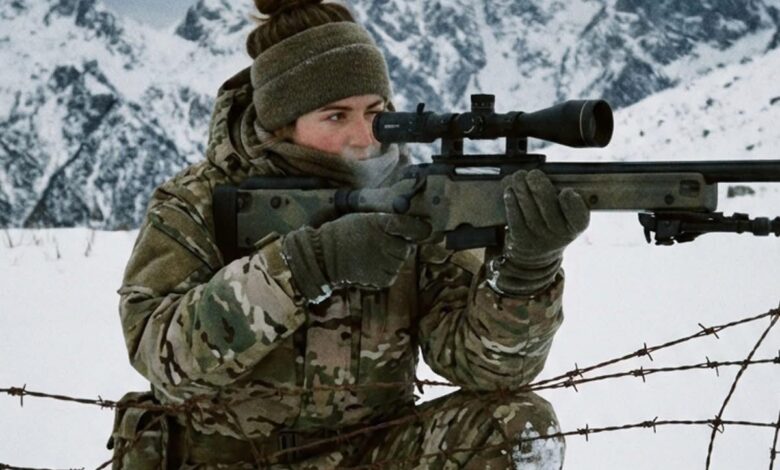
The Mountain’s First Warning
The mountain taught me its first rule quickly: it does not forgive carelessness.
Three weeks after I finalized the purchase and moved onto eight hundred acres deep in the Northern Rockies—land no developer wanted to wrestle with—I learned that lesson firsthand. Cell service barely reached this far. The terrain was too unforgiving for investors and too remote for most people to bother with.
For someone like me, that was exactly the point.
I had spent fifteen years learning how to disappear. This mountain was where I intended to finish the job.
Instead of building walls, I built layers.
Steel-reinforced fencing blocked the only sensible path to the ridgeline. Motion sensors were buried beneath the snowline where storms couldn’t trigger them. Thermal cameras watched the valleys where cold air carried sound across miles of forest.
Everything I did was legal.
And everything I did was designed to keep the world out.
A Life Before the Mountain
I had been an American citizen for fifteen years.
Before that, I served as a Navy sharpshooter. Later I became a doctor.
The military gave me medals. The hospital gave me retirement papers. The government gave me therapy referrals and medication that never quite worked.
None of those things brought quiet.
So I bought a mountain.
Christmas Eve
Snow fell on Christmas Eve, blanketing the forest in silence.
At 10:47 p.m., my perimeter alarm chirped once.
I was standing barefoot on the concrete kitchen floor I had poured myself that summer. My coffee sat cold beside me, forgotten.
I didn’t call the sheriff.
The nearest station was forty minutes away down winding mountain roads. Whoever had triggered the alarm would be gone long before help arrived.
So I grabbed my binoculars, pulled on boots and a jacket, and stepped into the frozen night.
The snow muted every sound.
I moved uphill slowly, the way the Navy had taught me—careful, deliberate, thinking three steps ahead.
When I finally saw them, I stopped.
Three heat signatures glowed in my thermal viewer.
Each carried a rifle.
At first I assumed poachers. But as I watched longer, something felt wrong.
One man ran his hand along the fence, testing for weak points. Another marked notes on a glowing tablet. The third studied the terrain.
They weren’t hunting deer.
They were studying my defenses.
The Warning
I didn’t reach for my rifle.
Instead, I activated the speaker system mounted along the perimeter.
My voice carried through the forest.
“You’re trespassing on private property,” I said calmly. “Turn around and leave.”
All three men froze.
One of them laughed harshly.
“We’re just passing through,” he called back.
I adjusted my stance, weight balanced.
“This mountain isn’t a shortcut,” I replied. “You’re not welcome here.”
One of them lifted his rifle slightly.
Just a small movement.
But it changed everything.
Because they had overlooked something important.
They hadn’t tested the land itself.
What Happened in the Dark
I never fired a shot.
I didn’t need to.
The first man lost his footing when the snow collapsed beneath him. Months of studying the terrain had taught me every hidden slope and ice shelf on that mountain.
He slid twenty feet down a concealed embankment and slammed into a fallen log. His rifle vanished into the dark.
The second man raised his weapon.
By then I was already behind him.
I twisted the rifle barrel downward and drove him to the ground before he could react. The maneuver came automatically—muscle memory from another life.
The third man ran.
Smartest of the three.
I let him go.
Fear would carry the message further than I ever could.
A Message Delivered
I zip-tied the two men’s wrists and dragged them outside my property line.
Then I handed them a satellite phone.
“Call whoever hired you,” I said evenly. “Tell them this land isn’t for sale.”
I paused.
“And tell them the next group might not leave unharmed.”
By morning they were gone.
The Sheriff
On Christmas morning the county sheriff arrived.
He sat in his truck for a long time before stepping out, studying the cameras, the fencing, the layout of the property.
Finally he walked up.
“Expecting trouble?” he asked.
“No,” I replied.
“I’m preventing it.”
He checked my deed, glanced at the defenses again, and asked one more question.
“You military?”
“Used to be.”
He nodded once.
That was enough explanation for him.
The Drones
Two weeks later the drones started appearing.
Small. Silent. Modified commercial models.
I logged six of them in January alone.
The first one I disabled with a homemade signal jammer.
The second mysteriously lost power near a ridge known for electromagnetic interference.
Someone was trying to see what I was guarding.
Instead, they learned how difficult it was to look.
The Phone Call
Then my old teammate Evan Brooks somehow found my number.
“You’ve got the wrong people interested in your land,” he said without greeting.
“What people?” I asked.
“Wildlife traffickers. High-end stuff. Rare animals. They use remote land as smuggling routes.”
I looked across the mountain range.
“They think your property is a perfect corridor,” Evan added.
I laughed quietly.
“They’re mistaken.”
“They think you’re the problem,” he said.
I answered calmly.
“I just wanted peace.”
The Second Attempt
In February they returned.
Six men this time.
Better gear. Better coordination.
They approached from three directions.
They believed numbers would overwhelm my defenses.
They didn’t understand the terrain.
When they reached the clearing near my cabin, I flipped the switch.
Every floodlight on the property ignited at once.
The forest exploded into blinding brightness.
My voice echoed through the speakers again.
“This is your final warning. Leave now.”
One man shouted back, “This mountain isn’t yours!”
I smiled in the darkness.
“I own the deed,” I replied. “Gravity owns the rest.”
Then I activated the confusion lights—strobes designed to distort depth and balance.
Within minutes they were retreating, stumbling over each other and scrambling downhill.
They left equipment behind.
By morning, word had spread.
No one came back.
The Return Visitor
Eight months later one man approached the fence.
Alone.
Unarmed.
He stopped ten feet from me.
“I was with the second group,” he said.
“Why come back?” I asked.
He hesitated.
“I want to understand how you scared six trained men away without firing a shot.”
I studied him.
“You scared yourselves,” I answered. “You expected no resistance. When that assumption broke, so did your plan.”
He nodded slowly.
“I quit after that night,” he said. “Got a job in Missoula.”
I opened the gate.
“Good,” I told him. “Keep it that way.”
He left.
And never returned.
The Government Offer
By spring, the mountain grew quiet again.
Then a letter arrived from federal wildlife officials.
They had been tracking a smuggling route through the region. Every attempt to cross my land had failed.
The lead agent visited personally.
“We’d like to establish a conservation easement,” he explained. “Your land becomes a protected choke point.”
“No roads?” I asked.
“No public access.”
“No development?”
“None.”
“Then it stays wild?”
“Yes.”
I signed.
Because the truth was simple.
I never owned the mountain.
I belonged to it.
A Different Kind of Victory
The defenses still exist.
The fence. The cameras.
But most days they gather dust.
The animals returned first.
Then the silence.
One year after that first intrusion, I sat by the fire on Christmas Eve while snow pressed softly against the windows.
The monitoring radio crackled once with a routine signal check.
Then nothing.
Just the quiet sound of a house settling around someone who no longer expected war.
And for the first time in years, I smiled.
Because sometimes victory isn’t defeating your enemies.
Sometimes it’s making your boundaries so clear that no one chooses to cross them.