The real story, in the end, is not just about how someone died—but how quickly the world decides who they were.
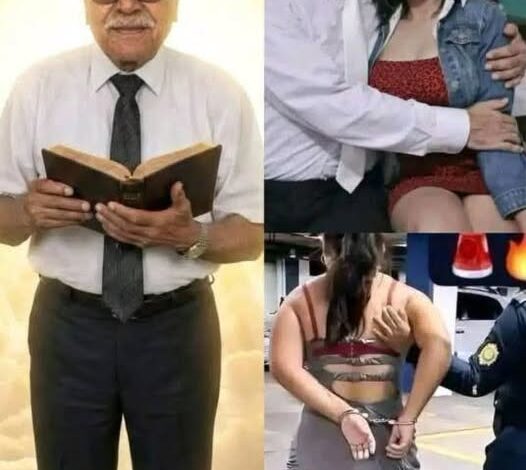
When news broke that a well-known pastor had been found dead in a motel room, the reaction was immediate and overwhelming. Shock turned into speculation. Confusion turned into narrative. Within hours, strangers who had never met him were piecing together theories, filling in gaps with assumptions, and projecting meaning onto a moment no one yet fully understood.
But the truth rarely moves at the same speed as rumor.
And it almost never fits neatly into a headline.
In life, the pastor had been many things to many people.
To his congregation, he was a voice of clarity in moments of chaos—a man who could take pain, confusion, and doubt and translate them into something hopeful. His sermons weren’t just performances; they were conversations. He spoke to people where they were, not where they were expected to be.
To those who worked alongside him, he was disciplined, committed, and deeply invested in the lives of others. He showed up—consistently, quietly, and often without recognition.
But like anyone who carries the weight of other people’s struggles, he also carried something less visible.
Responsibility.
Expectation.
And a kind of exhaustion that rarely makes it into public view.
That’s what made the circumstances of his death so difficult for many to process.
A motel room—anonymous, ordinary, disconnected from the life people associated with him—felt like a contradiction. It disrupted the image. It raised questions not just about what happened, but about who he might have been when no one was watching.
And in that uncertainty, people did what they often do.
They tried to explain it.
Quickly.
Loudly.
And not always fairly.
But those closest to him resisted that impulse.
They spoke not in speculation, but in memory.
They remembered the long hours. The phone calls answered late at night. The quiet moments when he sat with someone in pain and didn’t try to fix it—just listened. They remembered a man who gave more than he kept, who showed strength publicly and carried strain privately.
“He helped people hold their lives together,” one friend said. “But I don’t know how often anyone asked how he was holding his.”
That question—simple, but often overlooked—lingers in stories like this.
As investigators continue their work, the facts will eventually become clearer. A cause will be determined. A timeline will be confirmed. The unknowns will, slowly, be replaced with answers.
But even when that happens, something else remains.
The way the story was received.
The speed at which judgment arrived.
The ease with which complexity was flattened into something easier to consume.
Because there is something deeply human about discomfort with ambiguity.
We want explanations. We want certainty. We want stories that resolve cleanly—heroes who remain untarnished, leaders who remain consistent, lives that align perfectly with the roles people assign to them.
But real lives don’t work that way.
People are layered.
Contradictory.
Capable of strength and struggle at the same time.
In the days following his death, the vigil became a turning point.
Not because it answered questions—but because it shifted focus.
Candles replaced commentary. Stories replaced speculation. The room filled not with theories, but with memories—real, grounded, deeply personal moments that couldn’t be reduced to a headline.
People spoke about what he had meant to them.
Not what they thought had happened.
And in that space, something important returned:
Perspective.
It became clear that whatever the circumstances of his final hours, they did not define the totality of his life.
They were a moment.
A tragic one, yes—but still only a fragment of a much larger story.
There is a tendency, especially in moments like this, to let the ending rewrite everything that came before it.
But the people who knew him best refused to do that.
They held onto the full picture.
The work. The impact. The presence he had in their lives.
The humanity.
Because in the end, that’s what stories like this reveal—not just about the person at the center, but about everyone watching from the outside.
How quickly we react.
How easily we assume.
How rarely we pause.
And maybe that pause is the most important part.
The space between what we hear and what we believe.
Between what is reported and what is real.
Between the headline—and the human being behind it.
Because the real story isn’t just about how he died.
It’s about how he lived.
And whether we are willing to give that life the same attention, care, and patience that we give the mystery surrounding its end.