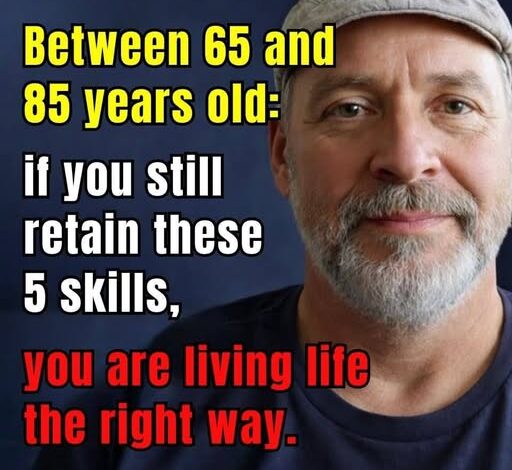
Between the ages of 65 and 85 – if you still have these 5 skills, you are aging better than most people!

The idea of “aging well” is often distorted in a society that idolizes youth. We are constantly exposed to messages suggesting that successful aging means avoiding wrinkles or maintaining the same relentless pace of middle age. Yet by 2026, insights from psychology and gerontology point to a very different understanding. True vitality between the ages of 65 and 85 is not about resisting change, but about the richness of one’s inner life. It reflects how a person inhabits the years they have lived.
Although this stage of life may bring a reduction in physical range—daily routines settle, social networks may grow smaller, and the body moves at a slower rhythm—the individuals who age most successfully often experience a surprising expansion within. Their outlook becomes deeper, their resilience strengthens, and their identity grows clearer and more authentic. If someone in this age group still demonstrates the following five psychological capacities, they are experiencing a level of healthy aging that goes far beyond the norm.
The first ability is adaptability in the face of change while preserving a stable sense of identity.
There is a persistent stereotype that older adults are inflexible or resistant to change. In reality, later life requires remarkable mental flexibility. Those who age gracefully are rarely rigid; instead, they are emotionally and psychologically adaptable. This adaptability often appears quietly: learning to navigate modern technology after decades of simpler tools, accepting physical limitations without letting them define one’s self-worth, or discovering new meaning after long-standing roles—such as careers or parenting responsibilities—fade. This capacity to adjust acts as a powerful buffer against life’s disruptions. It reflects the strength to absorb change without being broken by it.
The second marker of healthy aging is maintaining curiosity and a learner’s mindset.
Continuing to learn does not necessarily mean pursuing advanced degrees or mastering complicated skills. Instead, it often shows up in small ways: exploring a new phone feature, trying an unfamiliar dish, or listening openly to the ideas of younger generations. Curiosity keeps the mind active and connected to the present moment. When someone stops asking questions or loses interest in learning, they begin to drift away from the flow of life. Even modest acts of curiosity help keep the brain engaged and prevent the stagnation that can mistakenly be attributed to aging.
The third skill is emotional regulation built on experience and maturity.
Many people between the ages of 65 and 85 report feeling calmer and more emotionally balanced than they did earlier in adulthood. Psychologists sometimes describe this as the “positivity effect.” It reflects a reduced tendency to react strongly to minor frustrations, social disagreements, or everyday inconveniences. Instead of needing to prove themselves or win every argument, emotionally healthy older adults choose peace over pride. They understand which situations deserve their energy and which are better left alone. This emotional composure often makes them comforting companions for others while also protecting their own well-being.
The fourth capacity is sustaining meaningful relationships even as social circles evolve.
Aging well does not depend on maintaining a busy social calendar. Instead, it involves nurturing relationships that are authentic and emotionally nourishing. As time passes, social networks naturally become smaller, but they also tend to become deeper. Having the initiative to call a friend, the ability to engage in conversations that go beyond surface topics, and the courage to be emotionally open with at least one trusted person are powerful safeguards against loneliness. True connection is not about the number of people in one’s life, but about feeling genuinely understood.
The fifth and perhaps most transformative skill is discovering value beyond productivity.
For most of adulthood, society encourages us to measure our worth by what we accomplish—our careers, achievements, and contributions. However, later life invites a different perspective. Aging well often involves shifting from defining ourselves by what we produce to appreciating who we are. This means learning to enjoy a quiet afternoon without feeling guilty about not being “productive.” It means recognizing that presence, wisdom, attentiveness, and compassion can hold as much value as measurable output. When a person’s self-esteem is no longer tied solely to productivity, they gain a profound sense of inner freedom.
Ultimately, aging successfully is largely an inward process. It may not always be visible in physical appearance or medical records. Instead, it shows in how gently someone treats themselves during setbacks, how interested they remain in the world, and how they respond to life’s inevitable disappointments. If these five qualities still resonate within you, you are doing far more than simply growing older. You are living your later years with depth, dignity, and wisdom—demonstrating that the later stages of life can be a time of profound personal fulfillment and growth.